All species › Passerines › Sylvia warblers › Chestnut-Vented Warbler
Chestnut-Vented Warbler | Curruca subcoerulea
Kaapse meeszanger | Curruca Sureña
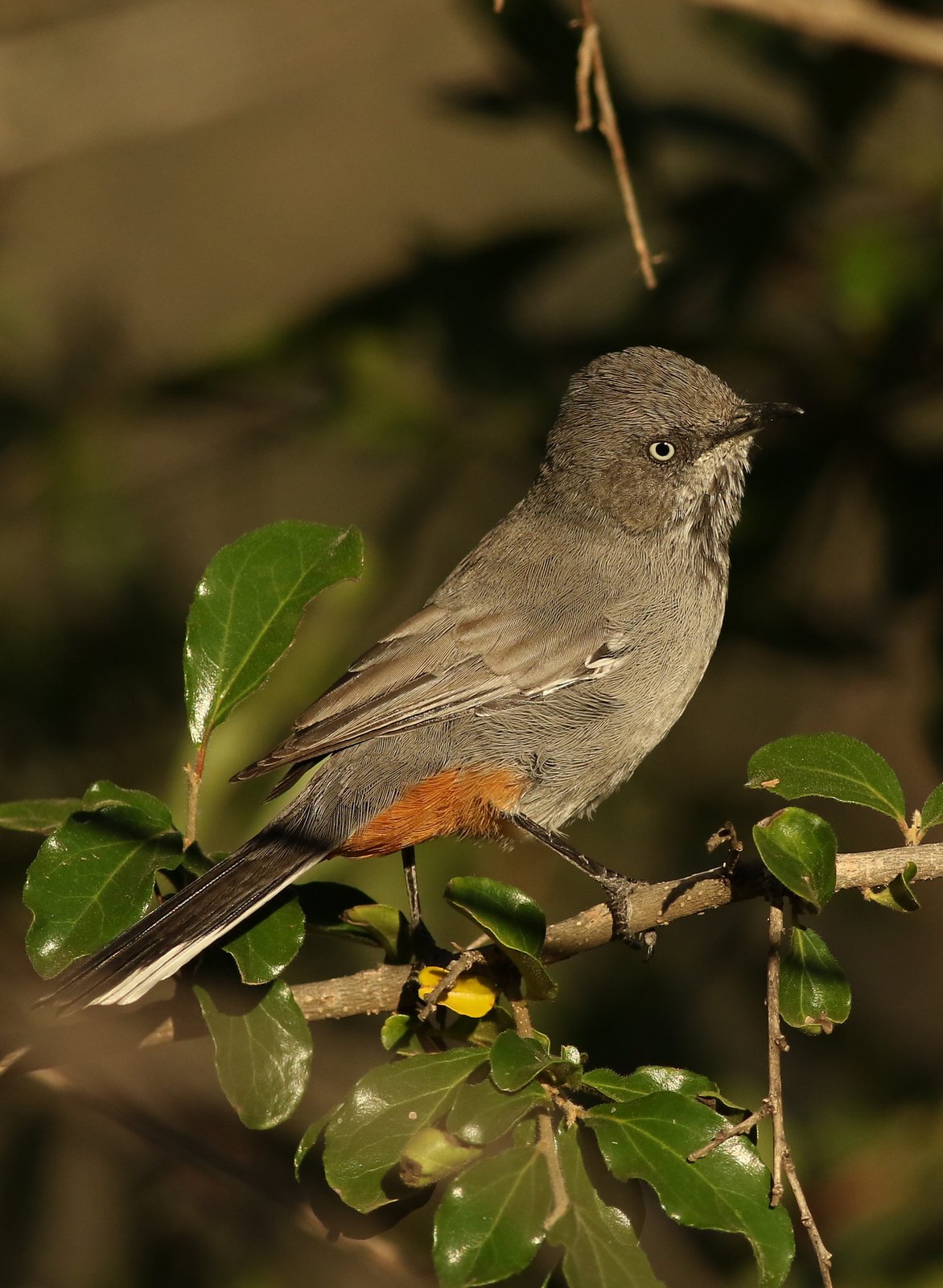
The Chestnut-Vented Warbler is a grey, pale-eyed Curruca warbler with a chestnut vent, heard in almost every thornbush and Karoo shrub in the dry west and centre of the region. Its rich song is one of the familiar sounds of the bushveld and the Karoo.
Voice
The song is a rich, fast, bubbling series of whistles and chirps, often introduced or ended with the characteristic cherik-tik-tik, from which its Afrikaans name ‘bosveldtjeriktik’ is derived. It sometimes mimics other species. The call is the same cherik-tik-tik or a sharp tik-tik.
Recording: Campbell Fleming — CC BY-NC-SA 4.0 · converted to mono · xeno-canto
Identification
15–16 cm, plain grey above, paler grey to off-white below. The white throat is densely marked with short black streaks. The iris is white to pale yellow and stands out at once in the grey head. The undertail coverts are deep chestnut, a clear contrast with the pale belly when the bird is seen from below. The long tail is blackish with white outer feathers and white tips. The bill is thin and black, the legs grey. The sexes are alike; juveniles have a darker iris, a less streaked throat and a dull rufous vent. It moves tit-like through bushes, sometimes hanging from twigs, and fans its tail.
Confusion species
Layard's Warbler Curruca layardi is very similar but has white undertail coverts and a somewhat less streaked throat; the two overlap in the western Karoo, Namaqualand and southern Namibia. Ashy Tit Melaniparus cinerascens and Grey Tit Melaniparus afer have a black cap and throat and a white cheek patch. Fairy Flycatcher Stenostira scita is smaller, with a black mask and a white wing stripe.
Habitat
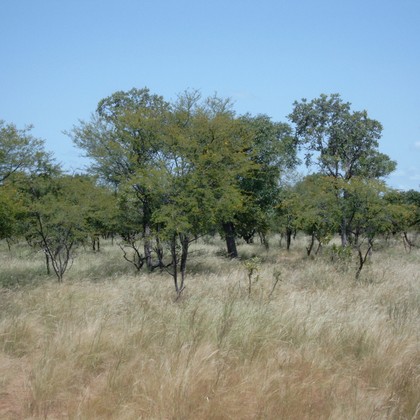
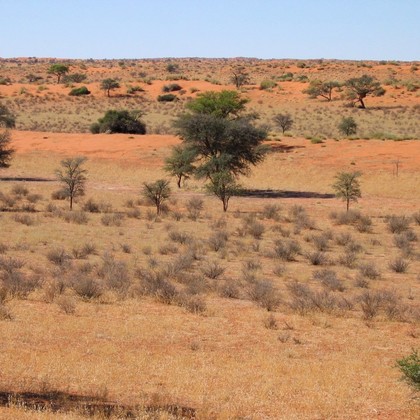
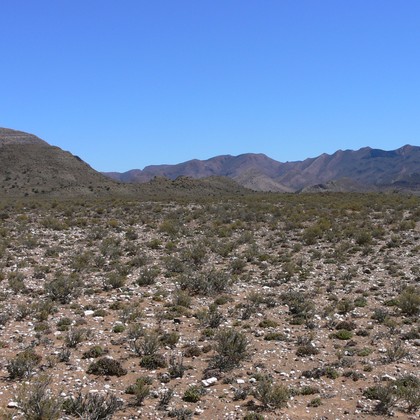
Acacia savanna and thornveld, Kalahari thornveld, Nama Karoo and dry, scrubby riverbeds; also fynbos with thorn bushes, scrub on rocky hills and gardens in dry areas. It forages low to mid-level in dense bushes for insects, spiders and berries.
Where the bird is most at home, classified by the vegetation units of southern Africa.
Range and movements
In Namibia across almost the whole country except the bare Namib; in Botswana widespread, scarcer in the moist north; in South Africa over most of the interior and the west, but absent from the moist eastern lowlands; also in Lesotho, south-western Zimbabwe, south-western Angola and with a few records from south-western Zambia. It does not occur outside the region.
- Resident
- Summer visitor (c. Oct–Mar)
- Winter visitor (c. Apr–Sep)
- Passage (Mar–Apr, Oct–Nov)
- dark = core range, pale = thinly spread
How and when to look
Present all year; in dry thornveld listen for the high cherik-tik-tik and wait for the bird to appear at the top of a bush. Common in, for example, Kgalagadi Transfrontier Park, Etosha, Karoo National Park and Pilanesberg. Check the undertail of every pale-eyed grey warbler in the west to rule out Layard's Warbler.
Conservation status
Not threatened. Common and widespread, with stable numbers; it benefits locally from bush encroachment by thorn scrub in overgrazed grassland.
Scientific name
Curruca subcoerulea | (Vieillot, 1817)
Vieillot described the species in 1817 as Sylvia subcaerulea; because it was later moved to another genus, the author and year stand in brackets. The genus Curruca was introduced in 1802 by Bechstein. Curruca is Latin, the name of an unidentified small bird mentioned by the Roman poet Juvenal. subcoerulea is Latin for 'bluish', from sub, 'somewhat', and caeruleus, 'blue' — for the blue-grey upperparts. The specimen the first description was based on came from Gouritz River, Western Cape, South Africa.