All species › Birds of prey › Hawks, eagles and kites › Black Sparrowhawk
Black Sparrowhawk | Astur melanoleucus
Zwarte havik | Azor Blanquinegro
The Black Sparrowhawk is Africa's largest accipiter: a powerful, black-and-white pigeon-hunter of forest and tall trees. In southern Africa it has spread considerably thanks to plantations of eucalyptus and pines, and it now also breeds in suburbs, notably on the Cape Peninsula.
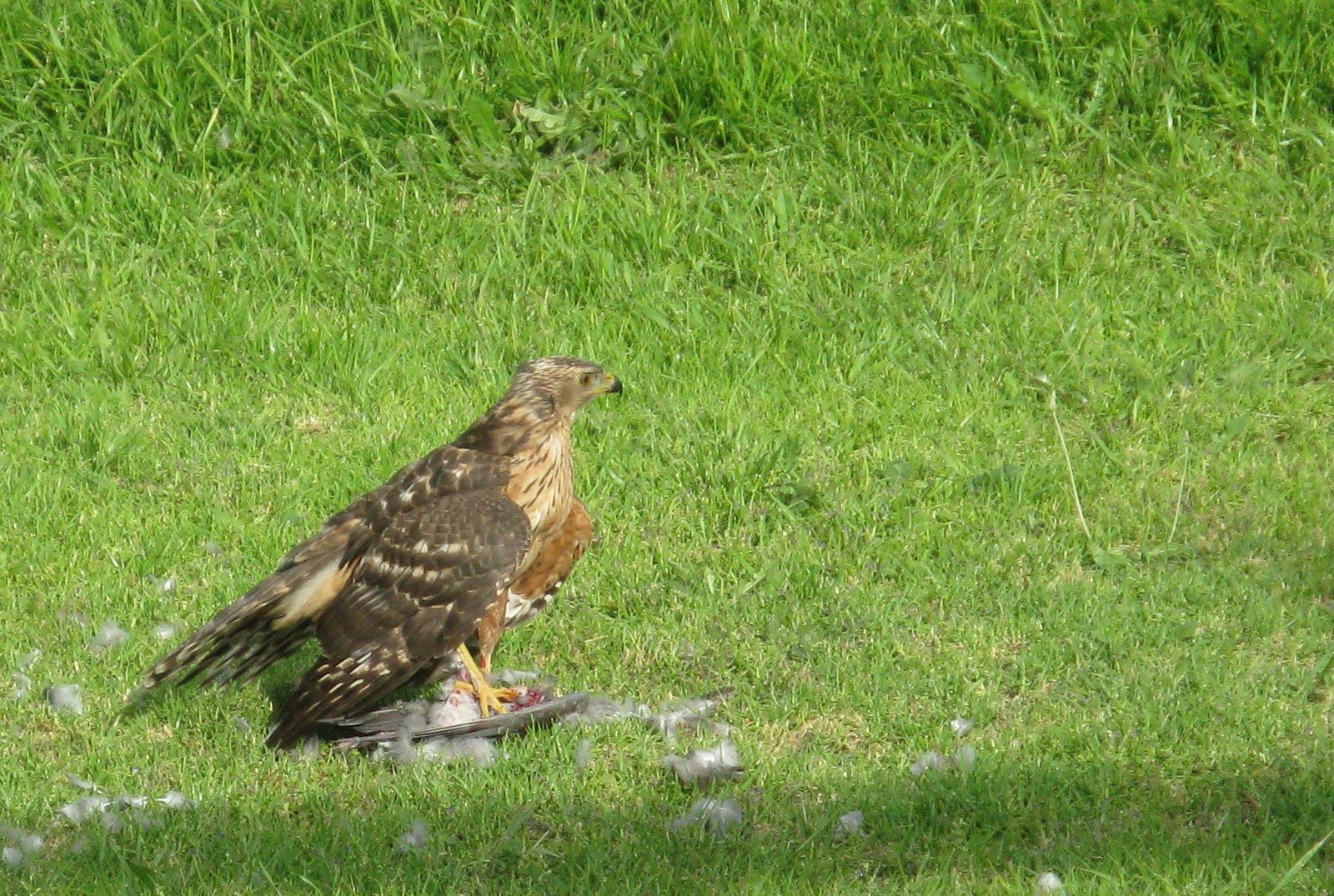
Colour forms

Voice
Mostly silent. Near the nest a loud, barking kek-kek-kek-kek when disturbed and a plaintive, repeated kew or cheep as a contact call between partners.
No recording with a suitable Creative Commons licence is available for this species yet.
Identification
46–58 cm, wingspan 85–110 cm. The female is clearly larger than the male. The usual pale morph is glossy black above with a white throat, breast and belly and black patches on the flanks, which in some birds extend onto the breast. The dark morph is wholly black with only a white throat and sometimes a few white spots on the breast; in the Western Cape this morph is in the majority. The tail is black with grey bars, the iris dark red to orange-brown, cere and legs yellow, with long toes. Juveniles are brown above and creamy white or rufous below with heavy dark brown streaks. In flight the long tail, broad rounded wings and the white underparts of the pale morph stand out.
Confusion species
The black form of Ovambo Sparrowhawk Accipiter ovampensis and the black form of Gabar Goshawk Micronisus gabar are far smaller, with orange and red legs respectively and no white throat. African Goshawk Aerospiza tachiro is smaller and barred rufous below. The grey African Harrier-Hawk Polyboroides typus is much larger, with a bare yellow face. Juveniles can resemble juvenile African Goshawks, but are larger and longer-legged.
Habitat
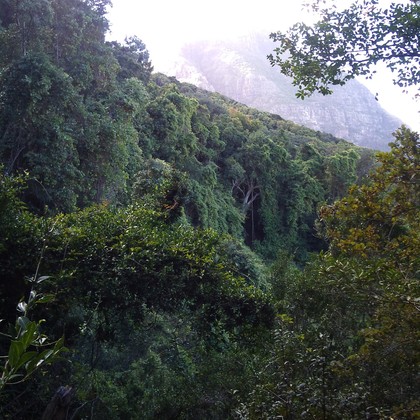
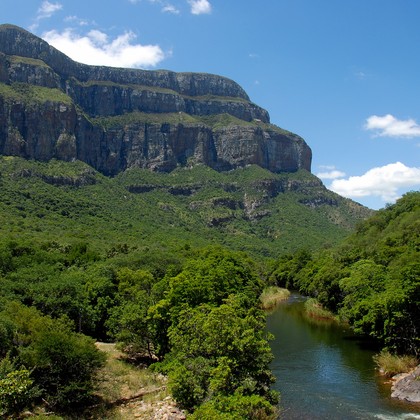
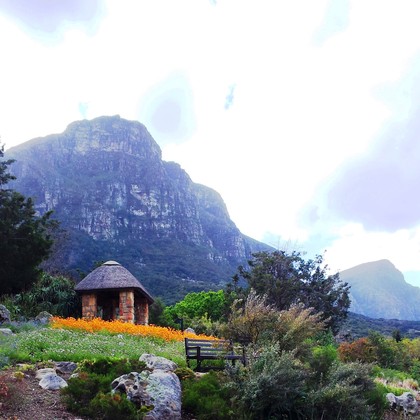
Tall forest, riverine and gorge forest and above all plantations of eucalyptus, pine and poplar, also parks, estates and suburbs with tall trees; it hunts over the surrounding open country. It takes mainly pigeons, doves and francolins, as well as chickens, in a fast chase from a lookout or after a short flight low over the ground. The large stick nest sits high in the canopy; Egyptian geese regularly take over nests.
Where the bird is most at home, classified by the vegetation units of southern Africa.
Range and movements
Distributed over most of the region, but absent from the arid Karoo, the Kalahari and the Namib: fairly common in eastern and southern South Africa, from the Western Cape to Mpumalanga and Limpopo, in Eswatini and Lesotho, and further in Zimbabwe, Mozambique, Malawi, Zambia, Angola, northern Botswana and scarce in north-eastern Namibia. Beyond the region through much of sub-Saharan Africa, from Senegal to Ethiopia.
- Resident
- Summer visitor (c. Oct–Mar)
- dark = core range, pale = thinly spread
How and when to look
The species is most often recorded on the Cape Peninsula and in the suburbs of Johannesburg and Pretoria: nests are in tall eucalyptus trees in parks and on estates. In the Western Cape it breeds in the austral winter, from April to October; elsewhere mostly from July to December. A large hawk chasing a pigeon at full speed among trees is almost always this species.
Conservation status
Not threatened. In South Africa the population has grown over recent decades through the planting of alien trees and the abundant supply of pigeons. Shooting by poultry keepers and the felling of nest trees are local threats.
Scientific name
Astur melanoleucus | (Smith, 1830)
Smith described the species in 1830 as Accipiter melanoleucus; because it was later moved to another genus, the author and year stand in brackets. The genus Astur was introduced in 1799 by De Lacépède. Astur is Late Latin for 'hawk'. melanoleucus comes from the Greek melas, 'black', and leukos, 'white' — for the black-and-white plumage. The specimen the first description was based on came from South Africa.