All species › Passerines › Cisticolas › Barred Wren-Warbler
Barred Wren-Warbler | Calamonastes fasciolatus
Gebandeerde savannezanger | Camaróptera Barrada
The Barred Wren-Warbler is a brown, barred warbler with a long, often cocked tail, which lives hidden in dry thornveld and scrub. It is almost confined to the western and central parts of the region, where it replaces Stierling's Wren-Warbler of the eastern broadleaved woodland.
Voice
The song is a series of rolling or trilled notes, trrrit-trrrit-trrrit, and a faster, higher series prrip-prrip-prrip, less clear and metallic than the song of Stierling's Wren-Warbler. The alarm is a dry, rattling trrrrr. It sings mainly in the summer breeding season.
Recording: Tony Archer — CC BY-NC-SA 4.0 · converted to mono · xeno-canto
Identification
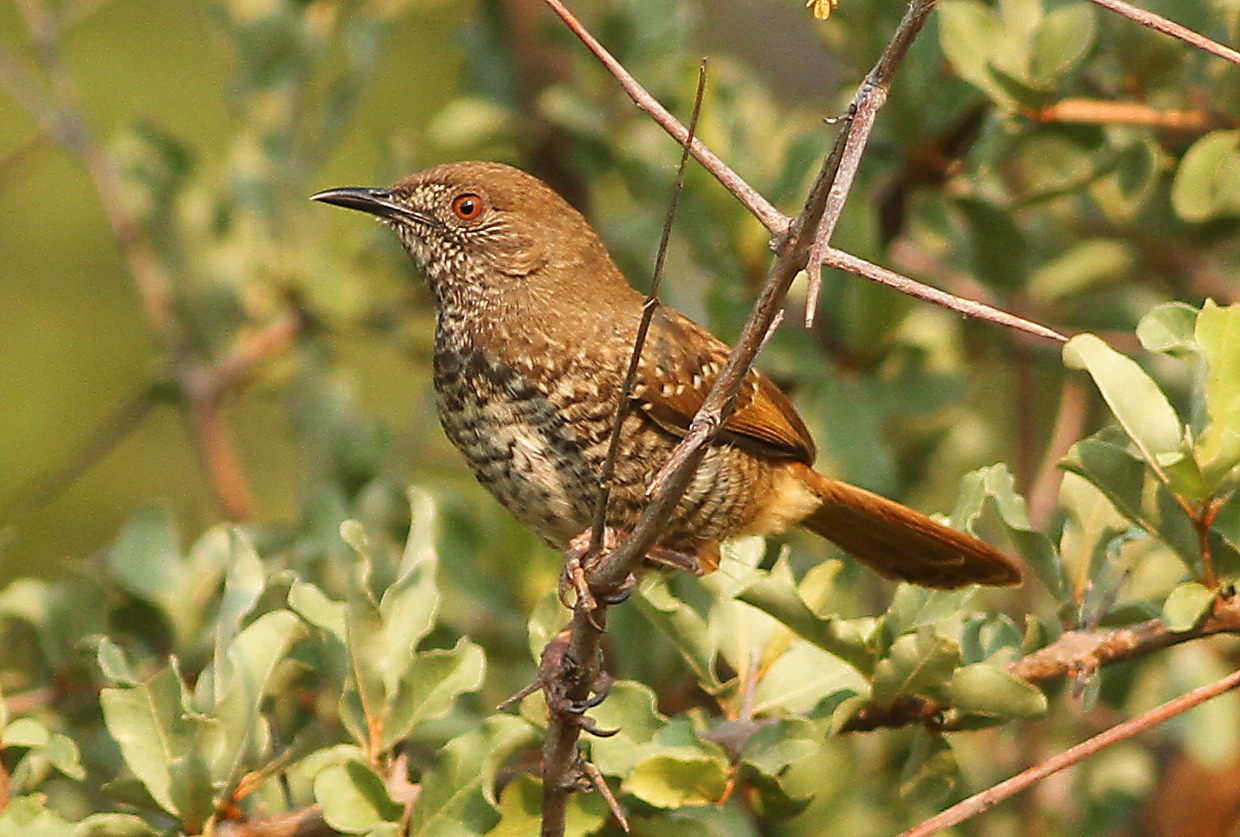
13–14 cm. The upperparts are plain sandy greyish-brown, the wings with rufous-brown edges to the flight feathers. The underparts are pale sandy to off-white, with brown to blackish-brown bars on throat, breast and flanks that are less crisp than in Stierling's Wren-Warbler; flanks and undertail coverts are warm buff. The long tail is often cocked at an angle. The iris is pale brown to orange-brown, the bill black, the legs pink. There is a seasonal plumage: in the dry winter the bird is drabber and the barring is faint or restricted to the breast, while in the summer breeding plumage the barring is stronger. Juveniles resemble winter-plumaged birds.
Confusion species
Stierling's Wren-Warbler Calamonastes stierlingi has whiter underparts with crisp black bars, no drab winter plumage and lives in broadleaved woodland in the east; where the two approach each other, in Zimbabwe and Limpopo, habitat usually separates them. In south-western Angola and Zambia Miombo Wren-Warbler Calamonastes undosus occurs in other habitat; it is grey, not sandy. Drab winter birds can suggest a prinia, such as Black-Chested Prinia Prinia flavicans in winter plumage, but that has yellowish underparts, a supercilium and a differently held, more upright and mobile tail. Bleating Camaroptera Camaroptera brachyura is unbarred, with green wings.
Habitat
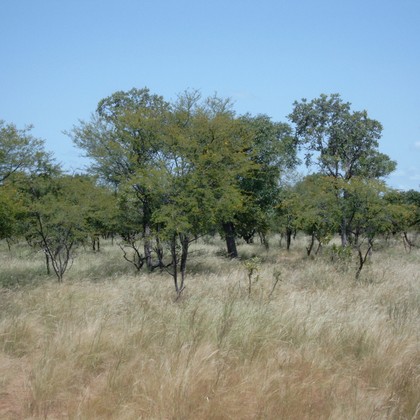
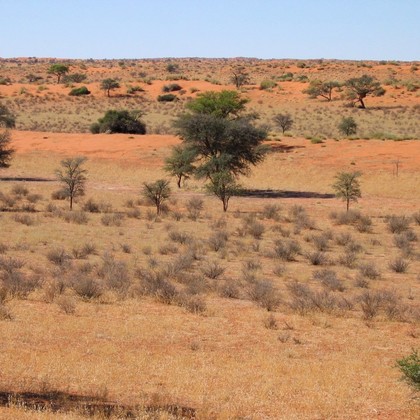
Dry thornveld with dense bushes, Kalahari scrub, acacia woodland and rank mopane, often around termite mounds and in scrub along dry watercourses. Singly or in pairs; it forages low in bushes and on the ground for insects and stays largely hidden.
Where the bird is most at home, classified by the vegetation units of southern Africa.

Range and movements
Within the region in northern and central Namibia (not in the Namib and the arid south), almost all of Botswana, western Zimbabwe, northern South Africa (North West, the north of the Northern Cape, western Limpopo and northern Gauteng), south-western Angola and extreme south-western Zambia. Virtually the entire world range lies within the region.
- Resident
- Summer visitor (c. Oct–Mar)
- Winter visitor (c. Apr–Sep)
- Passage (Mar–Apr, Oct–Nov)
- dark = core range, pale = thinly spread
How and when to look
Year-round; best in summer, when the bird sings and is in breeding plumage. Search dense thorn scrub in, for example, the Kgalagadi, around Etosha or in the Pilanesberg area and follow the trilled song. In winter it often responds to pishing and then appears briefly on an open twig, tail raised.
Conservation status
Not threatened. Common over a large range; it may benefit locally from bush encroachment caused by overgrazing, which creates more dense thorn scrub.
Scientific name
Calamonastes fasciolatus | (Smith, 1847)
Smith described the species in 1847 as Drymoica fasciolata; because it was later moved to another genus, the author and year stand in brackets. The genus Calamonastes was introduced in 1883 by Sharpe. Calamonastes comes from the Greek kalamos, 'reed', and nastēs, 'inhabitant' — 'reed-dweller', although these warblers actually live in dry scrub. fasciolatus is Latin for 'finely banded', from fasciola, 'small band', for the densely barred breast and belly. The specimen the first description was based on came from northeast of Kuruman, Northern Cape.