All species › Passerines › Chats and flycatchers › Ashy Flycatcher
Ashy Flycatcher | Fraseria caerulescens
Blauwgrijze vliegenvanger | Papamoscas Cenizo
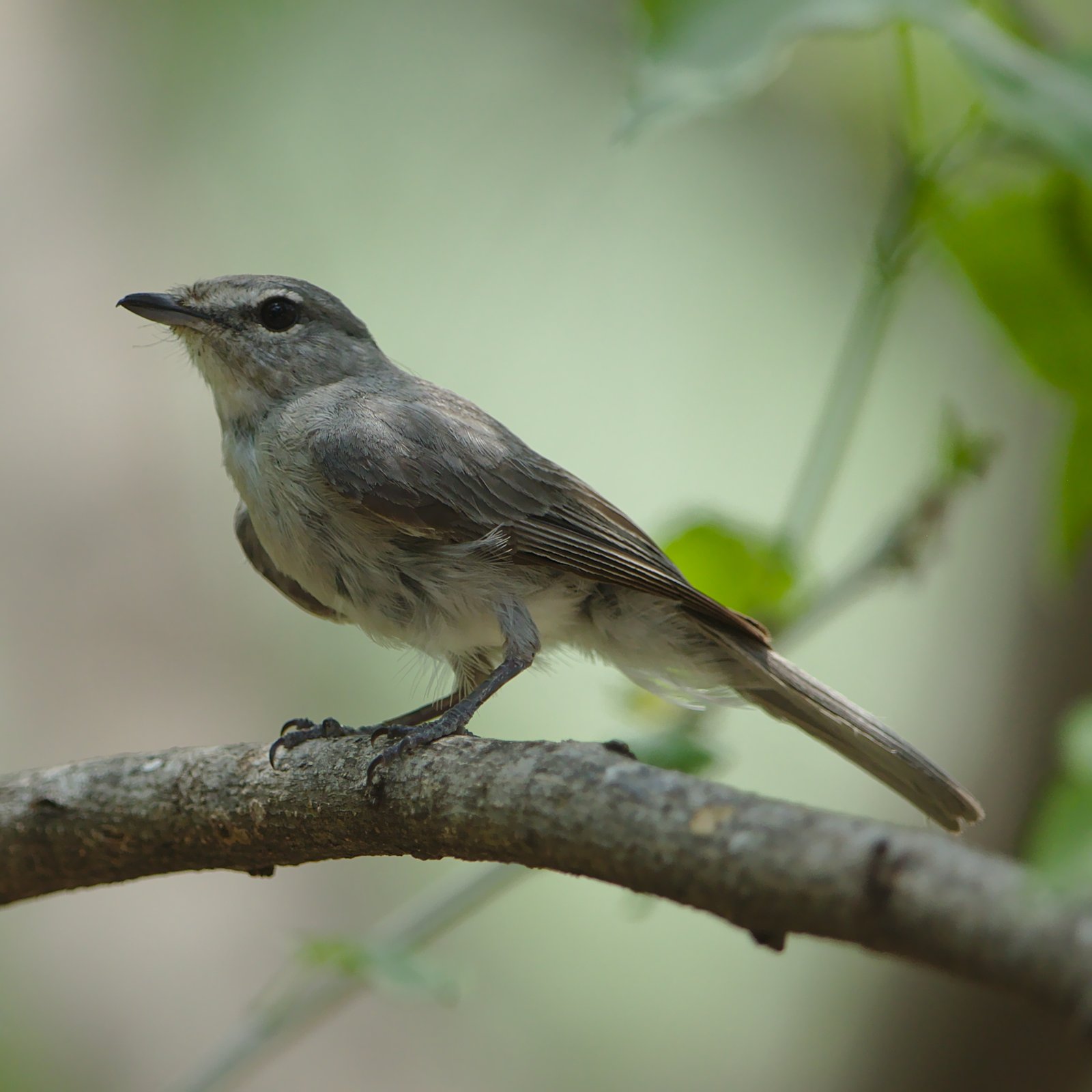
The Ashy Flycatcher is a slim, uniformly bluish-grey flycatcher of forest edges, riverine and coastal forest in the north and east of the region. It perches upright on an open branch in the canopy and sallies out on short flights to catch insects in the air.
Voice
The song is a quick, soft series of high, thin notes ending in a little trill, such as tsi-tsi-tsi-tsirrr. The call is a thin tseep.
No recording with a suitable Creative Commons licence is available for this species yet.
Identification
A slim flycatcher of 14–15 cm. The upperparts are uniform bluish grey, the underparts paler grey, becoming whitish towards the belly. A short white stripe above the lores, over a narrow dark loral line, is the best head mark. The tail is dark grey and fairly long, without white. Bill and legs are black. The sexes are alike; juveniles are browner and lightly spotted. It sits quietly and upright, makes short sallies after flying insects and often returns to the same perch.
Confusion species
Grey Tit-Flycatcher (Fraseria plumbea) is smaller, has white outer tail feathers and moves through the foliage like a tit with its tail constantly fanned. African Dusky Flycatcher (Muscicapa adusta) is smaller and brownish grey, with a faintly streaked breast. Swamp Flycatcher (Muscicapa aquatica) is brown with a brown breast band and lives in reeds and papyrus. Cassin's Flycatcher (Muscicapa cassini) is darker grey, with a white throat and grey breast band, and perches on branches over running water.
Habitat
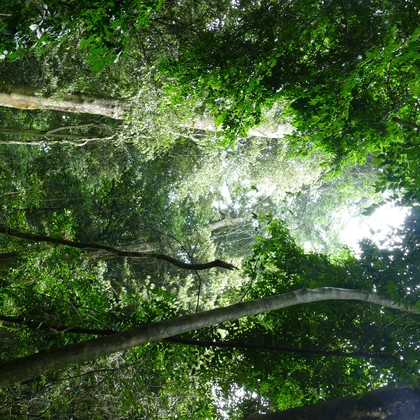
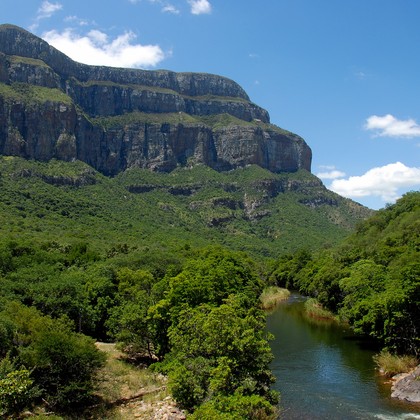
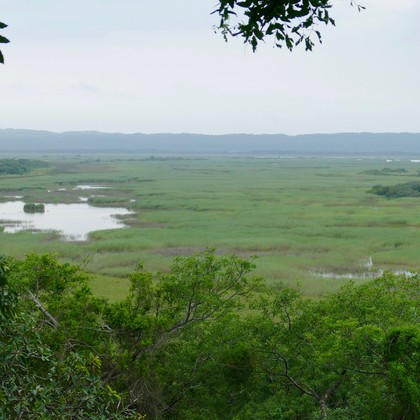
Edges of riverine and coastal forest, open woodland along rivers, mangroves, savanna with tall trees and gardens and parks with large trees. It seeks out the canopy and open branches at the forest edge.
Where the bird is most at home, classified by the vegetation units of southern Africa.
Range and movements
In Angola in the north and west, and further in Zambia, Malawi, Mozambique and eastern and northern Zimbabwe, and in South Africa in eastern Mpumalanga and KwaZulu-Natal, mainly along the coast, south into the north-east of the Eastern Cape; also in Eswatini. Beyond the region from Senegal to Ethiopia and south through East Africa.
- Resident
- Summer visitor (c. Oct–Mar)
- Winter visitor (c. Apr–Sep)
- Passage (Mar–Apr, Oct–Nov)
- dark = core range, pale = thinly spread
How and when to look
Search coastal and riverine forest in KwaZulu-Natal or southern Mozambique for a grey flycatcher perched upright on a bare branch at the forest edge. The white stripe above the lores and the plain grey tail separate it from Grey Tit-Flycatcher; the short, high song with its closing trill often gives it away first.
Conservation status
Not threatened. The species is widespread and numbers appear stable. Loss of coastal and riverine forest to clearance and development causes local declines, but it tolerates gardens and parks with tall trees well.
Scientific name
Fraseria caerulescens | (Hartlaub, 1865) (GBIF: Muscicapa caerulescens)
Hartlaub described the species in 1865 as Butalis caerulescens; because it was later moved to another genus, the author and year stand in brackets. The genus Fraseria was introduced in 1854 by Bonaparte. Fraseria is named after the English zoologist Louis Fraser (1810–1866), naturalist on the Niger expedition of 1841–1842. caerulescens is Latin for 'bluish' — for the blue-grey upperparts. The specimen the first description was based on came from KwaZulu-Natal, South Africa (not further specified).