All species › Passerines › Sylvia warblers › Yemen Warbler
Yemen Warbler | Curruca buryi
Jemenzanger | Curruca yemení
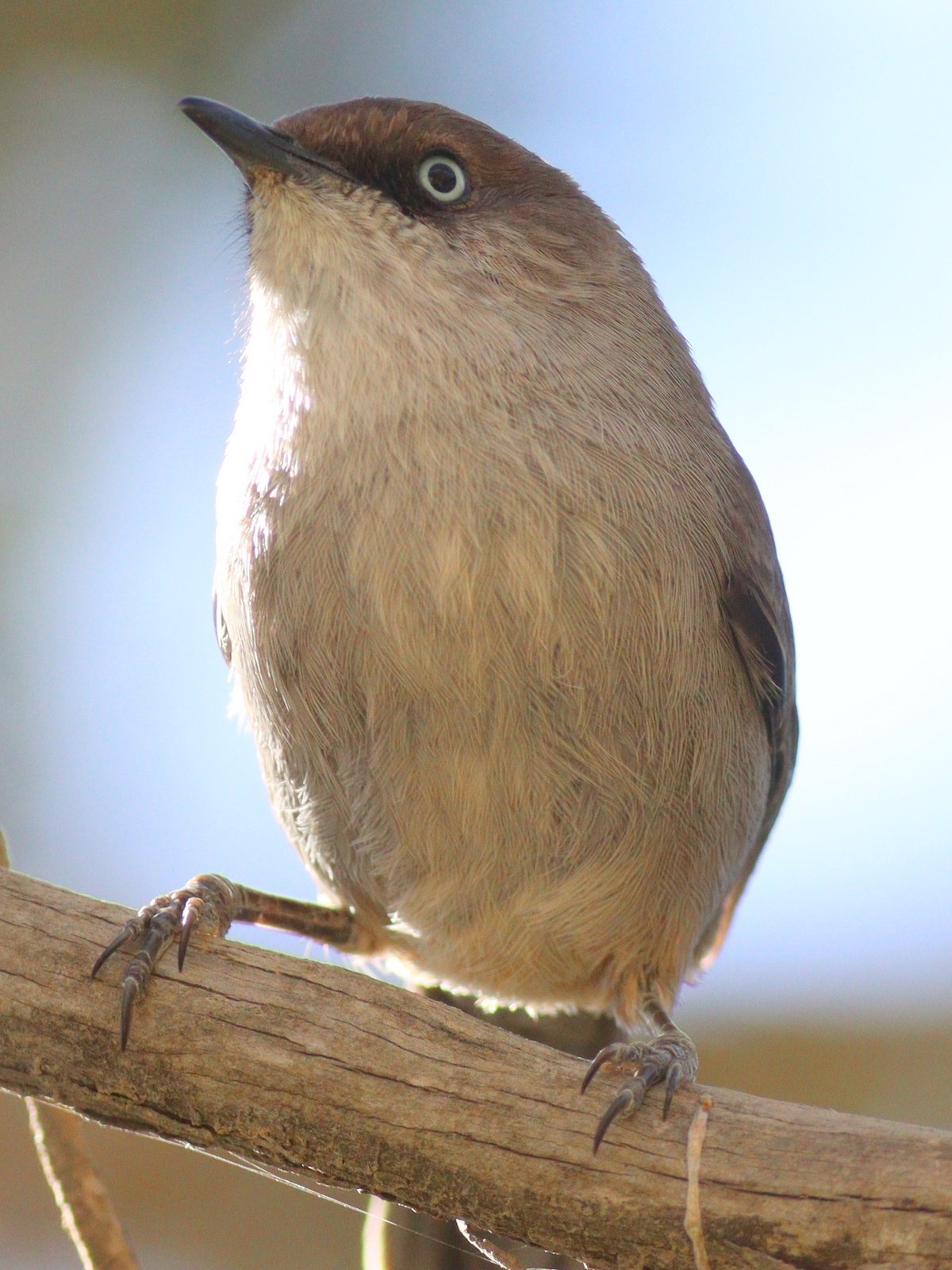
The Yemen Warbler is an endemic warbler of the south-west Arabian mountains, with a small range in the Asir and Sarawat mountains of Saudi Arabia and the western highlands of Yemen. It was formerly placed in the genus Parisoma, with the African tit-babblers; it now belongs in Curruca. A species to search for deliberately, and one easily overlooked in the canopy.
Voice
A short, melodious, thrush-like phrase, often sung from cover in a tree, and a soft, somewhat nasal chatter. When alarmed a dry, rattling cherr and a sharp chek.
Recording: David Darrell-Lambert — CC BY-NC-SA 4.0 · converted to mono · xeno-canto
Identification
15 cm. A large, long-tailed warbler with a fairly long, slightly decurved bill and short, rounded wings. Upperparts dark grey-brown, the head slightly darker; underparts off-white, washed brownish-grey on the flanks. The undertail-coverts are warm ochre-brown, a good feature from below. Adults have a pale iris. Long, dark tail with white outer edges and white tips. Sexes alike.
Confusion species
Arabian Warbler (Curruca leucomelaena) lives in the same area but usually lower down; it has a dark hood, a dark eye with a narrow white eye-ring and dark, white-fringed undertail-coverts. Arabian Babbler (Argya squamiceps) is larger, lives in noisy groups and has a scaly crown. Brown Woodland Warbler (Phylloscopus umbrovirens) is much smaller, with a fine bill and greenish wing edges.
Habitat
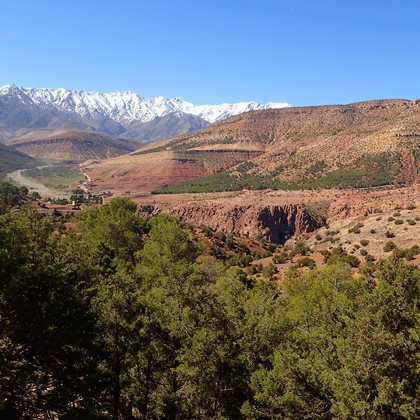
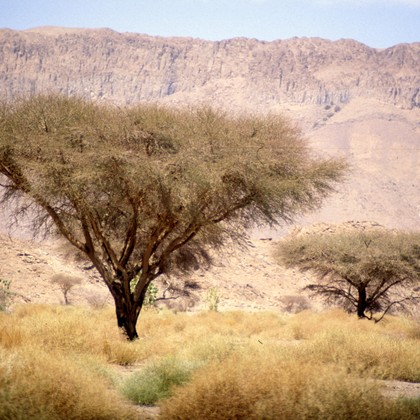
Montane woodland between about 1500 and 3000 m: in Saudi Arabia mainly open juniper woodland (Juniperus procera), in Yemen acacia woodland (Vachellia origena), hedges around terraced fields and bushy mountain slopes. Forages in pairs or small family groups for insects in the canopy and along branches, sometimes clambering like a tit.
Where the bird is most at home, classified by the habitats of North Africa and the Middle East.
Range and movements
Endemic to the mountains of south-west Arabia. In Saudi Arabia along the south-eastern slope of the Sarawat and Asir mountains, from the Taif area south to the Yemen border, with well-known sites around Abha, Al Soudah and Tanomah; in Yemen in the western highlands from the Saudi border south to around Ibb and Taizz. The range is fragmented and tied to the remaining patches of woodland. It does not occur outside Arabia.
- Resident
- Summer visitor (c. Apr–Sep)
- Passage (Mar–Apr, Oct–Nov)
- dark = core range, pale = thinly spread
How and when to look
Best found in the juniper woodland of the Asir mountains around Abha and Al Soudah, early in the morning when pairs are singing. It is shy and often stays in the canopy: listen for the short, thrush-like phrase and follow the movement in the foliage.
Conservation status
Near Threatened. The world population is estimated at 3,500–15,000 birds. The main threat is the loss and degradation of montane woodland: felling and lopping of trees for firewood and fodder, poor regeneration due to grazing, and in Saudi Arabia the die-back of juniper woodland through drought. Tourism and building development in the Asir mountains also take habitat.
Scientific name
Curruca buryi | (Ogilvie-Grant, 1913) (GBIF: Sylvia buryi)
Ogilvie-Grant described the species in 1913 as Parisoma buryi; because it was later moved to another genus, the author and year stand in brackets. The genus Curruca was introduced in 1802 by Bechstein. Curruca is Latin, the name of an unidentified small bird mentioned by the Roman poet Juvenal. buryi honours George Wyman Bury (1874-1920), British explorer of Arabia. The specimen the first description was based on came from Manakhah, Yemen.