All species › Passerines › Finches › Yemen Serin
Yemen Serin | Crithagra menachensis
Jemenkanarie | Serín yemení
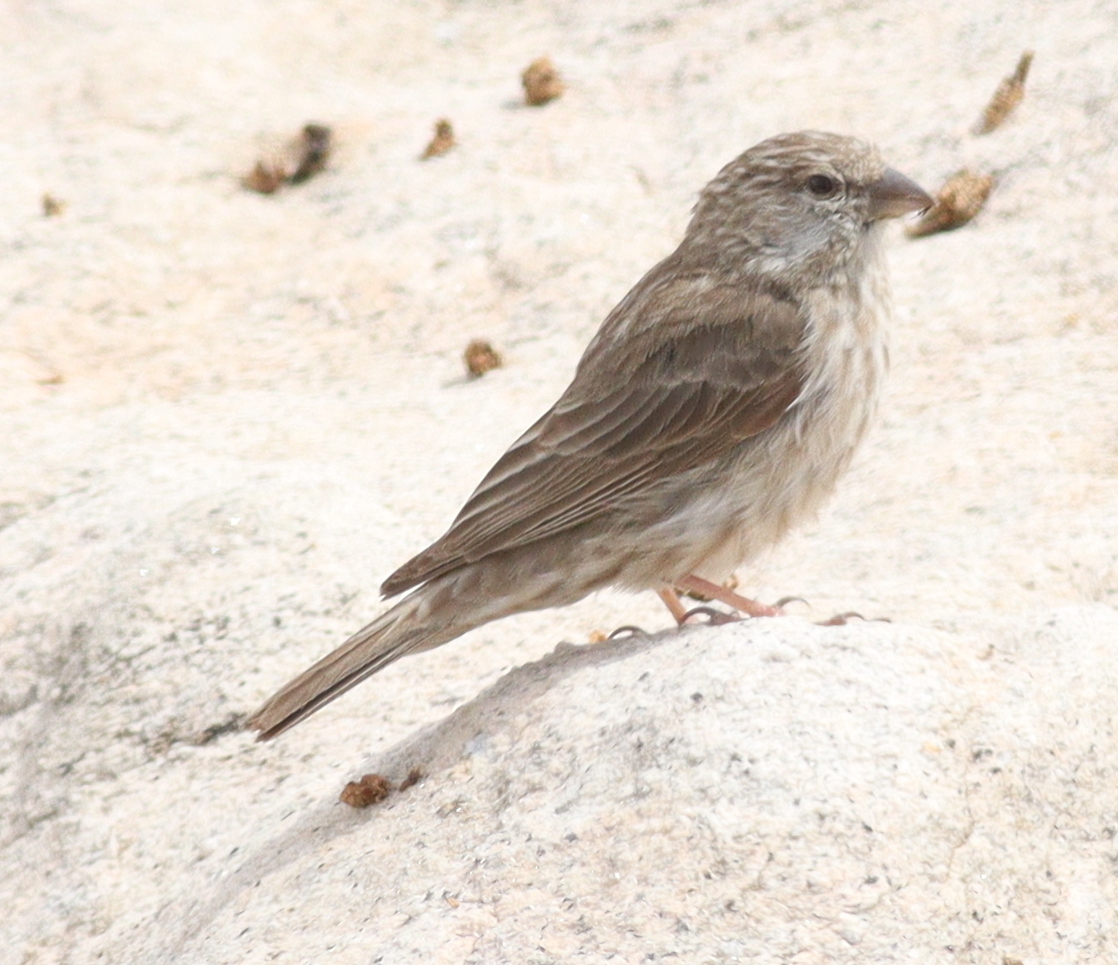
Yemen Serin is a small, brown, streaked serin of the bare rocky highlands of south-western Arabia. Small groups sit on terrace walls, rocks and the roofs of mountain villages, where it is often the commonest small seed-eater.
Voice
The song is a simple series of whistles and trills, less varied than that of Arabian Serin. Calls are a rising sweet, a soft chwee and dry rattles, often from birds in a group.
Recording: Stanislas Wroza — CC BY-NC-SA 4.0 · converted to mono · xeno-canto
Identification
12–13 cm, slender, with a small, pointed bill and a slightly forked tail. Upperparts brown with fine dark streaks on crown and mantle; the face is pale brown, with a faint pale supercilium and a darker cheek patch. The underparts are whitish to off-white, with blotchy dark brown streaks on breast and flanks. The rump is brown, without yellow or olive, and the wing has two narrow pale wing bars. Sexes alike; juveniles are warmer brown and more heavily streaked.
Confusion species
Arabian Serin (Crithagra rothschildi) is greyer and plainer, with a weaker face pattern, blurrier streaking and an olive-yellow rump; it keeps more to woodland and scrub. Yemen Linnet (Linaria yemenensis) has a grey head, a rufous back and a white wing patch. Striolated Bunting (Emberiza striolata) has a streaked head, rufous wings and a yellowish lower mandible. Female House Sparrows (Passer domesticus) are larger, with a heavier bill and unstreaked underparts.
Habitat
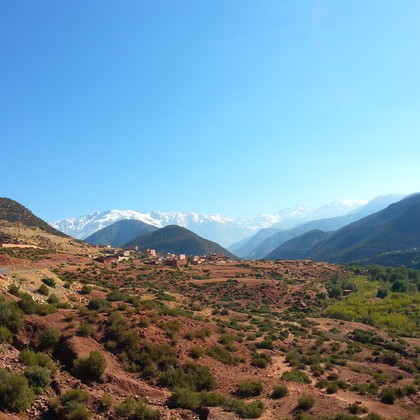
Bare rocky highlands, cliffs, rocky slopes with sparse vegetation, terraced fields and mountain villages, where birds perch on walls and roofs; mostly above 2,000 m up to the highest summits of Yemen and Asir. It lives in small groups that feed on seeds on the ground.
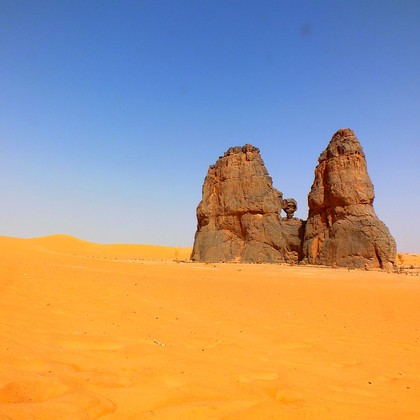
Where the bird is most at home, classified by the habitats of North Africa and the Middle East.
Range and movements
Endemic to the highlands of south-western Arabia: in Saudi Arabia in the highest parts of Asir (including Jabal Sawda near Abha), and in Yemen throughout the western highlands, from Saada through Sanaa to the mountains near Ta'izz and Ibb. Occurs nowhere else.
- Summer visitor (c. Apr–Sep)
- Winter visitor (c. Oct–Mar)
- Passage (Mar–Apr, Oct–Nov)
- dark = core range, pale = thinly spread
How and when to look
On Jabal Sawda, Saudi Arabia's highest peak, search around the viewpoints and terraced fields; the birds often sit in groups on low walls and show well. Note the brown rump and clear streaking.
Conservation status
Not threatened and locally common within its small range. It appears tolerant of human presence and benefits from terraced fields and villages. Little recent information exists from Yemen.
Scientific name
Crithagra menachensis | (Ogilvie-Grant, 1913)
Ogilvie-Grant described the species in 1913 as Poliospiza menachensis; because it was later moved to another genus, the author and year stand in brackets. The genus Crithagra was introduced in 1827 by Swainson. Crithagra comes from the Greek krithē, 'barley', and agra, 'hunting' — a 'barley hunter', for the seed-eating diet of these canaries and seedeaters. menachensis refers to Menacha (Manakhah), a town in western Yemen. The specimen the first description was based on came from Manakhah, Yemen.