All species › Passerines › Wagtails and pipits › Water Pipit
Water Pipit | Anthus spinoletta
Waterpieper | Bisbita alpino
The Water Pipit is a mountain breeder that moves down to the lowlands in winter. In the region it is mainly a winter visitor from the mountains of Turkey, the Caucasus and Iran (race coutellii) and from southern Europe (race spinoletta): from October to March along ditches, marsh edges, riverbanks, sewage works and wet fields, from the Maghreb to the Gulf. A small number of pairs breed on the bare summit of Mount Hermon.
Voice
The call is a single, full, penetrating note, feest or dzeep, sometimes given twice, fuller than the thin, repeated ist of Meadow Pipit. The song, heard only at the breeding site on Mount Hermon, is a series of four to six groups of repeated notes in a rising song flight with a gliding, stiff-winged descent.
Recording: Xavier Riera — CC BY-NC-SA 4.0 · converted to mono · xeno-canto
Identification
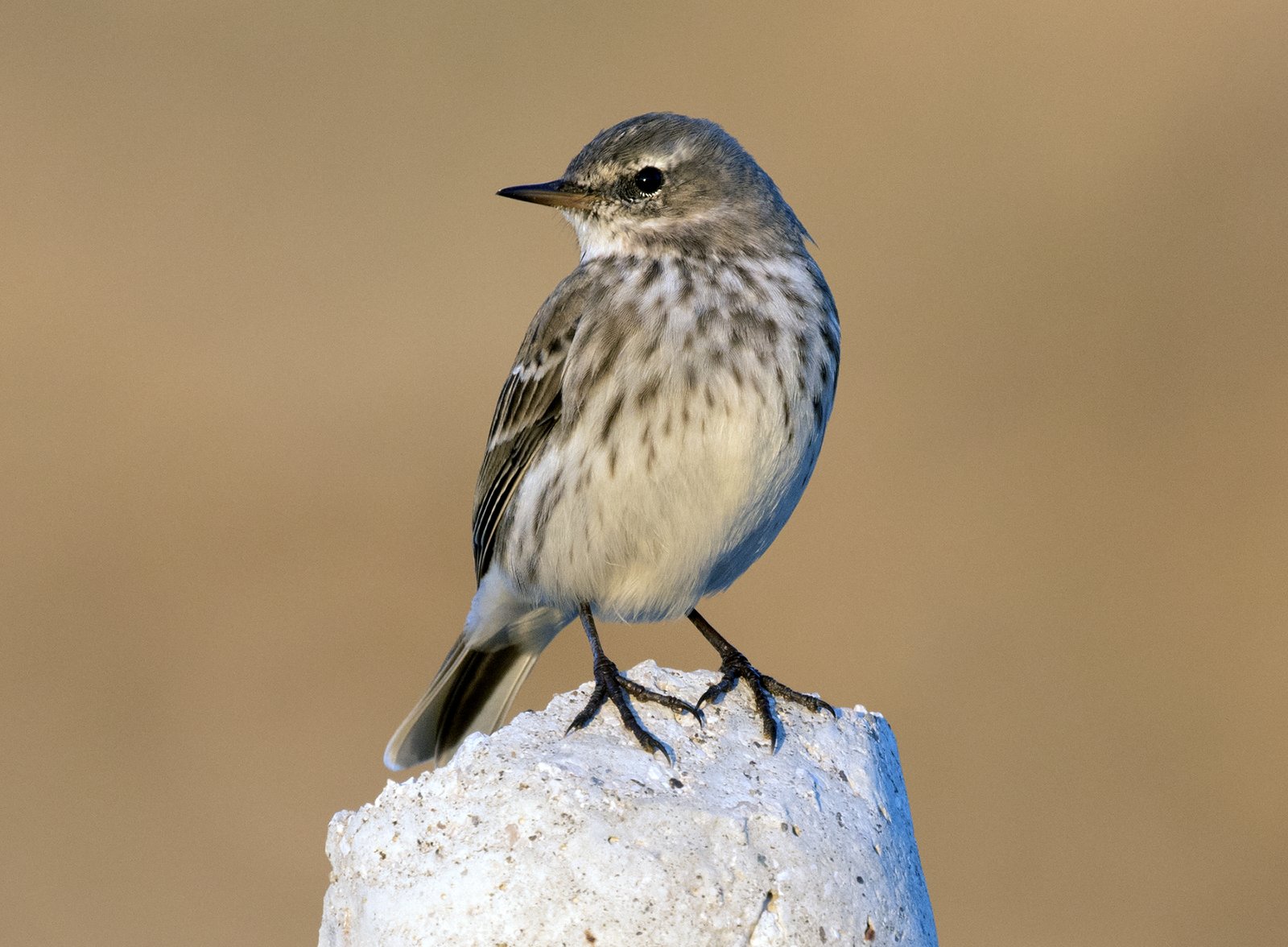
15–17 cm, large for a small pipit, elongated, with a long tail and a fairly strong dark bill. The legs are dark brown to blackish, never pink. In winter plumage the upperparts are cold grey-brown with faint streaks, the underparts clean white with sharp dark streaks on breast and flanks, and a clear white supercilium stands out; there are two narrow white wing-bars. In summer plumage, from March, the head and neck become plain blue-grey and the nearly unstreaked underparts flushed pinkish-buff. The outer tail feathers are pure white. The race coutellii is slightly browner and warmer above than European birds.
Confusion species
Meadow Pipit (Anthus pratensis) is smaller and more olive-brown, with pale legs, a plain face and a thin, repeated ist-ist-ist. American Pipit (Anthus rubescens) of the Asian race japonicus, which appears as a rare winter visitor mainly in the east of the region, has pink to flesh-coloured legs, blacker and heavier breast streaking, a shorter tail and a thinner, often doubled tsip-it. Red-throated Pipit (Anthus cervinus) has a streaked rump, white mantle stripes and pale legs. Eurasian Rock Pipit (Anthus petrosus) hardly occurs in the region; a stray in north-west Morocco is conceivable, but it has dingy grey underparts with blurred streaks and greyish-white outer tail feathers.
Habitat
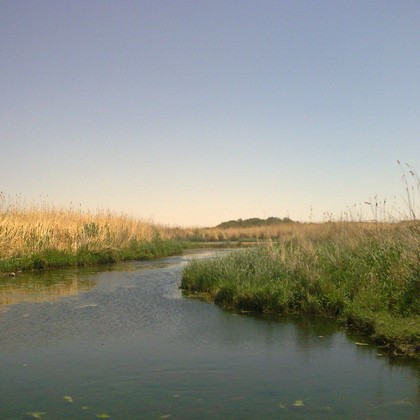
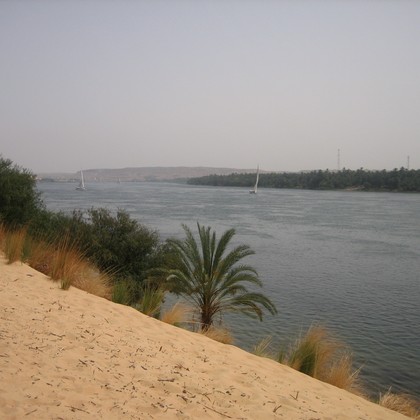
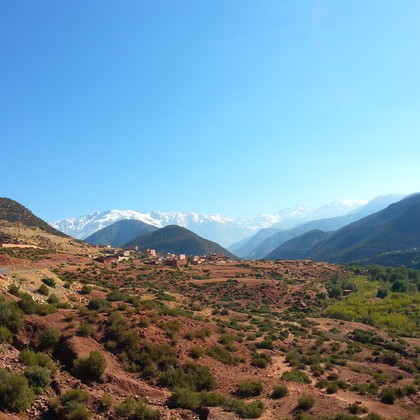
In winter fresh and brackish water in the lowlands: reedbeds and ditches, muddy banks of rivers, lakes and reservoirs, wet meadows, rice fields and irrigated farmland, fishponds, sewage works and the edges of saltmarsh and sabkha; it wants short grass or bare mud right next to water. On Mount Hermon it breeds on alpine turf and scree slopes with streams and late snow above about 2,000 m.
Where the bird is most at home, classified by the habitats of North Africa and the Middle East.
Range and movements
In the region it breeds only in small numbers on the highest parts of Mount Hermon (on the border of Israel, Lebanon and Syria), possibly also elsewhere in the Anti-Lebanon and Lebanon ranges. As a winter visitor common in northern Morocco, Algeria and Tunisia, scarce in Libya; in Egypt common in the Nile Delta, the Nile Valley and the Faiyum. In Israel, Jordan, Lebanon, Syria and Iraq common in all wetlands. On the Arabian Peninsula a common winter visitor in Kuwait, eastern Saudi Arabia, Bahrain, Qatar, the United Arab Emirates and northern Oman, scarcer in western and southern Saudi Arabia and in Yemen. Beyond the region it breeds in the mountains of southern and central Europe, Turkey, the Caucasus and Iran to Central Asia and China, and winters in western and southern Europe, North Africa, the Middle East and northern India.
- Resident
- Summer visitor (c. Apr–Sep)
- Winter visitor (c. Oct–Mar)
- Passage (Mar–Apr, Oct–Nov)
- dark = core range, pale = thinly spread
How and when to look
From November to February at a sewage works or the muddy edge of a fishpond in the Beit She'an Valley, the Nile Delta or the Emirates: look for a robust, dark-legged pipit that flushes with a single, full call. In March many birds are already half in summer plumage, with grey head and pink breast, and are then easy. For breeding birds: June and July on the summit of Mount Hermon.
Conservation status
Not globally threatened and a common winter visitor within the region. The small, isolated breeding population on Mount Hermon lies at the extreme southern edge of the breeding range and is vulnerable to climate warming, which pushes the alpine zone further up the mountain, and to disturbance from skiing and tourism.
Scientific name
Anthus spinoletta | (Linnaeus, 1758)
Linnaeus described the species in 1758 as Alauda Spinoletta; because it was later moved to another genus, the author and year stand in brackets. The genus Anthus was introduced in 1805 by Bechstein. Anthus is the Latin word for a small bird of grasslands mentioned by Pliny the Elder. spinoletta is a dialect word for a pipit from the Florence region of Italy. The specimen the first description was based on came from Italy.