All species › Passerines › White-eyes › Socotra White-Eye
Socotra White-Eye | Zosterops socotranus
Socotrabrilvogel | Anteojitos de Socotra
Socotra White-eye is one of the endemic songbirds of Socotra. It was long treated as a subspecies of Abyssinian White-eye, but DNA work (2014) showed that it is not closely related to it; IOC has recognised it as a species since 2019. It is common on the island, from the wadis near the coast to the mountain woodland of the Hajhir massif.
Voice
A high, thin tsiu and soft contact calls within the group; the song is a fast, thin twittering, mainly in the morning.
Recording: Mischa Keijmel — CC BY-NC-SA 4.0 · converted to mono · xeno-canto
Identification
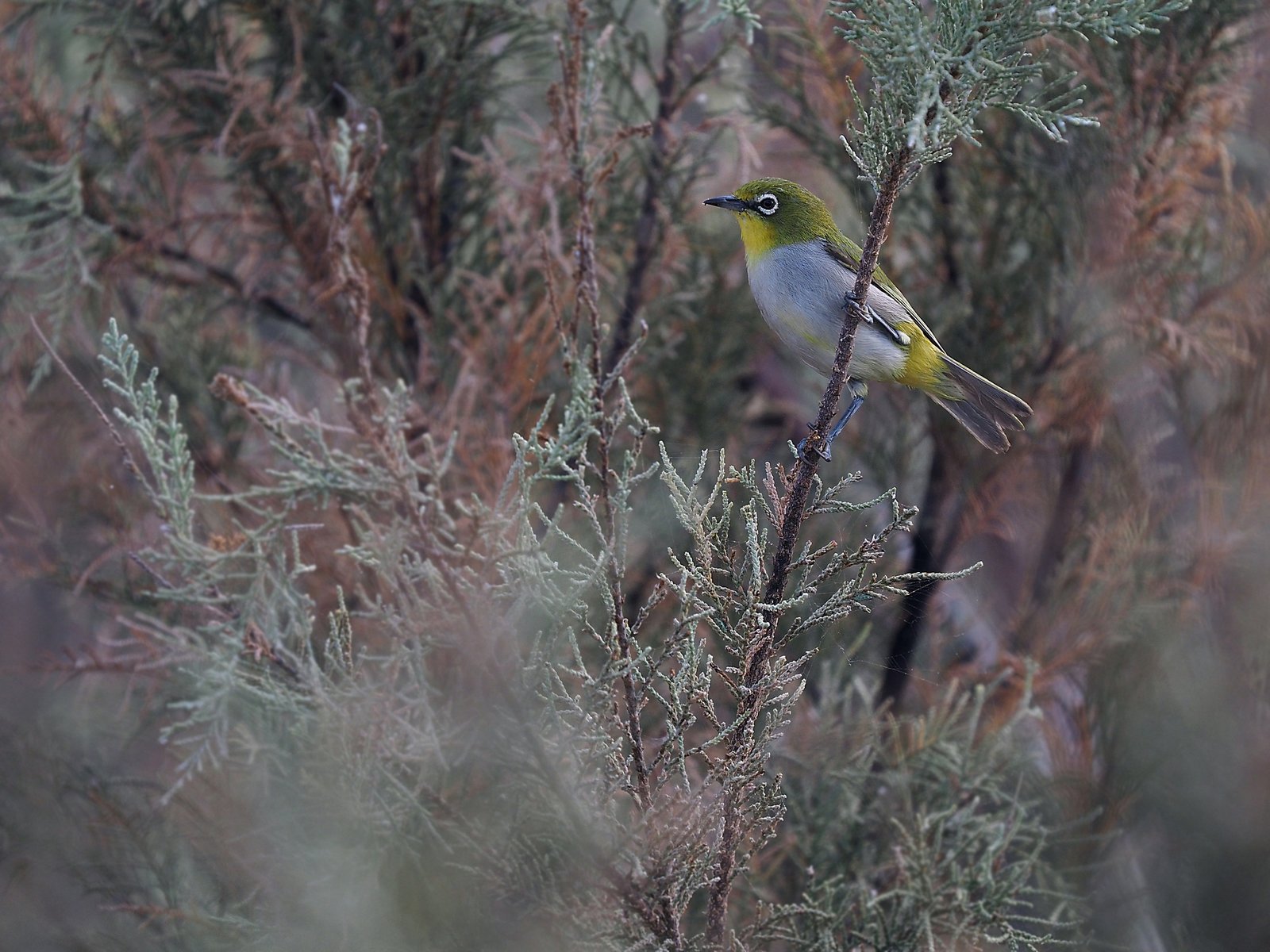
10–11 cm. A small, compact white-eye with a broad white eye-ring, narrowly broken at the front, and a fine black loral line. Upperparts olive-green, throat and undertail-coverts pale yellow, breast and flanks greyish white and belly white. Bill fine and dark, legs grey. Sexes alike; young birds are duller with a smaller eye-ring.
Confusion species
There is no other white-eye on Socotra. Socotra Warbler (Incana incana) is grey-brown, long-tailed and lacks the eye-ring; Socotra Cisticola (Cisticola haesitatus) is streaked brown. Socotra Sunbird (Chalcomitra balfouri) is larger and grey-brown with a long, decurved bill. According to the literature it differs subtly from Abyssinian White-eye (Zosterops abyssinicus) of the mainland, among other things in its less yellow underparts; in the field, location decides.
Habitat
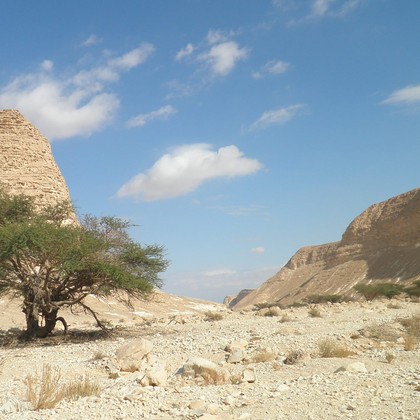
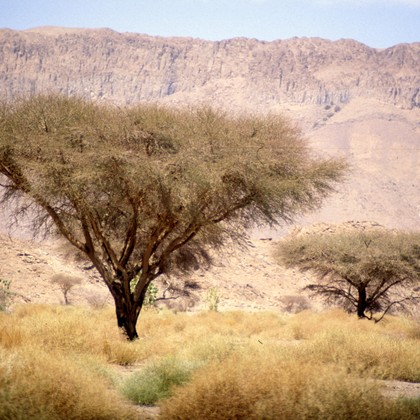
Scrub of Croton and other shrubs, wooded wadis with figs and tamarind, stands of frankincense and dragon's blood trees on the limestone plateau, and the cloud forest of the Hajhir mountains; also in gardens and palm groves near villages. From sea level to the highest peaks.
Where the bird is most at home, classified by the habitats of North Africa and the Middle East.

Range and movements
Only on Socotra (Yemen), where it occurs throughout the island, most numerous in the wadis and on the slopes of the Hajhir massif and the Dixam plateau. There are no confirmed records from the smaller islands of the archipelago (Abd al-Kuri, Samha, Darsa). Some authors also assign birds in northern Somalia to this species, but this is unconfirmed.
- Winter visitor (c. Oct–Mar)
- Passage (Mar–Apr, Oct–Nov)
- dark = core range, pale = thinly spread
How and when to look
Any visit to Wadi Ayhaft, the Homhil plateau or the Dixam plateau produces groups moving through the bushes; they are fairly tame and often seen together with Socotra Sunbirds.
Conservation status
Not yet assessed by IUCN as a separate species (BirdLife includes it in Abyssinian White-eye). Common on Socotra; its small range does make it vulnerable to overgrazing by goats, loss of woodland and the effects of cyclones and climate change.
Scientific name
Zosterops socotranus | Neumann, 1908
Neumann described the species in 1908 and placed it straight away in the genus where it still stands. The genus Zosterops was introduced in 1827 by Vigors & Horsfield. Zosterops comes from the Greek zōstēr, 'belt, girdle', and ōps, 'eye' — for the white eye-ring shown by most white-eyes. socotranus refers to the island of Socotra. The specimen the first description was based on came from Dahamis, Socotra, Yemen.