All species › Birds of prey › Hawks, eagles and kites › Red Kite
Red Kite | Milvus milvus
Rode wouw | Milano real
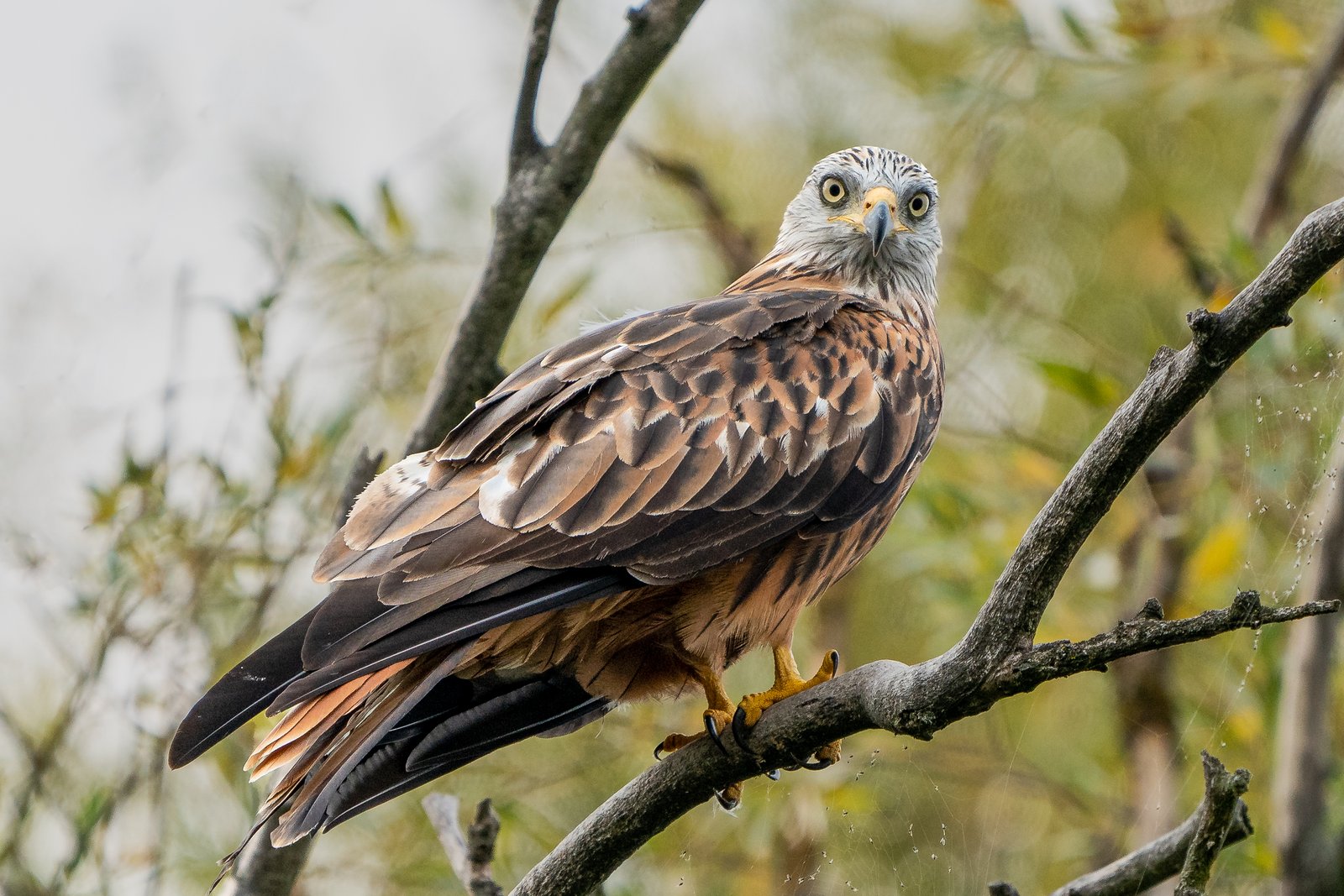
The Red Kite is a large, slender raptor with long, angled wings and a deeply forked rufous tail, gliding endlessly low over open country. It is a European species that once bred more widely in North Africa but has now almost disappeared there; in the region it is mainly a scarce winter visitor to the Maghreb and the Levant.
Voice
Usually silent in winter. At the breeding site a high, bleating series, weeoo-ee-ee-ee-ee, somewhat hesitant in tone.
Recording: David Darrell-Lambert — CC BY-NC-SA 4.0 · converted to mono · xeno-canto
Identification
61–72 cm, wingspan 140–165 cm. Body and tail warm rufous-brown, the head pale grey to almost white with fine dark streaks, the eye pale. The tail is long and deeply forked, still clearly notched when spread, and constantly twisted for steering. From below, large white windows at the base of the primaries stand out sharply against the black wingtips and the rufous underwing coverts. From above a pale diagonal band across the wing coverts. The juvenile is duller, with a shallower tail fork, pale fringes to the coverts and a pale line along the greater coverts.
Confusion species
Black Kite (Milvus migrans) is smaller and darker brown, with a shallow tail fork that becomes almost square when spread, at most a vague pale area in the hand and a grey-brown tail without a rufous tone. Juvenile and pale Black Kites, especially eastern birds, may show paler hand windows; then check the tail fork and tail colour. Common Buzzard (Buteo buteo) and Long-legged Buzzard (Buteo rufinus) have a short, unforked tail and soar with the wings in a V.
Habitat
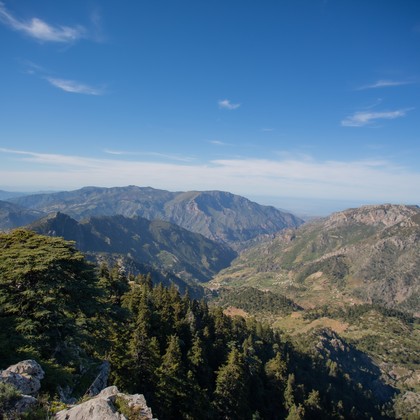
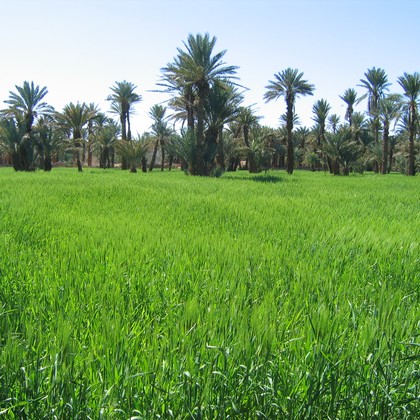
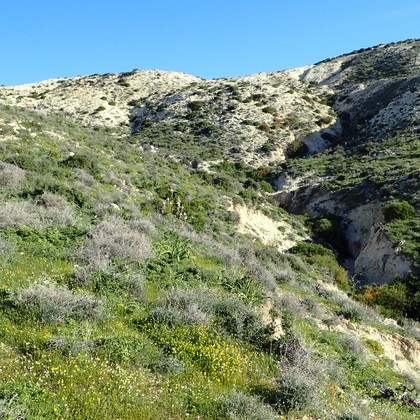
Open, rolling country with fields, pastures and copses; in the Maghreb mainly the moister plains and hills behind the Atlantic and Mediterranean coasts, with cork oak woodland and maquis. Wintering birds search rubbish dumps, fields and road verges for carrion and small animals; in the Levant mainly in farmed valleys with fish ponds.
Where the bird is most at home, classified by the habitats of North Africa and the Middle East.
Range and movements
In Morocco the species formerly bred in the north and in the Middle Atlas; the last pairs in the northwest have all but disappeared and breeding there is now at most sporadic. In winter a scarce visitor to northern Morocco, northern Algeria and Tunisia, mainly birds from Spain. In Israel, Lebanon and Syria a rare but almost annual winter visitor, with a few birds each year, mainly in the Hula Valley and Galilee; a vagrant to Egypt, Jordan and Iraq. Beyond the region it breeds in western and central Europe, with most pairs in Germany, France and Spain, and south to Wales, Sweden and western Ukraine.
- Resident
- Winter visitor (c. Oct–Mar)
- dark = core range, pale = thinly spread
How and when to look
The best chance is in winter in northern Morocco, around the Loukkos plain and Larache, and in the Hula Valley in Israel among the Black Kites. A kite with a bright rufous, deeply forked tail and white hand windows is always worth noting in the region.
Conservation status
Not threatened; in Europe partly recovered since the 1990s thanks to protection and reintroductions. In North Africa almost lost as a breeding bird through poisoned bait, shooting, electrocution on power lines and habitat loss. Wintering birds face the same risks at rubbish dumps and along roads.
Scientific name
Milvus milvus | (Linnaeus, 1758)
Linnaeus described the species in 1758 as Falco Milvus; because it was later moved to another genus, the author and year stand in brackets. The genus Milvus was introduced in 1799 by De Lacépède. Milvus is the Latin word for the red kite. The specific name repeats the genus name: milvus was the Roman name for precisely this bird. The specimen the first description was based on came from Sweden.