All species › Waders, gulls and terns › Sandpipers and snipes › Long-Toed Stint
Long-Toed Stint | Calidris subminuta
Taigastrandloper | Correlimos dedilargo
A small, variegated sandpiper with yellow legs and strikingly long toes that breeds in the Siberian taiga and winters mainly in South-East Asia. The region lies at the western edge of its winter range: in Oman it is a scarce but regular visitor, further north and west a much sought-after vagrant.
Voice
A soft, rolling prrrt or chirrup, fuller than Little Stint's call and without the trill of Temminck's Stint.
Recording: Ray Tsu 诸仁 — CC BY-NC-SA 4.0 · converted to mono · xeno-canto
Identification
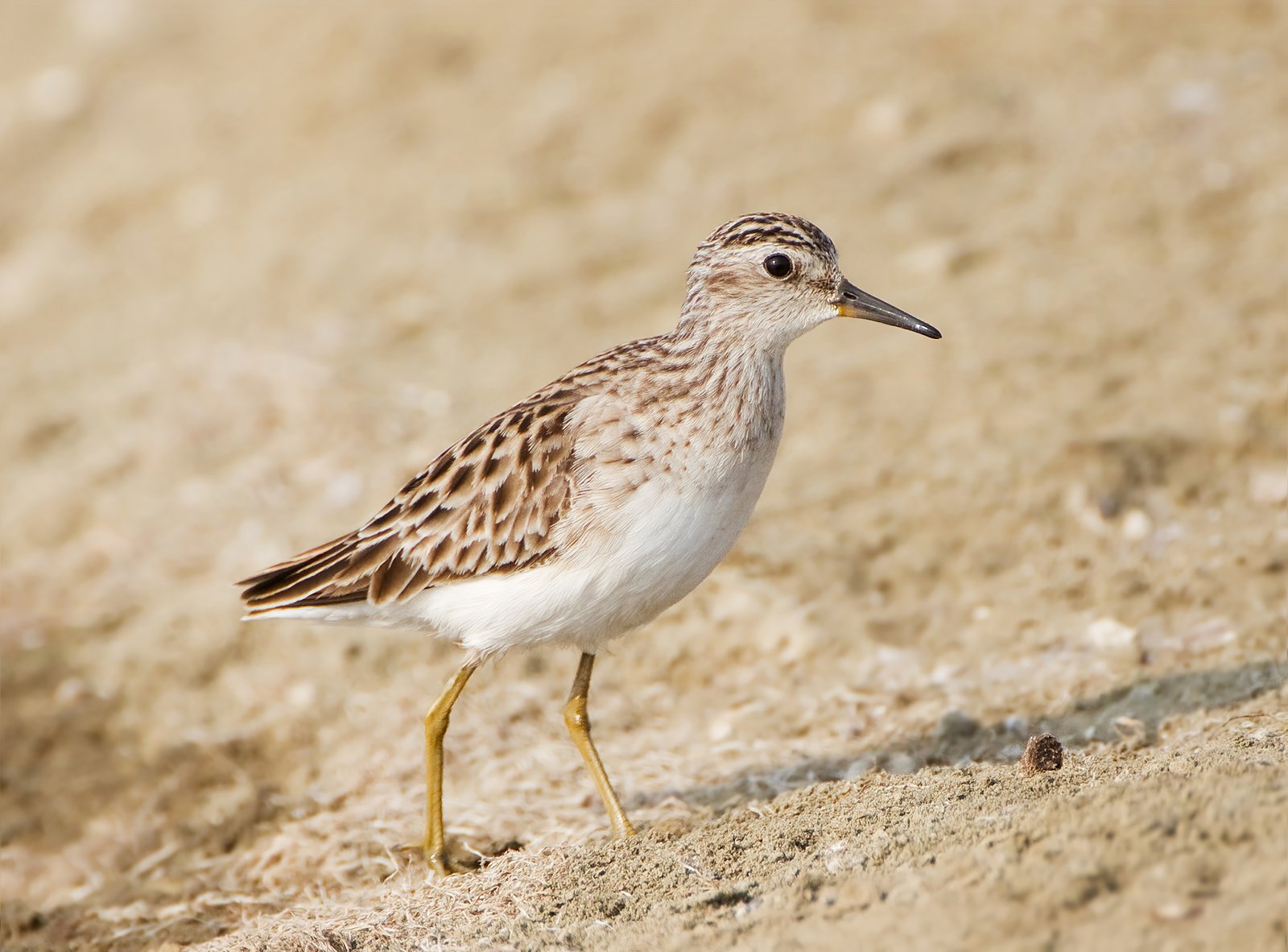
About the size of a Little Stint, but with a more upright stance, a longer neck and longer, yellowish-green legs with long toes; the middle toe is about as long as the bill. The fine dark bill is slightly decurved, often with a pale base to the lower mandible. The upperparts are dark with broad rufous fringes and the crown rufous-brown, with a clear white supercilium that often continues in front of the eye to the bill, while the dark crown reaches almost to the bill base. Breast pale brown and finely streaked. In winter greyer, but the upperparts remain dark-centred. In flight a faint wingbar; the toes project just beyond the tail.
Confusion species
Little Stint (Calidris minuta) has black legs, a straighter bill, a whiter forehead and a less upright stance. Temminck's Stint (Calidris temminckii) also has yellow legs but is plain grey-brown, short-legged and has white tail sides. The American Least Sandpiper (Calidris minutilla) is very similar but unknown in the region. With its upright stance Long-toed Stint sometimes recalls a miniature Wood Sandpiper (Tringa glareola).
Habitat
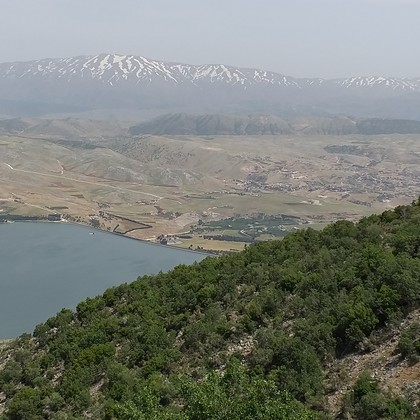
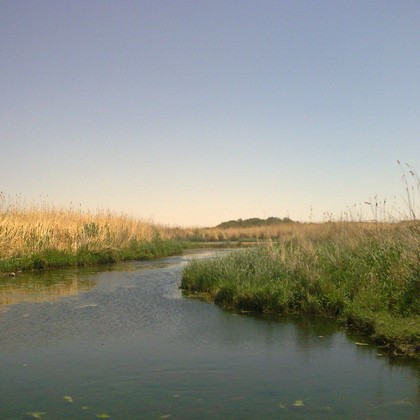
The muddy, often vegetated margins of fresh water: sewage ponds, irrigation pools, flooded fields and the edges of khors and coastal lagoons with a freshwater inflow. It often walks among low vegetation and stretches its neck upright when alarmed.
Where the bird is most at home, classified by the habitats of North Africa and the Middle East.
Range and movements
In Oman a scarce passage migrant and winter visitor, mainly along the Batinah coast, around Muscat and in Dhofar (including the khors of Salalah). In the Emirates formerly a vagrant and now a rare passage migrant. In Bahrain a vagrant; in Saudi Arabia only a few records in the east (Abqaiq in 1977, Dhahran in 2011); in Israel two records (a bird ringed at Eilat in August 1991 and one in the Bet She'an Valley in October 2004). No records were known from Kuwait and Qatar up to 2011, and as far as is known none from North Africa, Egypt, Iraq or the Levant either. The species is clearly less rare in the south of the Arabian Peninsula than in the north. Beyond the region it breeds in the taiga and forest steppe of Siberia east to Kamchatka and the Kuril Islands, and winters from India and Sri Lanka to South-East Asia, the Philippines and Australia.
- Winter visitor (c. Oct–Mar)
- dark = core range, pale = thinly spread
How and when to look
The best chance is from October to March at the sewage ponds and khors around Muscat and Salalah in Oman. Look among Little and Temminck's Stints for a bird with yellow legs, a rufous crown and an upright stance, and note how far the toes project in flight.
Conservation status
Not globally threatened, with a large breeding range in Siberia; the population appears roughly stable. In the region it is so scarce that its protection coincides mainly with the conservation of freshwater pools and khors on the Omani coast.
Scientific name
Calidris subminuta | (Middendorff, 1853)
Middendorff described the species in 1853 as Tringa subminuta; because it was later moved to another genus, the author and year stand in brackets. The genus Calidris was introduced in 1804 by Merrem. Calidris goes back to Ancient Greek kalidris or skalidris, a name Aristotle used for an unidentified grey waterside bird. subminuta is Latin, from sub 'somewhat, near' and minutus 'small', for its resemblance to the Little Stint (Calidris minuta). The specimen the first description was based on came from Stanovoy Range and mouth of the Uda, Khabarovsk Krai, Russia.