All species › Falcons › Falcons › Lanner Falcon
Lanner Falcon | Falco biarmicus
Lannervalk | Halcón borní
The Lanner Falcon is the large falcon of the desert fringe: slim, long-tailed and pale, hunting in a low gliding flight along slopes and over steppe rather than with a steep stoop. In North Africa and the Middle East it is locally the commonest large falcon, though it has declined strongly in the Levant.
Voice
At the nesting cliff a harsh, grating kreh-kreh-kreh, slower and rougher than the chatter of the Peregrine. A plaintive wheek between partners. Quiet outside the breeding season.
Recording: Stanislas Wroza — CC BY-NC-SA 4.0 · converted to mono · xeno-canto
Identification
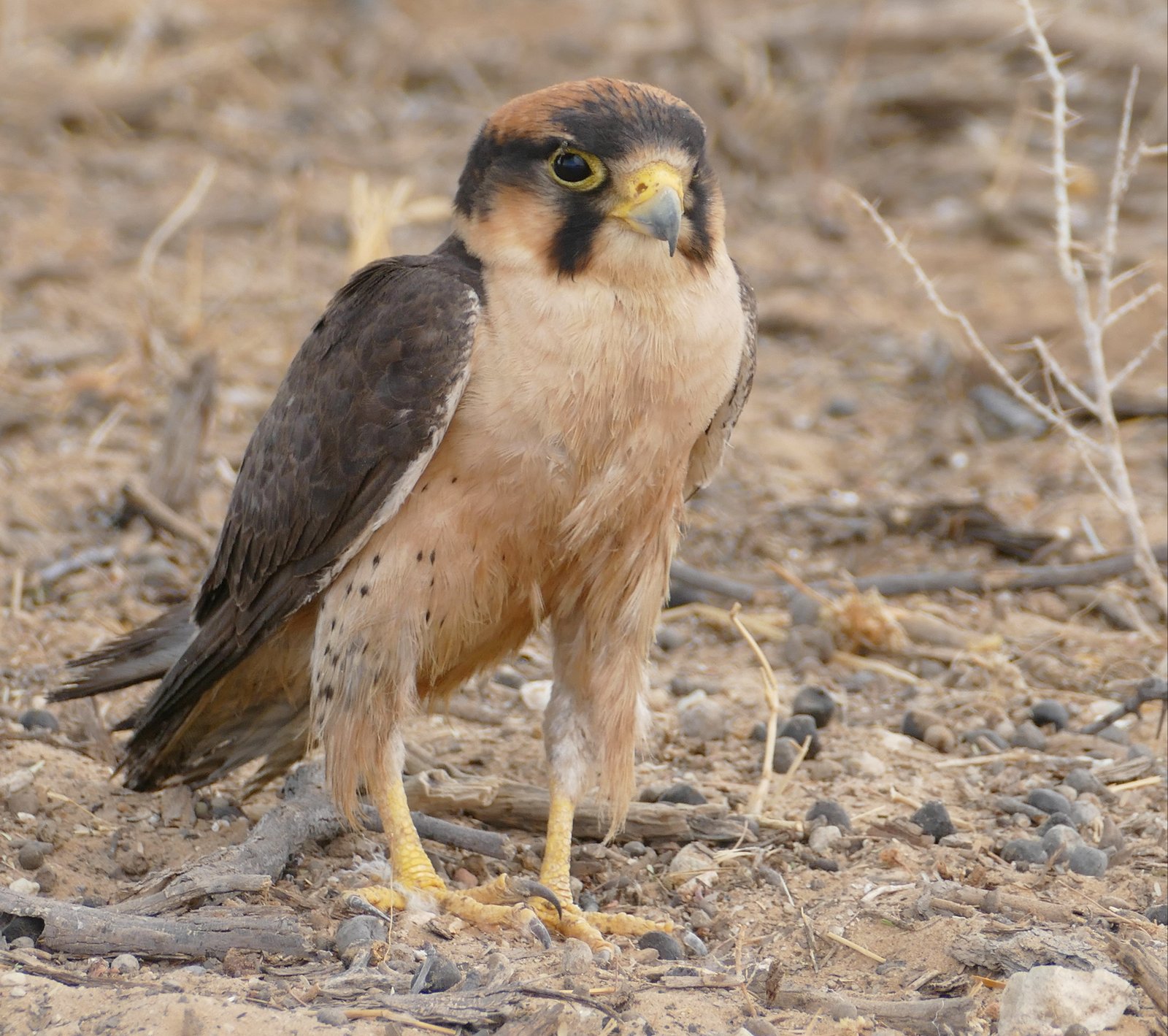
43–50 cm, wingspan 95–105 cm. About the size of a Peregrine, but slimmer, with a longer tail, a narrower wing base and blunter wingtips. Upperparts grey-brown to blue-grey with fine barring, underparts creamy white with small round or drop-shaped spots on flanks and thighs. The head is the best feature: crown and nape rufous, in the pale North African birds (erlangeri) rather creamy with fine streaks, with a thin dark eyestripe and a narrow moustache on a white cheek. In flight a pale underwing with dark, spotted coverts. Juveniles are browner, heavily streaked below, with darker underwing coverts and blue-grey legs.
Confusion species
Peregrine Falcon (Falco peregrinus) is more compact, with a shorter tail, dark head with a broad moustache and barred underparts; the Barbary form does have a rufous nape but a dark crown and a faster, stiffer flight. Saker Falcon (Falco cherrug) is larger and heavier, browner above, with a paler head, a faint moustache and coarse spots on the thighs; young Lanners and young Sakers are hard to separate and need close attention to head colour, tail length and flight silhouette. Escaped falconry birds and hybrids make identification even harder, particularly in the Gulf states.
Habitat
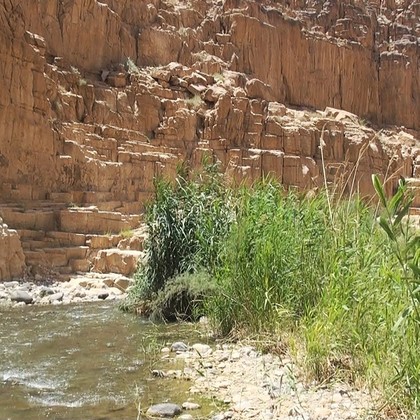
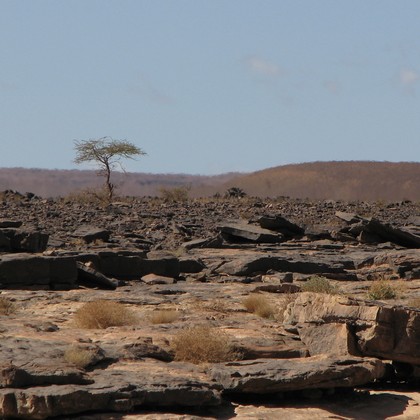
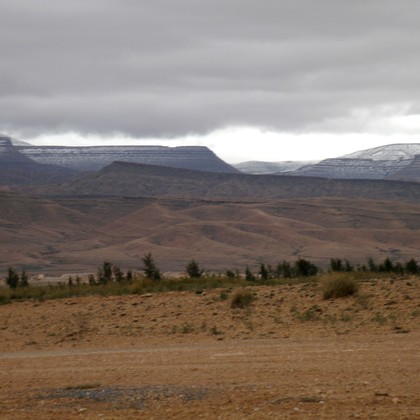
Open, dry country with rocks: gorges, wadis with steep sides, rocky hills and stony desert, alfa steppe and the edges of oases and farmland. Nests on a cliff ledge or in an old nest of a raven or other raptor, also on pylons and buildings. Often hunts in pairs for sandgrouse, pigeons, small birds, bats and large insects, and follows migrants at oases.
Where the bird is most at home, classified by the habitats of North Africa and the Middle East.
Range and movements
In Morocco widespread from the high plateaux and the Anti-Atlas to the desert edge and Western Sahara; also in Algeria, Tunisia and Libya, from the steppe deep into the Sahara. In Egypt the commonest large falcon, along the Nile valley, in the Eastern and Western Deserts and in Sinai. In Israel a rare breeder with about fifteen to twenty pairs in the Judean Desert, the Negev and the Arava; it formerly bred as far north as Galilee. Further in Jordan, Syria and western Iraq, in Saudi Arabia from the north and the Hejaz to Asir, and in Yemen. In Oman, the UAE, Qatar, Bahrain and Kuwait scarce, and partly escaped falconry birds. Beyond the region across almost all of Africa, and in Italy, the Balkans and Turkey.
- Resident
- Summer visitor (c. Apr–Sep)
- Winter visitor (c. Oct–Mar)
- Passage (Mar–Apr, Oct–Nov)
- dark = core range, pale = thinly spread
How and when to look
In Morocco there is a good chance in the steppe and gorges around Boumalne-Dades and Merzouga, and on pylons along desert roads. In Egypt around the Pyramids of Giza and in the desert along the Nile valley. Look for a pale, long-tailed falcon skimming low over the ground.
Conservation status
Not globally threatened, but has declined in the north of its range. In Israel assessed as Critically Endangered, after it disappeared from the north through poisoning in the 1960s and 1970s. Threats are nest robbing and trapping for falconry, poisoning by pesticides and lead, electrocution and disturbance at the breeding cliff.
Scientific name
Falco biarmicus | Temminck, 1825
Temminck described the species in 1825 and placed it straight away in the genus where it still stands. The genus Falco was introduced in 1758 by Linnaeus. Falco is Late Latin for 'falcon', from falx, falcis 'sickle', after the sickle-shaped claws of the bird. biarmicus is not certainly explained; it has been read as 'bearded', but probably goes back to Bjarmaland, a district in northern Russia, in latinised form. The specimen the first description was based on came from the Cape of Good Hope.