All species › Birds of prey › Hawks, eagles and kites › Hen Harrier
Hen Harrier | Circus cyaneus
Blauwe kiekendief | Aguilucho pálido
The Hen Harrier is the bulkiest of the grey harriers and a breeder of Europe and northern Asia. In the region it is a winter visitor, quartering low and rocking over fields, steppes and marshes, most numerous in the Maghreb and the Levant; further south and in Arabia it quickly becomes scarce.
Voice
In winter almost always silent. On the breeding grounds a fast chattering kek-kek-kek and a plaintive psee-yew from the female.
Recording: Jorge Leitão — CC BY-NC-SA 4.0 · converted to mono · xeno-canto
Identification
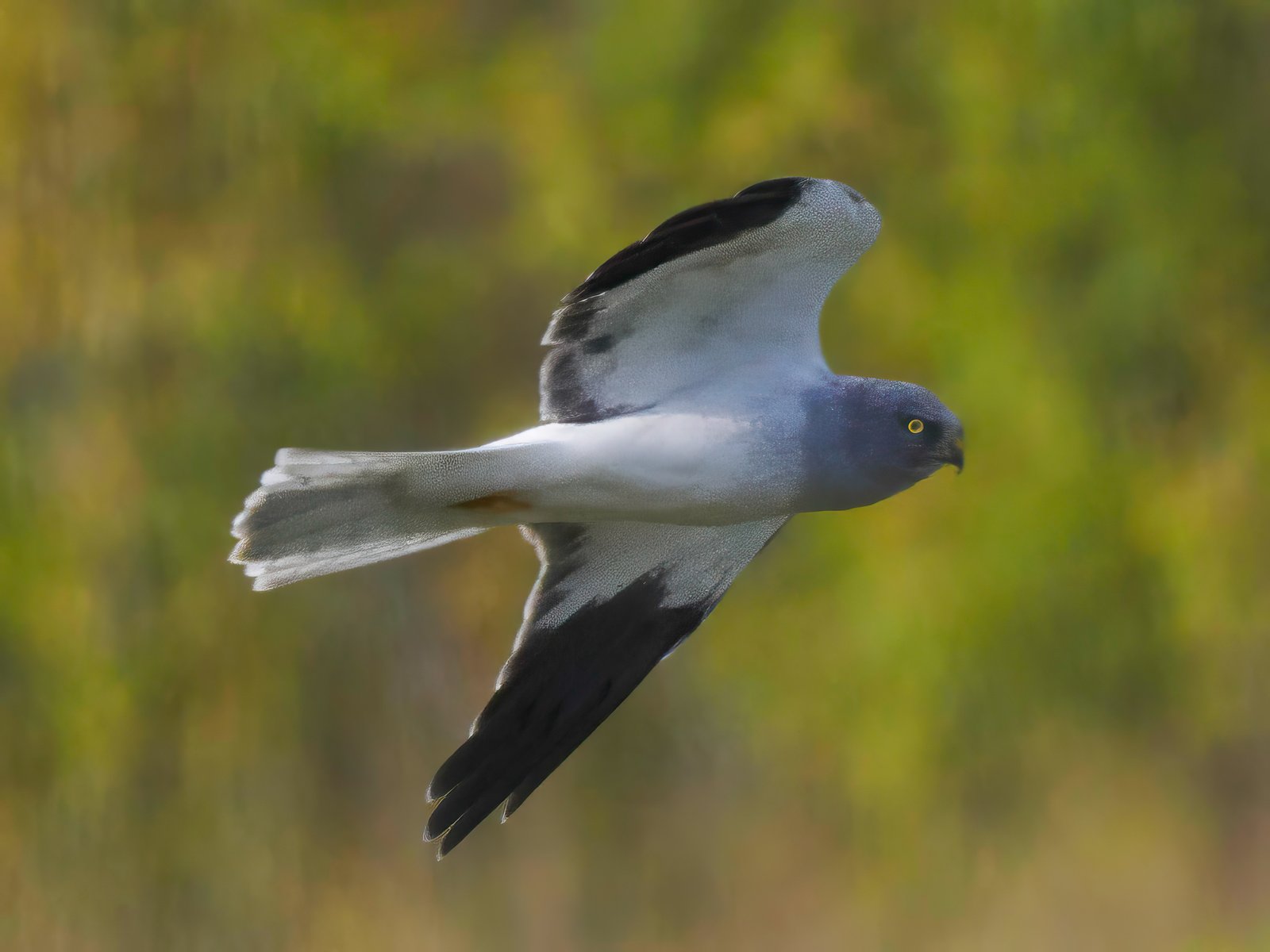
42–52 cm, wingspan 100–120 cm. A fairly bulky harrier with, for its group, broad wings that are rather blunt at the tip with five fingers, and a long, fairly broad tail; hunts low with the wings in a shallow V. The male is pale blue-grey on head, breast and upperparts, white on the belly, with a sharply defined black wingtip over the outer five primaries, a dark grey trailing edge to the wing and a white rump. The female is brown, with a barred tail, a large white rump patch, heavily streaked underparts and a coarsely barred underwing. The juvenile resembles the female but is warmer rufous below.
Confusion species
Pallid Harrier (Circus macrourus) and Montagu's Harrier (Circus pygargus) are slimmer and more pointed-winged, with four fingers on the wingtip. The male Pallid Harrier is whiter, with only a narrow black wedge in the wingtip; the male Montagu's Harrier has a black bar across the secondaries and rufous streaks on the flanks. Females and juveniles of both have a smaller white rump patch and a more sharply marked head. Western Marsh Harrier (Circus aeruginosus) is heavier and the female lacks the white rump.
Habitat
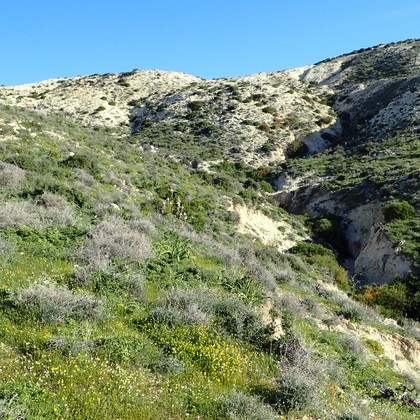
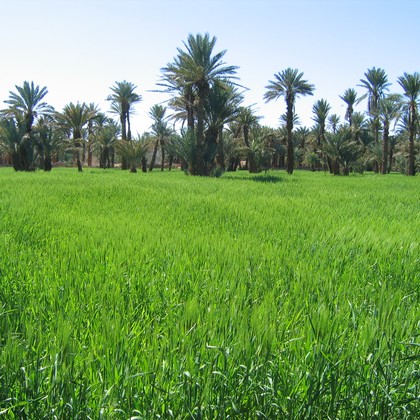
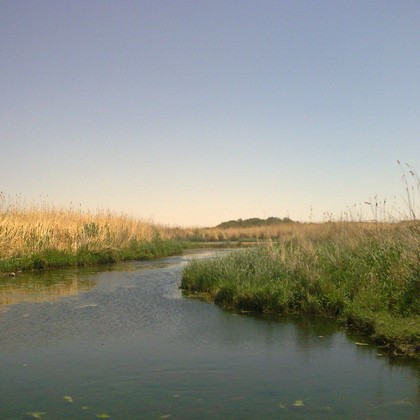
In winter in open, flat country: cereal fields, fallow land, herbaceous steppe, coastal plains, reedbeds and the edges of marshes and lagoons. Often roosts communally on the ground in reeds or tall vegetation. Hunts low for voles and small birds.
Where the bird is most at home, classified by the habitats of North Africa and the Middle East.
Range and movements
In the Maghreb a fairly scarce winter visitor to the coastal plains and high plateaus of northern Morocco, northern Algeria and Tunisia, scarce in northwest Libya and Cyrenaica. In Egypt a scarce winter visitor, mainly in the Nile Delta and along the north coast. In the Levant a fairly common winter visitor in Israel, especially in the north and the Hula Valley, and also in Jordan, Lebanon, Syria and Iraq. In Arabia a scarce passage migrant and winter visitor, most often in northwest Saudi Arabia and in Kuwait; a vagrant in central and eastern Saudi Arabia, the Gulf states and Oman. Beyond the region it breeds from western Europe to eastern Siberia; winters in southern Europe, the Middle East and South and East Asia.
- Resident
- Winter visitor (c. Oct–Mar)
- Passage (Mar–Apr, Oct–Nov)
- dark = core range, pale = thinly spread
How and when to look
The best chance is in winter over the plains and marshes of northern Morocco and northern Israel, late in the afternoon, when the birds come in to their communal roost in the reeds. On brown birds look for the large, square white rump patch.
Conservation status
Not threatened, but declined over much of Europe through agricultural intensification and persecution on moors managed for grouse shooting.
Scientific name
Circus cyaneus | (Linnaeus, 1766)
Linnaeus described the species in 1766 as Falco cyaneus; because it was later moved to another genus, the author and year stand in brackets. The genus Circus was introduced in 1799 by De Lacépède. Circus is from the Ancient Greek kirkos, a bird of prey named for its circling flight. cyaneus is Latin for 'dark blue', after the blue-grey plumage of the male. The specimen the first description was based on came from the area around London.