All species › Pelicans, herons and ibises › Herons and bitterns › Grey Heron
Grey Heron | Ardea cinerea
Blauwe reiger | Garza real
The familiar large grey heron of Europe, which in the region occurs mainly as a winter visitor and passage migrant, from the merjas of Morocco to the coasts of Oman. As a breeder it is scarcer and more scattered here than in Europe, but strikingly it also nests on bare islets and in mangroves along the Red Sea.
Voice
A loud, harsh kraaink or fraank, mainly on take-off and in flight; bill-clattering and hoarse calls in the colony.
Recording: Aku Kalliomäki — CC BY-NC-SA 4.0 · shortened to the first 60 s, mono · xeno-canto
Identification
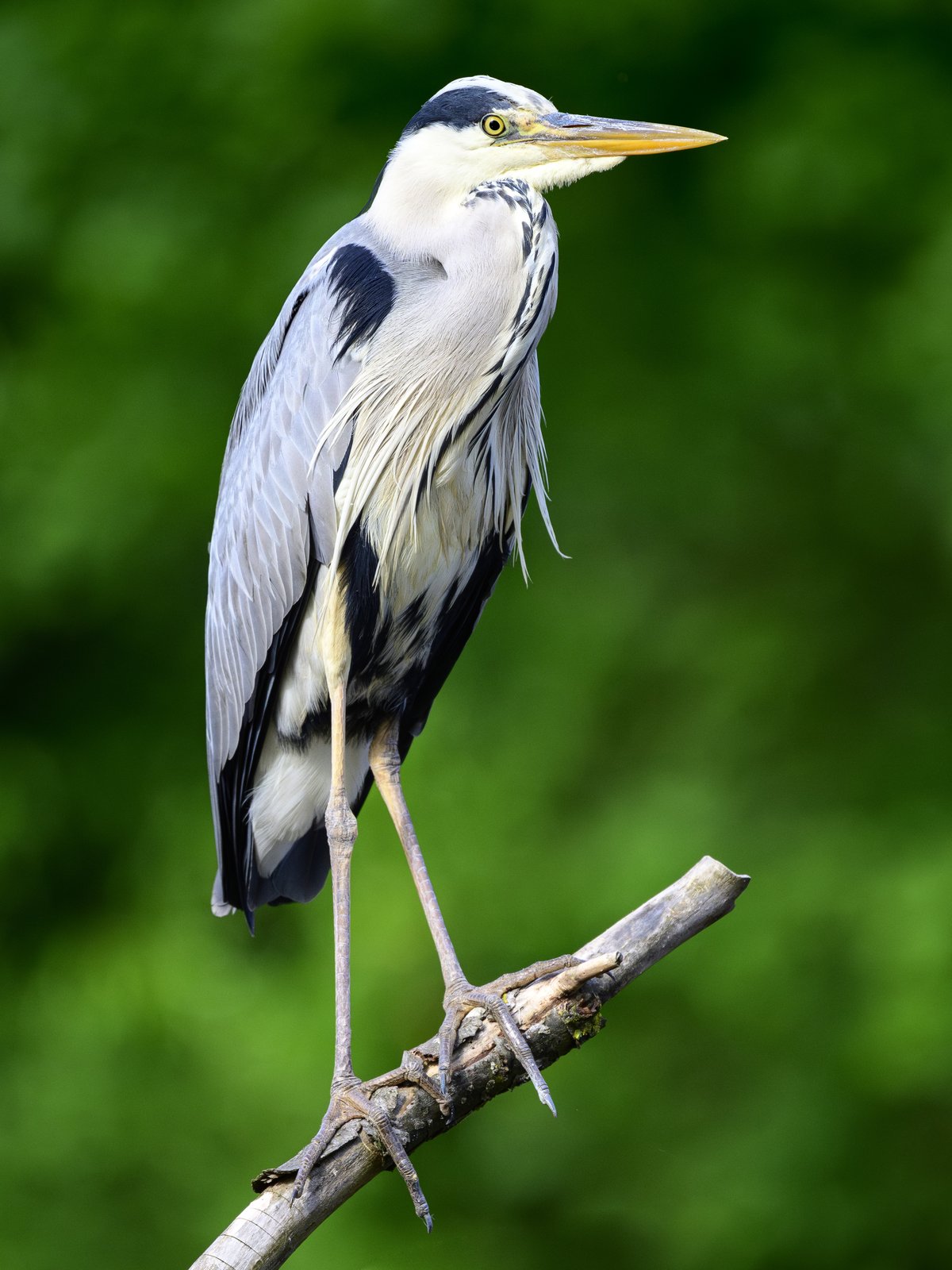
Large, with a long neck and a heavy, dagger-shaped yellow bill. Adults are grey above, with a white head and neck, a broad black stripe from above the eye to the nape ending in a thin black crest, and a line of black streaks down the foreneck; the shoulders have black patches. The legs are yellowish-brown, briefly orange-red in the breeding season like the bill. Juveniles are plainer grey with a grey crown and darker bill. Flight slow and heavy, with bowed wings and retracted neck; the upperwing shows dark flight feathers against grey coverts.
Confusion species
Purple Heron (Ardea purpurea) is smaller, slimmer and darker, with a rufous head and neck. Black-headed Heron (Ardea melanocephala), a vagrant to south-west Arabia, has a black head and hindneck, black legs and a black-and-white underwing in flight. Goliath Heron (Ardea goliath) is much larger and rufous. The dark morph of Western Reef Heron (Egretta gularis) is much smaller, slate-grey with a white throat.
Habitat
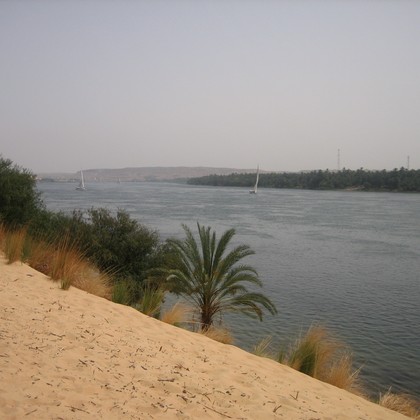
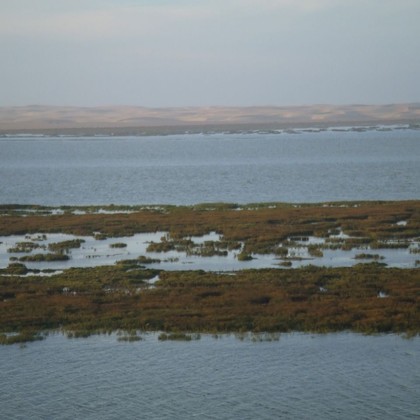
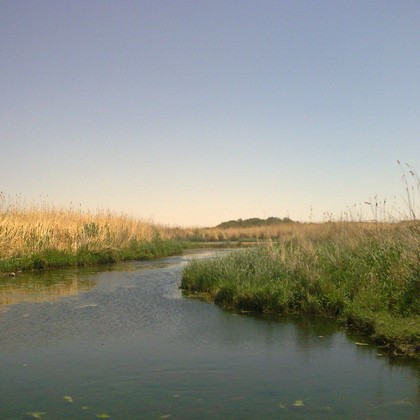
Almost any water with fish: rivers, canals, lakes, reservoirs, fish ponds, marshes, lagoons, tidal flats, rocky shores and mangroves. It hunts standing or slowly stalking, and also takes rodents in fields. Breeds in colonies in tall trees, reeds or, on the Red Sea and in the Gulf, on the ground and in low bushes on islets and in mangroves.
Where the bird is most at home, classified by the habitats of North Africa and the Middle East.
Range and movements
In North Africa it breeds in small numbers in Morocco, northern Algeria (El Kala, Lac Tonga, Lac Fetzara) and Tunisia; in Egypt mainly a winter visitor to the delta lakes and along the Nile, with breeding on the islands of the southern Red Sea. In the east it breeds in the marshes of southern Iraq, in Syria and in small numbers in Israel. In Arabia it breeds on islets and in mangroves along the Red Sea coast of Saudi Arabia (including the Farasan Islands) and Yemen, and locally on islands in the Gulf. In winter widespread across the region: numerous on the wetlands of the Maghreb and the Nile Delta, along the Gulf coast from Kuwait to the Emirates, in Oman and along the Red Sea; also inland at reservoirs and sewage ponds. On passage across the Sahara, with resting birds at oases, and through the Jordan Valley. Beyond the region it breeds across almost all of Europe and Asia and in sub-Saharan Africa, including the pale form monicae on the Banc d'Arguin in Mauritania.
- Resident
- Summer visitor (c. Apr–Sep)
- Winter visitor (c. Oct–Mar)
- Passage (Mar–Apr, Oct–Nov)
- dark = core range, pale = thinly spread
How and when to look
In winter hard to miss along any Gulf coast or lagoon; the mangroves of Abu Dhabi and Khor Kalba, the Egyptian delta lakes and Merja Zerga hold many. For breeding birds in an unusual setting, visit the islets of the Farasan group and other Red Sea islands, where they nest on the ground among terns and reef herons.
Conservation status
Not globally threatened, and greatly increased in Europe after protection. In the region locally threatened by hunting, disturbance of colonies and loss of marshes, as in Iraq in the 1990s; the small breeding populations on the Red Sea islands are vulnerable to disturbance by fishermen and tourism.
Scientific name
Ardea cinerea | Linnaeus, 1758
Linnaeus described the species in 1758 and placed it straight away in the genus where it still stands. He introduced the genus Ardea in that same work. Ardea is the Latin word for 'heron'. cinerea is Latin for 'ash-grey', from cinis 'ashes'. The specimen the first description was based on came from Sweden.