All species › Waders, gulls and terns › Stone-curlews › Great Stone-Curlew
Great Stone-Curlew | Esacus recurvirostris
Grote griel | Alcaraván picogrueso indio
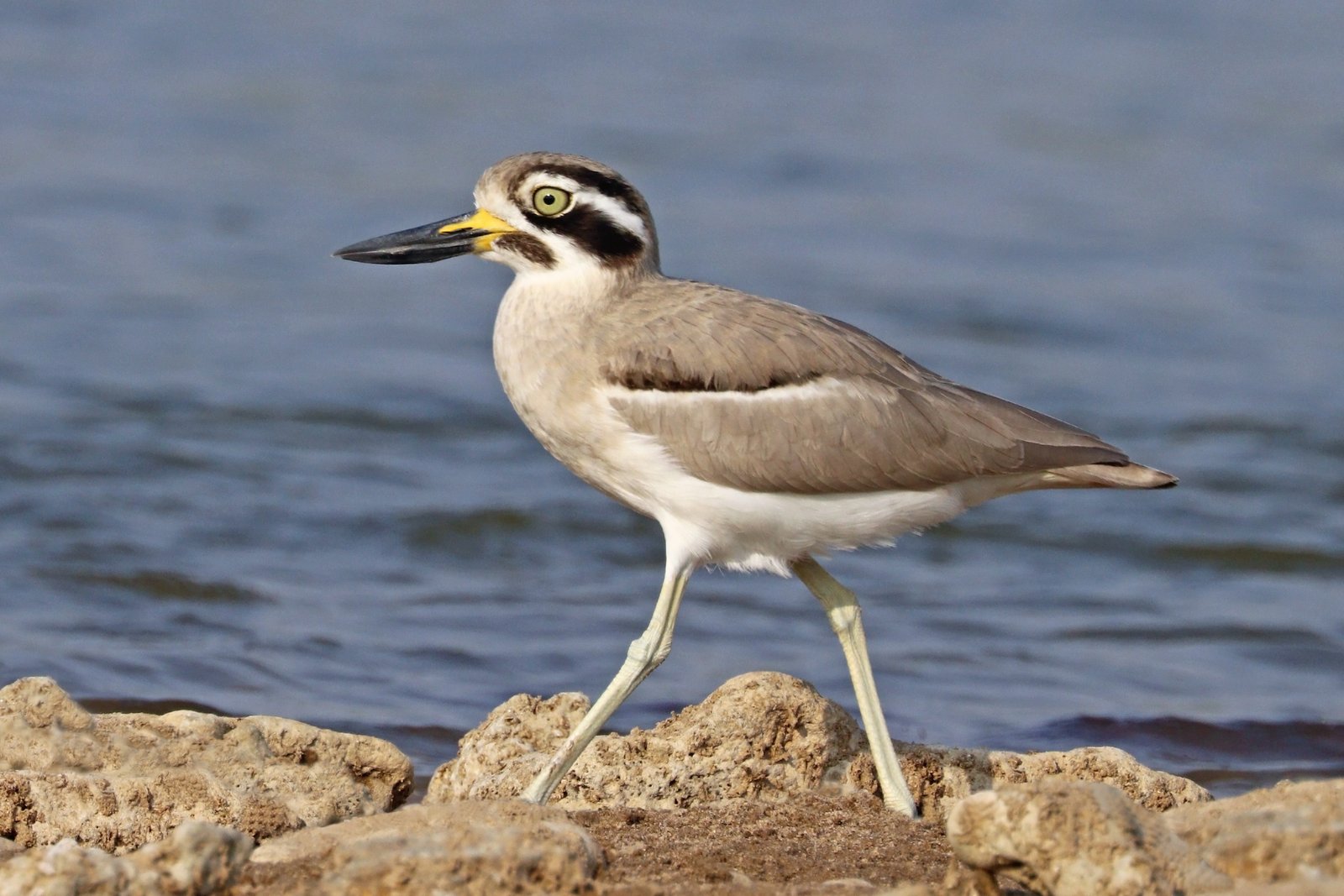
A large, grey-brown thick-knee with a huge, upturned-looking bill, living along rivers and coasts of South Asia and breeding closest to the region in the estuaries of southern Iran. In Arabia it is an extremely rare visitor to the coasts of the Gulf of Oman and the Persian Gulf.
Voice
A plaintive, whistling wee-wee-wee-wee-wheek, rising and then falling away, mainly at dusk and at night; when alarmed a harsh see-eek. Vagrants are usually silent.
Recording: Viral Patel & Pankaj Maheria — CC BY-NC-SA 4.0 · shortened to the first 60 s, mono · xeno-canto
Identification
The largest thick-knee in the region, with a heavy, rounded head and a long, massive bill of about 7 cm that looks slightly upturned because of the angled lower mandible; the bill is black with a yellow base. The upperparts and breast are plain grey-brown, without the streaking of Eurasian Thick-Knee; the rest of the underparts are whitish. The head has a striking black-and-white pattern with a black band through the eye, white supercilium and white band below the eye. The eye is large and bright yellow, the legs dull greenish-yellow. On the folded wing a black bar with a grey panel below it. In flight black primaries with white patches and a largely white underwing.
Confusion species
Eurasian Thick-Knee (Burhinus oedicnemus) is smaller, clearly streaked on the upperparts and breast, with a short yellow bill with a black tip and a less bold head pattern. Senegal Thick-Knee (Burhinus senegalensis) is much smaller, streaked and has a slender, mainly black bill. The bill and the plain grey-brown plumage make Great Stone-curlew practically unmistakable.
Habitat
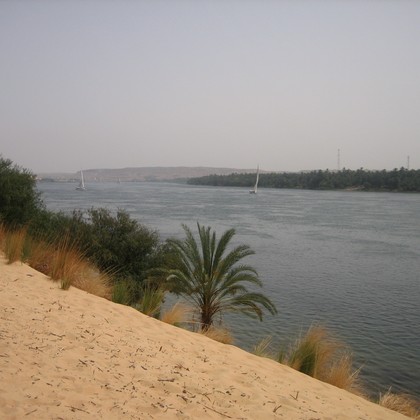
Shingle and sand bars along large rivers, estuaries and rocky or sandy coasts with creeks. In Arabia to be expected on quiet beaches, lagoons and coastal wadi mouths.
Where the bird is most at home, classified by the habitats of North Africa and the Middle East.

Range and movements
In the region an extremely rare vagrant, with a few records in eastern Arabia, mainly in Oman and the United Arab Emirates; no occurrence elsewhere in the region is known. The nearest breeding birds live in the estuaries of southern Iran and the Indus Valley in Pakistan; further resident in India and Sri Lanka and east to Myanmar, Thailand, Cambodia and Vietnam.
How and when to look
Mainly a chance for those who regularly walk the beaches, creeks and wadi mouths of the Batinah coast of Oman and the east coast of the Emirates in winter. Resting birds sit still by day at the edge of the tideline or on a sandbar and only stand out when they fly.
Conservation status
Near Threatened globally: the species is declining through disturbance and development of riverbeds and coasts, sand extraction, dams and disturbance of breeding sites on shingle bars. In the region a very rare vagrant worth reporting to the national rarities committee.
Scientific name
Esacus recurvirostris | (Cuvier, GLCFD, 1829)
Cuvier, GLCFD described the species in 1829 as OEdicnemus recurvirostris; because it was later moved to another genus, the author and year stand in brackets. The genus Esacus was introduced in 1831 by Lesson. Esacus probably derives from Aisakos (Aesacus), a son of Priam who in myth was turned into a diving bird. recurvirostris is Latin for 'with an upturned bill', from recurvus 'bent back' and rostrum 'bill'. The specimen the first description was based on came from Nepal.