All species › Passerines › Chats and flycatchers › Gambaga Flycatcher
Gambaga Flycatcher | Muscicapa gambagae
Gambagavliegenvanger | Papamoscas de Gambaga
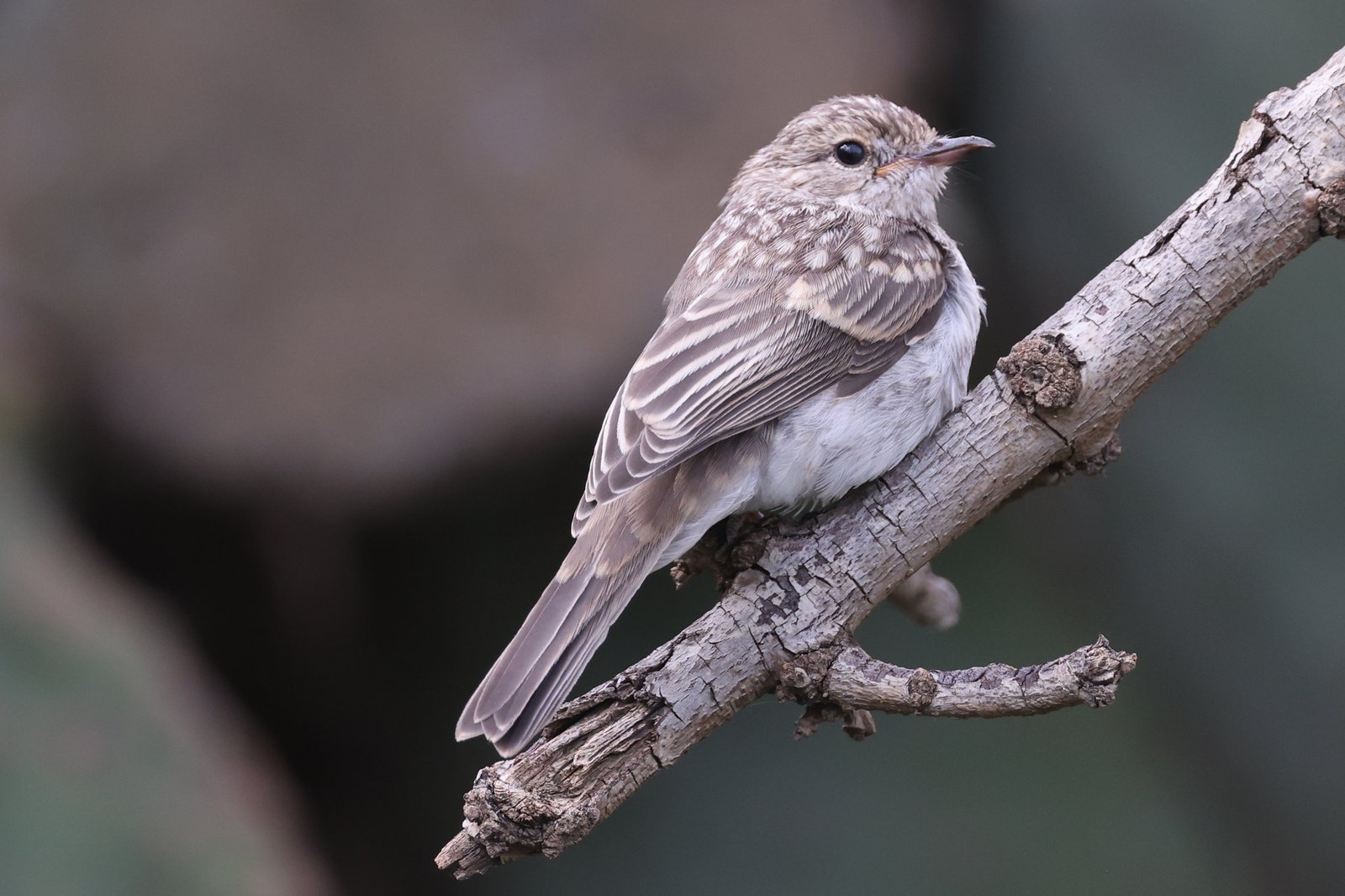
The Gambaga Flycatcher is a small African relative of the Spotted Flycatcher. In this region it is a summer visitor to the acacia woodland of the foothills and highlands of Yemen and south-western Saudi Arabia, where it is easily overlooked among migrating Spotted Flycatchers.
Voice
Call a soft, high tseep and a dry tchek, somewhat flatter than Spotted Flycatcher's. The song is a soft, scratchy series of high notes.
Recording: Gregory Askew — CC BY-NC-SA 4.0 · shortened to the first 60 s, mono · xeno-canto
Identification
12–13 cm, noticeably smaller and more compact than Spotted Flycatcher. Upperparts grey-brown with a plain, unstreaked crown; a narrow pale eye-ring and pale lores. Throat white, breast with faint, smudgy grey-brown spots or a diffuse breast band without sharp streaks, belly white. Wings with pale edges to the greater coverts and tertials, and a short primary projection (about half the tertial length). The bill is short and broad, with a pale base to the lower mandible. Sexes are alike. Behaviour as Spotted Flycatcher: sallying from a low branch and returning.
Confusion species
Spotted Flycatcher (Muscicapa striata), which passes through the same area, is larger, with a streaked crown, more clearly streaked breast and a much longer primary projection. Females of the Ficedula flycatchers have a white wing patch.
Habitat
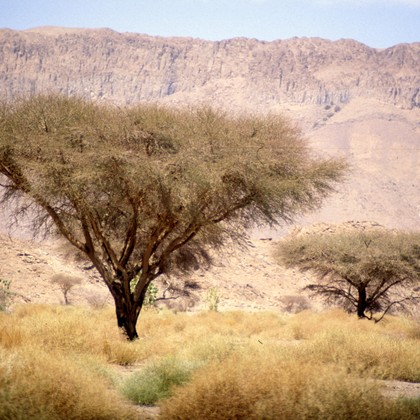
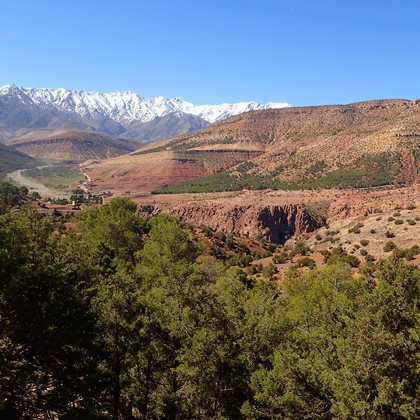
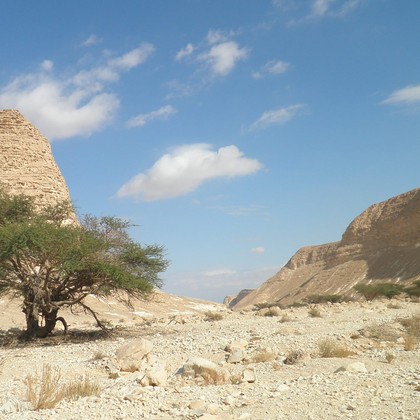
Open acacia woodland and trees in wadis and on terraced slopes and foothills, also single trees around villages; locally in juniper woodland. In Yemen from about 700 to 2,300 m.
Where the bird is most at home, classified by the habitats of North Africa and the Middle East.
Range and movements
In the region only in south-western Arabia: in the western highlands and foothills of Yemen, in many places not uncommon (for example around Al Mahwit and Kawkaban), and in south-western Saudi Arabia in the Asir, where it is scarce but nests have been found. There are no confirmed records from Oman. Presumably winters in the Horn of Africa. Beyond the region an African species with a patchy range in the savanna belt, from Ghana (home of Gambaga, the type locality) and Nigeria via Sudan to Ethiopia, Somalia and Kenya.
- Summer visitor (c. Apr–Sep)
- Winter visitor (c. Oct–Mar)
- Passage (Mar–Apr, Oct–Nov)
- dark = core range, pale = thinly spread
How and when to look
Between April and August in acacia woodland on the terraces west of Sana'a or in the Asir around Abha: look for a small, compact flycatcher with an unstreaked crown. Take care in May, when Spotted Flycatchers are still passing: check the short wing point.
Conservation status
Not globally threatened. The Arabian population is small and little studied; felling and overgrazing of acacia woodland are the main threats.
Scientific name
Muscicapa gambagae | (Alexander, 1901)
Alexander described the species in 1901 as Alseonax gambagae; because it was later moved to another genus, the author and year stand in brackets. The genus Muscicapa was introduced in 1760 by Brisson. Muscicapa is Latin, from musca 'fly' and capere 'to catch'. gambagae refers to Gambaga, a town in northern Ghana. The specimen the first description was based on came from Gambaga, Ghana.