All species › Passerines › Nuthatches › Eastern Rock Nuthatch
Eastern Rock Nuthatch | Sitta tephronota
Grote rotsboomklever | Trepador rupestre oriental
The Eastern Rock Nuthatch is the eastern counterpart of the Western Rock Nuthatch and one of the largest nuthatches in the world. In the region it occurs only in the Kurdish uplands of northern Iraq, at the western edge of a range reaching into Central Asia. Where it lives alongside the Western Rock Nuthatch, the two species have diverged in size and pattern: a textbook case of character displacement.
Voice
Loud, as in Western Rock Nuthatch, but on average lower, fuller and slower. The call is a hard chok or kwit; the song consists of clear whistles, often a slowing or accelerating series tyoo-tyoo-tyoo, and a rattling trill. Where both species occur, the songs are hard to tell apart.
Recording: Frantz Barrault — CC BY-NC-SA 4.0 · converted to mono · xeno-canto
Identification
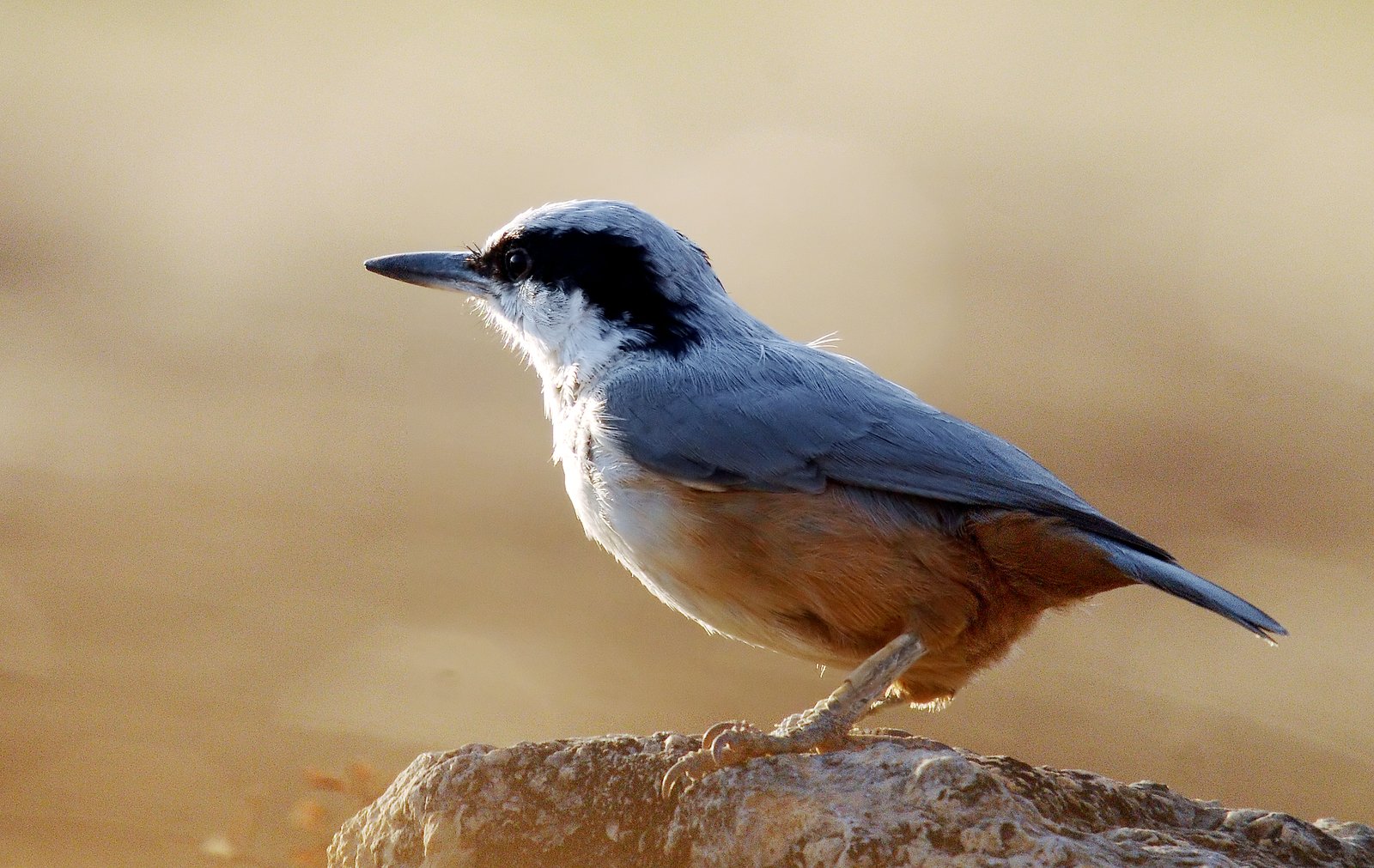
15–16 cm, clearly larger and heavier than Western Rock Nuthatch, with a longer, stronger bill. Upperparts pale blue-grey, underparts white with a warm cream to pale rufous belly and undertail. The black eyestripe is broad and extends far back onto the side of the mantle; the face below it is bright white. Tail plain grey. Iraqi birds belong to the heavy form dresseri, the largest of the species.
Confusion species
Western Rock Nuthatch (Sitta neumayer) is smaller in northern Iraq, with a shorter, finer bill and a narrower eyestripe ending on the side of the neck; note the ratio of head size to bill and the width of the stripe behind the eye. Eurasian Nuthatch (Sitta europaea) is smaller, darker blue-grey with rufous flanks and white tail spots, and climbs tree trunks. Wallcreeper (Tichodroma muraria) has red wing panels and a long decurved bill.
Habitat
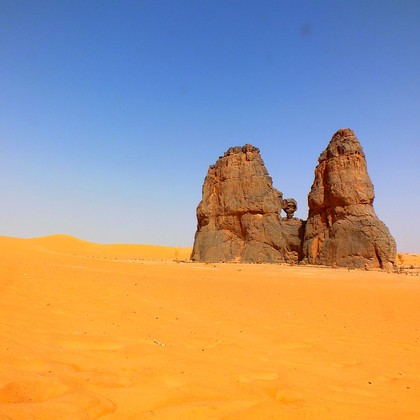
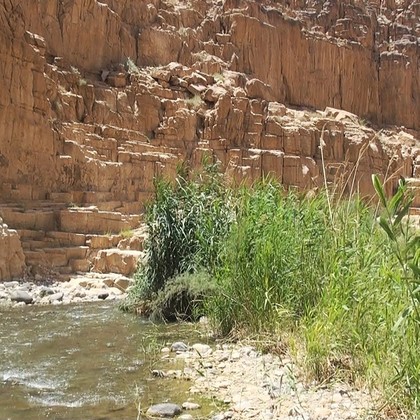
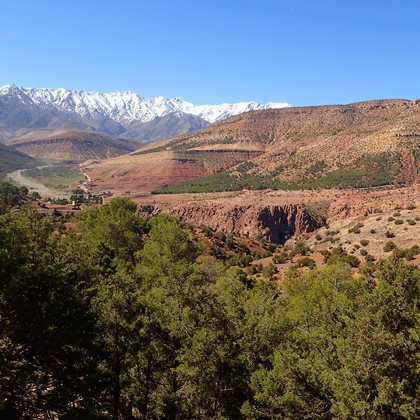
Rocky mountain slopes, gorges and river valleys with scattered trees and bushes such as oak, pistachio and almond, at 600–2,000 m. More often than Western Rock Nuthatch near trees, and sometimes forages on trunks. The mud nest, with a long entrance tube, is placed in a rock crevice, under an overhang or in a hole in a steep face.
Where the bird is most at home, classified by the habitats of North Africa and the Middle East.
Range and movements
In the region only in northern Iraq, in the mountains of Kurdistan (Zagros and Taurus foothills along the borders with Turkey and Iran), where the form dresseri breeds. Occurrence in the far north-east of Syria cannot be ruled out but is unconfirmed. Beyond the region from south-eastern and eastern Turkey and the Caucasus through Iran and Afghanistan to Central Asia and north-western Pakistan.
- Resident
- Summer visitor (c. Apr–Sep)
- Winter visitor (c. Oct–Mar)
- Passage (Mar–Apr, Oct–Nov)
- dark = core range, pale = thinly spread
How and when to look
In Iraqi Kurdistan, for example in the gorges around Rawanduz and Amadiya, rock nuthatches of both species share the same slopes: the loud call leads you there, and a good view of the head with its broad eyestripe and heavy bill decides.
Conservation status
Not globally threatened and fairly common in its large range. Little studied in Iraq because of the long period of unrest in the north; there is no evidence of a marked decline.
Scientific name
Sitta tephronota | Sharpe, 1872
Sharpe described the species in 1872 and placed it straight away in the genus where it still stands. The genus Sitta was introduced in 1758 by Linnaeus. Sitta is the Ancient Greek name sittē for the nuthatch. tephronota is Greek for 'ash-backed', from tephros 'ash-grey' and nōtos 'back'. The specimen the first description was based on came from Kokand, Fergana Valley, Uzbekistan.