All species › Passerines › Sparrows › Desert Sparrow
Desert Sparrow | Passer simplex
Woestijnmus | Gorrión sahariano
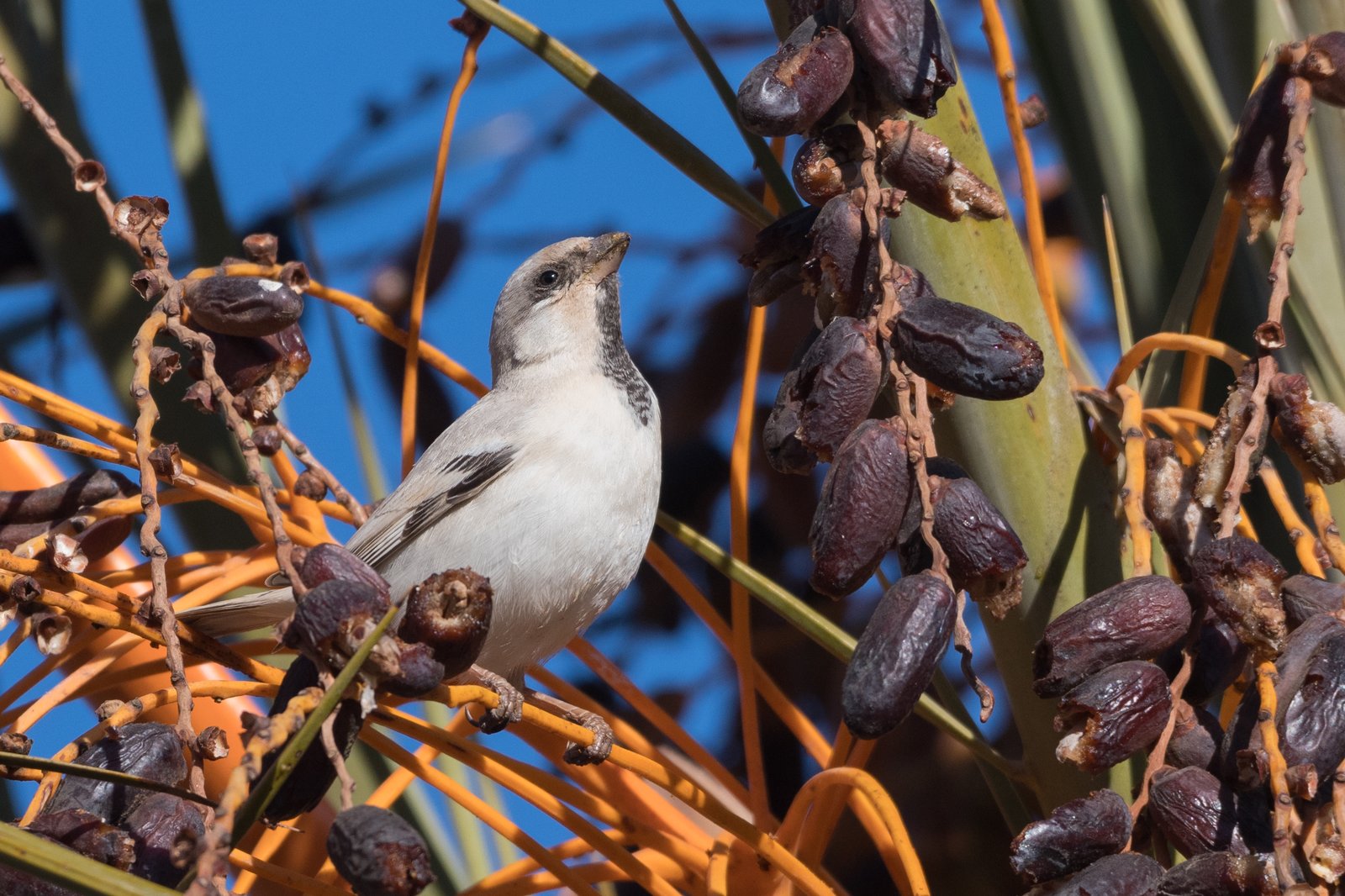
The Desert Sparrow is the pale sparrow of the Saharan dunes, its plain sandy-grey back and snow-white belly blending perfectly with its surroundings. It lives far from large settlements, in dunes with scattered bushes and around small oases, and is a target species for many birders visiting the edge of the Sahara.
Voice
Softer and more musical than other sparrows: a clear, rolling series of chirps from a bush or palm frond, and a short chilp and a fine trill in flight.
Recording: Sven Normant — CC BY-NC-SA 4.0 · converted to mono · xeno-canto
Identification
13–14 cm. Slightly smaller and slimmer than House Sparrow, with a rather heavy conical bill. The male has a plain pale grey crown, nape and back without streaks, pure white underparts, a black lore reaching the eye and a small black bib. The wing is contrasting: black centres to the coverts and flight feathers with broad white or pale fringes. Bill black in the breeding season, horn-coloured otherwise. The female is plain sandy above and off-white below, with no black on the head and less black in the wing. Juveniles resemble the female.
Confusion species
House Sparrow (Passer domesticus) and Spanish Sparrow (Passer hispaniolensis) are browner and have a heavily streaked back. The female may recall a Desert Lark (Ammomanes deserti) or a female Trumpeter Finch (Bucanetes githagineus); the lark has a thinner bill and walks rather than hops, the finch is stockier with a shorter, thicker pink or orange bill. Sudan Golden Sparrow (Passer luteus) is smaller, with yellow in the plumage.
Habitat
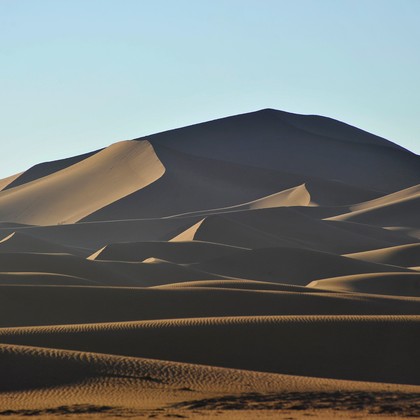
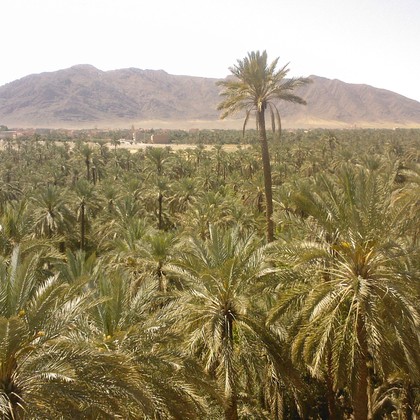
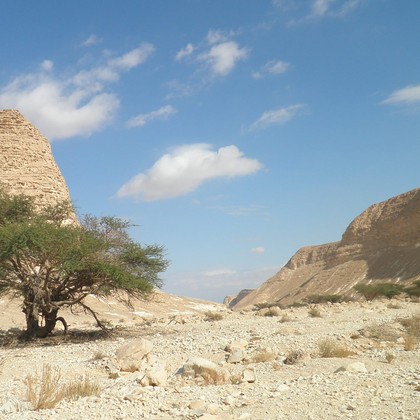
Sand desert with scattered bushes and tamarisks, the edges of ergs (dune seas), small oases and palm groves, and dry wadis with trees. Nests in bushes, palms, holes in walls and sometimes in buildings. Outside the breeding season in small flocks that forage for seeds around watering points and camps.
Where the bird is most at home, classified by the habitats of North Africa and the Middle East.
Range and movements
Resident in south-east Morocco (the Tafilalt around Erg Chebbi and the area of M'Hamid and Erg Chegaga), scarce in Western Sahara, scattered in the Algerian Sahara (Grand Erg Occidental and Oriental, around Béni Abbès, El Menia and Ouargla, and locally further south), in southern Tunisia (Grand Erg Oriental, Ksar Ghilane) and in Libya around Ghadames and in the Fezzan. For Egypt there are old reports from the Western Desert; its present status there is unclear. Beyond the region in the Sahara of Mauritania, Mali, Niger, Chad and Sudan. Zarudny's Sparrow (Passer zarudnyi) of Turkmenistan and Uzbekistan is now treated as a separate species.
- Resident
- Summer visitor (c. Apr–Sep)
- Winter visitor (c. Oct–Mar)
- Passage (Mar–Apr, Oct–Nov)
- dark = core range, pale = thinly spread
How and when to look
The best-known site is the area around Erg Chebbi near Merzouga, where local guides know where to find the birds around small farms and auberges at the edge of the dunes. Go early in the morning, before the heat sets in, and listen for the soft song.
Conservation status
Not globally threatened, but thinly spread and confined to the edge of its range. Locally, disturbance and trapping for the cage-bird trade have probably reduced numbers at tourist sites.
Scientific name
Passer simplex | (Lichtenstein, 1823)
Lichtenstein described the species in 1823 as Fringilla simplex; because it was later moved to another genus, the author and year stand in brackets. The genus Passer was introduced in 1760 by Brisson. Passer is the Latin word for 'sparrow'. simplex is Latin for 'plain, unmarked', for the uniform sandy plumage. The specimen the first description was based on came from Ambukol, Sudan.