All species › Waders, gulls and terns › Sandpipers and snipes › Common Redshank
Common Redshank | Tringa totanus
Tureluur | Archibebe común
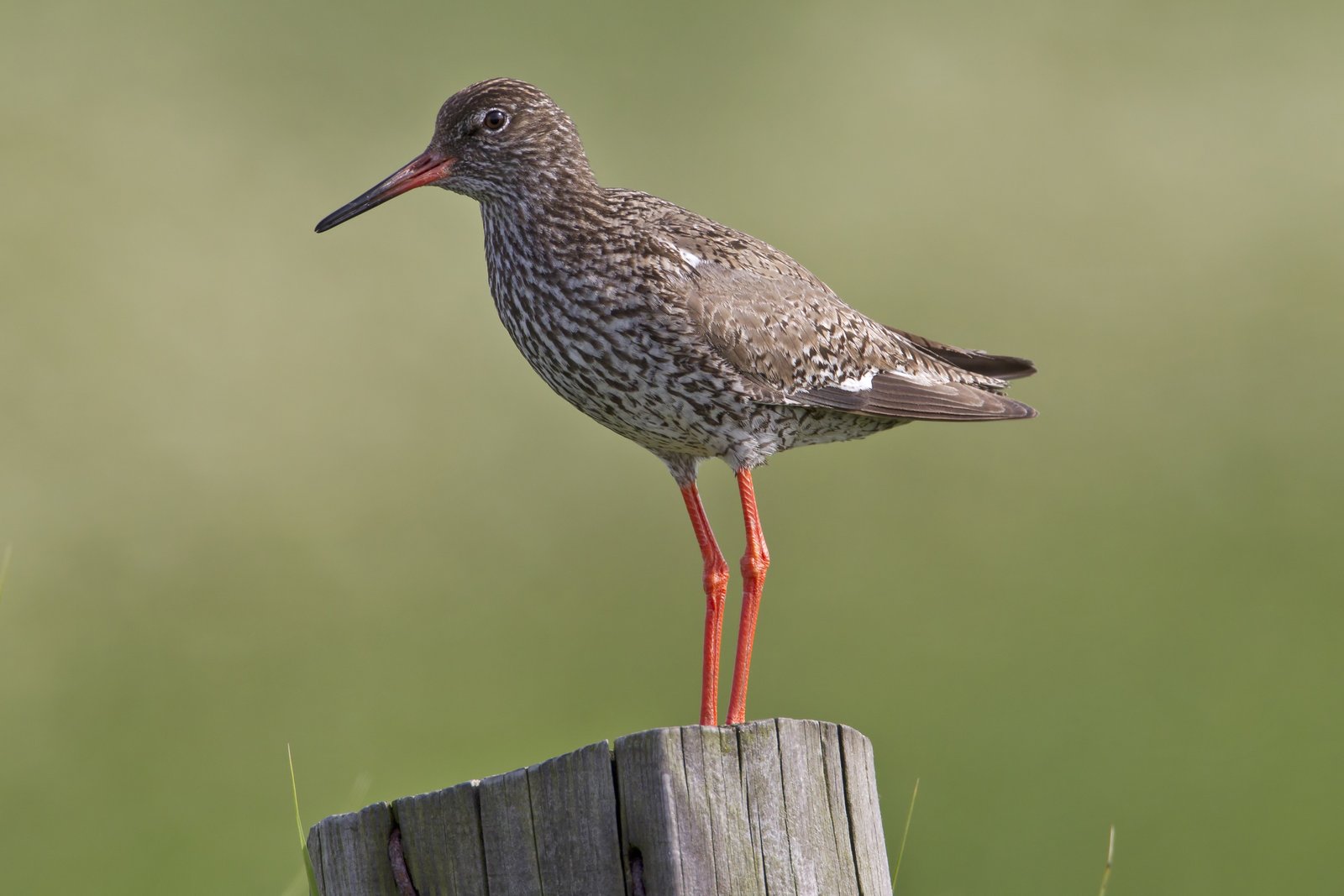
The noisy sentinel of the shore: a medium-sized Tringa with orange-red legs that flies up with shrill alarm calls at the slightest disturbance, warning the whole mudflat. In the region it is one of the most numerous winter waders, from the Atlantic coast of Morocco and the Gulf of Gabès to the tidal flats of the Persian Gulf and Oman.
Voice
A melodious, plaintive tew-hu-hu, usually of two or three syllables with the first highest. When alarmed a persistent, shrill tyuk-tyuk-tyuk, often given before other waders react. In spring a yodelling song in flight.
Recording: Stanislas Wroza — CC BY-NC-SA 4.0 · converted to mono · xeno-canto
Identification
Medium-sized and rather compact, grey-brown with bright orange-red legs and a straight, medium-length bill with a red base and dark tip. In winter plumage plain grey-brown above and white below with a finely streaked breast; in breeding plumage browner and more heavily spotted and streaked. Juveniles have yellow-orange legs and a spotted mantle. Unmistakable in flight: a broad white trailing edge to the wing, a white wedge on the back and a barred tail.
Confusion species
Spotted Redshank (Tringa erythropus) is larger and slimmer, with a longer, finer bill showing red only at the base of the lower mandible, and lacks the white trailing edge in flight; in winter plumage it is paler grey with an obvious white supercilium. Ruff (Calidris pugnax) can have orange legs, but has a shorter, slightly drooping bill, a smaller head and white oval patches at the base of the tail. Juvenile Common Redshanks with yellowish legs can recall Lesser Yellowlegs (Tringa flavipes), which is slimmer and lacks the white trailing edge.
Habitat
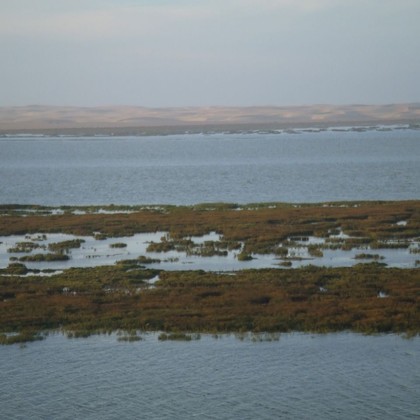
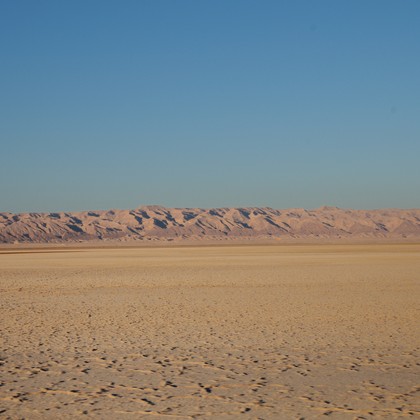
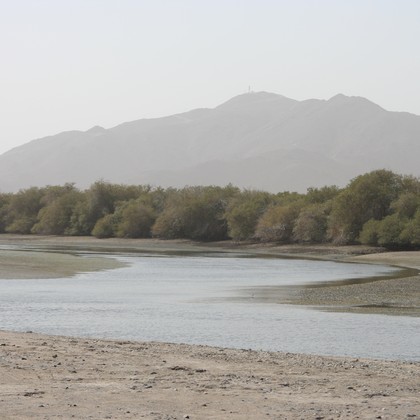
Tidal flats, the muddy edges of lagoons and creeks, mangroves, salt pans and sebkhas along the coast; also shallow inland lakes, sewage ponds and flooded fields. It feeds with quick, jerky pecks and probes in soft mud; at high tide it roosts in flocks on sandbanks and bunds.
Where the bird is most at home, classified by the habitats of North Africa and the Middle East.
Range and movements
One of the most numerous winter visitors on the coasts of the region. Morocco: large numbers along the Atlantic coast, from Merja Zerga and Moulay Bousselham via Oualidia and Sidi Moussa to Khnifiss and Dakhla Bay in Western Sahara. Tunisia: thousands in the Gulf of Gabès, on the Sfax salt pans and on the lagoons of Ichkeul and Tunis; smaller numbers along the Algerian and Libyan coasts. Egypt: on the delta lakes, at Port Said and along the Red Sea. In the east common in the Mesopotamian marshes and on the tidal flats of Kuwait, southern Iraq, Bahrain, Qatar and the Saudi Gulf coast; in the Emirates a very common passage migrant and winter visitor numbering a few thousand birds; in Oman large concentrations at Barr al Hikman and Masirah; also along the Red Sea coasts of Saudi Arabia and Yemen. As a breeder in the region very local and irregular at most. Breeds from Iceland and western Europe to Central and East Asia; also winters on the coasts of western Europe, Africa and South Asia.
- Resident
- Summer visitor (c. Apr–Sep)
- Winter visitor (c. Oct–Mar)
- Passage (Mar–Apr, Oct–Nov)
- dark = core range, pale = thinly spread
How and when to look
In winter the tidal flats of Barr al Hikman in Oman, Dakhla Bay and the Gulf of Gabès hold thousands of Common Redshanks among other waders. Stand on a bund or viewpoint on a rising tide, as the birds are pushed closer. Listen to the alarm too: where redshanks call shrilly, a raptor is often about.
Conservation status
Not globally threatened (LC), but it has declined sharply in parts of Europe through the loss of wet grasslands and agricultural intensification. In the region the key tidal flats and lagoons suffer from land reclamation, port construction and coastal development, especially in the Gulf; Barr al Hikman, the Gulf of Gabès and Dakhla Bay are of international importance for the species.
Scientific name
Tringa totanus | (Linnaeus, 1758)
Linnaeus described the species in 1758 as Scolopax Totanus; because it was later moved to another genus, the author and year stand in brackets. The genus Tringa was introduced in 1758 by Linnaeus. Tringa is the Neo-Latin name Aldrovandi gave to the green sandpiper, after Ancient Greek trungas, a thrush-sized, white-rumped, tail-bobbing wading bird mentioned by Aristotle. totanus comes from totano, an Italian folk name for this bird. The specimen the first description was based on came from Sweden.