All species › Waders, gulls and terns › Sandpipers and snipes › Buff-Breasted Sandpiper
Buff-Breasted Sandpiper | Calidris subruficollis
Blonde ruiter | Correlimos canelo
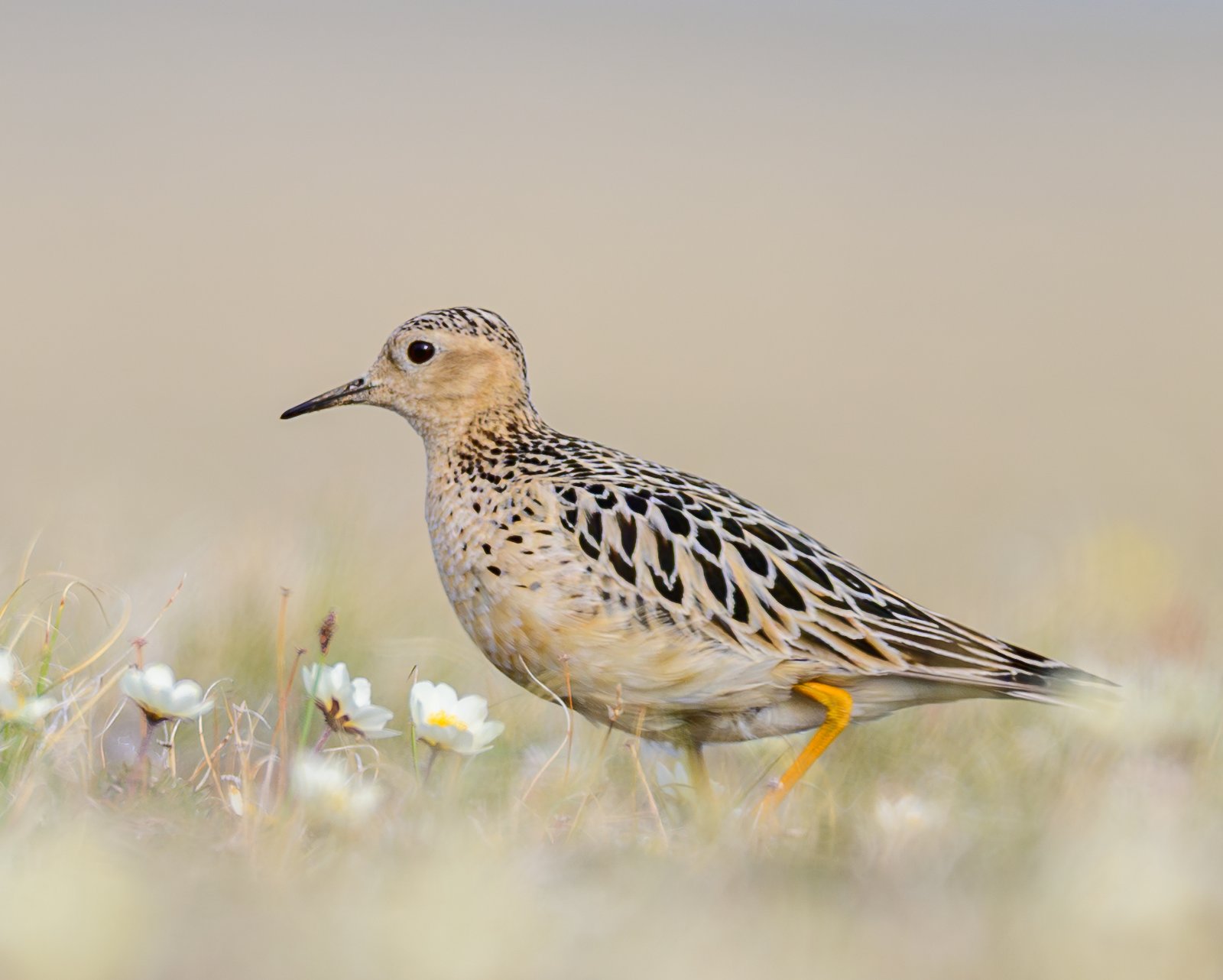
A slender, plover-like American sandpiper with a dove-like head and plain buffy underparts. In the region it is an extremely rare vagrant, with only a handful of records from Morocco's Atlantic coast to Oman.
Voice
Usually silent; in flight a soft, low preet or a dry tik.
Recording: Paul Kelly — CC BY-NC-SA 4.0 · converted to mono · xeno-canto
Identification
Slim and small-headed, with a short, thin black bill, large dark eyes in a plain pale face and bright ochre-yellow legs. The entire underparts are warm buff, with fine dark spotting on the breast sides; the upperparts are scaled with dark feather centres and pale fringes. In flight an unmarked upperwing without a wing bar and a striking white underwing with a dark mark on the primary coverts, often shown as the bird raises its wings.
Confusion species
A juvenile Ruff (Calidris pugnax) is also buffy, but clearly larger, with a longer bill and legs, and in flight a narrow wing bar and white oval patches on the tail sides. Baird's Sandpiper (Calidris bairdii), a vagrant elsewhere, has black legs and long wings projecting well beyond the tail. American Golden-Plover (Pluvialis dominica) is larger, with a plover bill and a greyer pattern. The plain, open face with the dark eye is the best feature.
Habitat
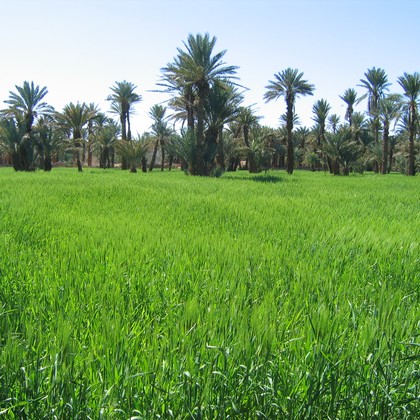
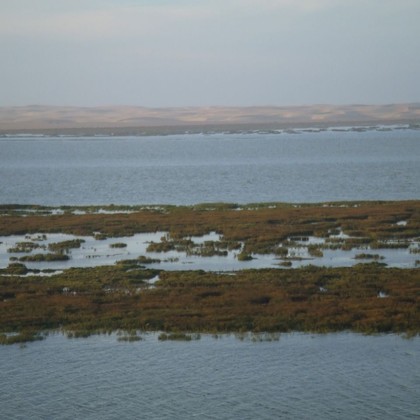
Short grassland, fields, lawns, golf courses and dried-out margins of lakes and estuaries; it feeds more on dry ground than other sandpipers and moves in quick dashes like a small plover.
Where the bird is most at home, classified by the habitats of North Africa and the Middle East.
Range and movements
Extremely rare. In Morocco the first record was accepted from the Oued Souss estuary near Agadir (26 September 1998), and in Oman it is on the list as an accidental vagrant. Elsewhere in the region there are at most a few isolated reports; it is most to be expected along Morocco's Atlantic coast and on the lawns and sewage ponds of the Gulf states. Beyond the region it breeds on the tundra of Alaska and Arctic Canada and winters on the pampas of South America; an annual vagrant to western Europe.
How and when to look
The best chances are in September–October after westerly gales, on short grass near the Moroccan coast (Souss-Massa, Oualidia). In the Gulf states American vagrants are often found on golf courses and lawns; look there for a small buffy bird among the golden plovers and Ruffs.
Conservation status
Vulnerable. The world population is small and declining through loss of grasslands in the South American wintering areas and along the migration route through the American prairies. In the region it is an extremely rare vagrant facing no specific threats.
Scientific name
Calidris subruficollis | (Vieillot, 1819)
Vieillot described the species in 1819 as Tringa subruficollis; because it was later moved to another genus, the author and year stand in brackets. The genus Calidris was introduced in 1804 by Merrem. Calidris goes back to Ancient Greek kalidris or skalidris, a name Aristotle used for an unidentified grey waterside bird. subruficollis joins Latin subrufus 'reddish' — from sub 'somewhat' and rufus 'rufous' — to collum 'neck'. The specimen the first description was based on came from Paraguay.