All species › Waders, gulls and terns › Gulls and terns › Black-Headed Gull
Black-Headed Gull | Chroicocephalus ridibundus
Kokmeeuw | Gaviota reidora
Europe's familiar small gull is mainly a winter visitor in the region, but one of the most numerous and widespread: from Moroccan harbours to the Nile at Aswan and the coasts of the Gulf and Oman. It is the yardstick against which the region's other small gulls are judged.
Voice
A hoarse, grating kree-ah or kwarr and a short kek; flocks keep up a constant screaming, especially when squabbling over food.
Recording: Grzegorz Lorek — CC BY-NC-SA 4.0 · converted to mono · xeno-canto
Identification
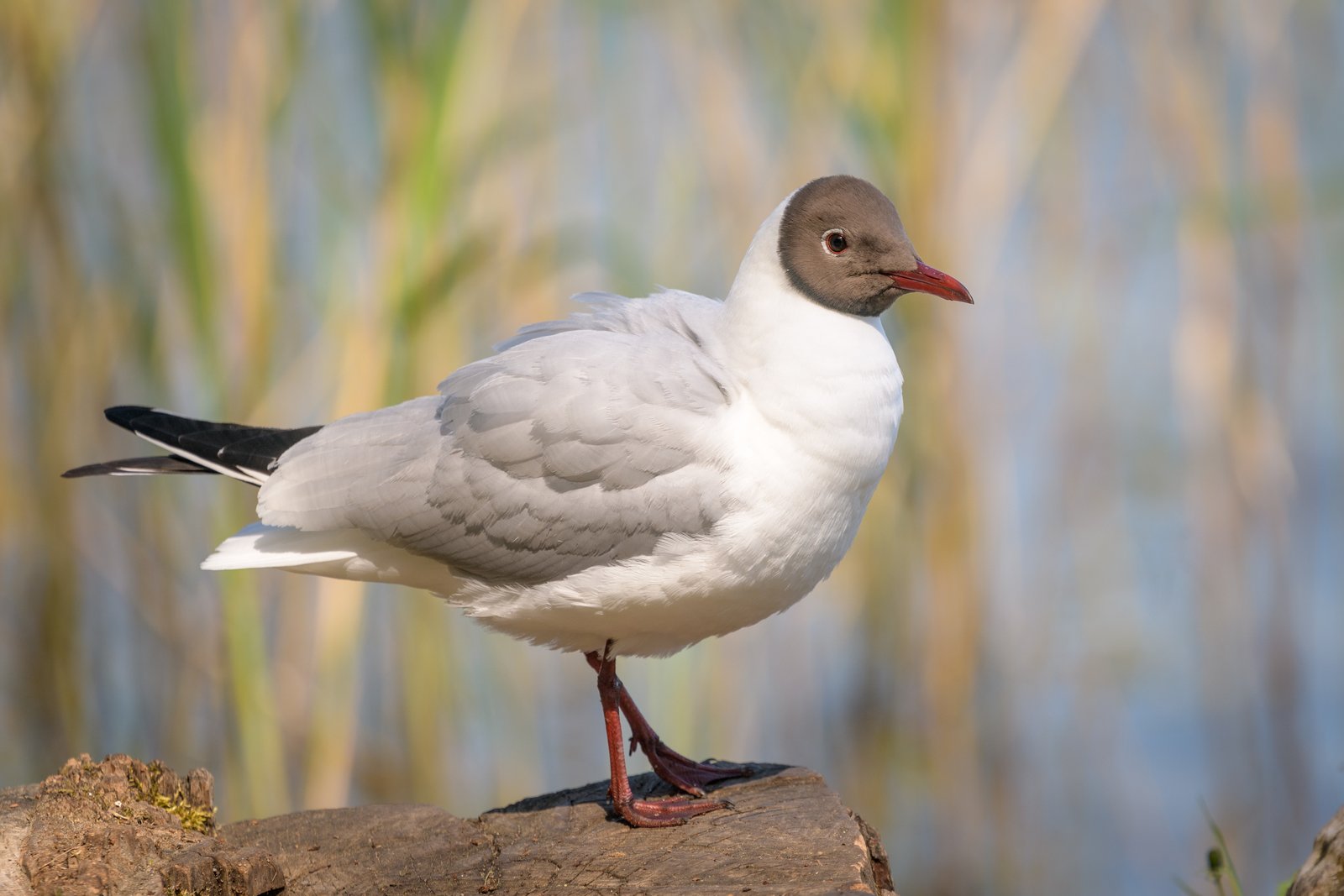
A small, light gull with a pale grey mantle and a conspicuous white leading edge to the outer wing, bordered by a narrow black trailing edge to the primaries; from below the inner primaries are dark. In breeding plumage (already from February–March in some wintering birds) a chocolate-brown hood that does not reach the nape, with a narrow white eye-ring. In winter a white head with a dark ear spot and often two faint smudges across the crown. Bill and legs dark red, the bill with a black tip in winter. First-years have a brown wing bar, a black tail band and an orangey bill with a dark tip.
Confusion species
Slender-billed Gull (Chroicocephalus genei) has the same wing pattern but a longer head and bill, a pale eye and at most a faint ear spot. Mediterranean Gull (Ichthyaetus melanocephalus) is bulkier with a heavier bill and as an adult has all-white wingtips; in breeding plumage a true black hood extending far onto the rear of the head. Little Gull (Hydrocoloeus minutus) is much smaller with dark underwings and no white leading edge. The rare Franklin's Gull (Leucophaeus pipixcan) has a dark mantle and a half-hood in winter.
Habitat
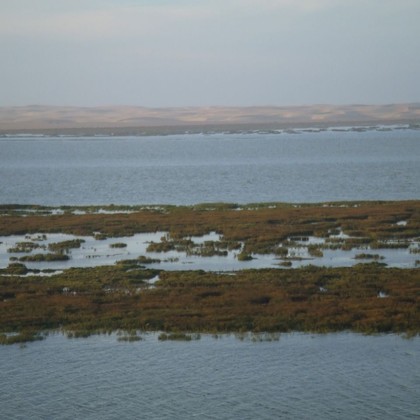
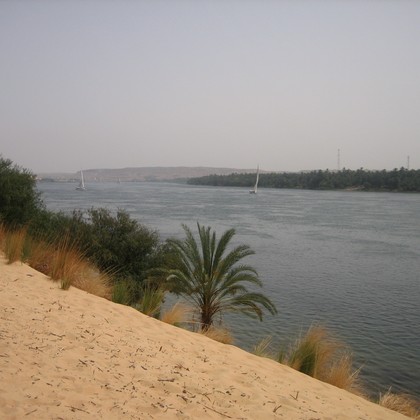
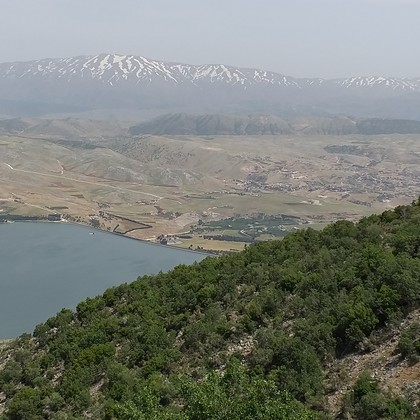
Harbours, beaches, lagoons, salt pans, rivers and reservoirs, but also fields, rubbish tips, fish farms and city parks; an opportunistic feeder, swimming, walking and flying. Inland mainly along the Nile, the Euphrates and Tigris and at large reservoirs and sewage works.
Where the bird is most at home, classified by the habitats of North Africa and the Middle East.
Range and movements
A common winter visitor along the entire Mediterranean coast from Morocco to the Levant and along Morocco's Atlantic coast south to Western Sahara. In Egypt in large numbers in the Nile Delta and along the Nile upstream to Luxor and Lake Nasser. In the east numerous in Israel, Lebanon, Syria and Iraq (also inland on the marshes and along the rivers) and in the Persian Gulf from Kuwait to the Emirates, and further along the coasts of Oman, the Saudi and Yemeni Red Sea coast and the Gulf of Aden. Scarce in the Arabian and Saharan interior, at oases, sewage ponds and irrigation lakes. Does not breed in the region, or only incidentally. Beyond the region it breeds from Iceland and western Europe to Kamchatka and winters to West Africa, East Africa, India and Southeast Asia.
- Resident
- Summer visitor (c. Apr–Sep)
- Winter visitor (c. Oct–Mar)
- Passage (Mar–Apr, Oct–Nov)
- dark = core range, pale = thinly spread
How and when to look
Easy to find in any harbour or lagoon between November and March. Use flocks of Black-Headed Gulls to search for rarer species: both the Franklin's Gull at Luxor and the one at Merzouga turned up among them. In the Gulf and Oman it is the comparison species for learning Slender-billed Gull.
Conservation status
Not globally threatened, although it has declined in parts of Europe. In the region it benefits from harbours, rubbish tips and fish farms and faces few threats; on some wetlands it is shot along with other waterbirds.
Scientific name
Chroicocephalus ridibundus | (Linnaeus, 1766)
Linnaeus described the species in 1766 as Larus ridibundus; because it was later moved to another genus, the author and year stand in brackets. The genus Chroicocephalus was introduced in 1836 by Eyton. Chroicocephalus combines the Ancient Greek khrōikos 'coloured' with -kephalos '-headed'. ridibundus is Latin for 'laughing', after the strident call. The specimen the first description was based on came from European seas.