All species › Waders, gulls and terns › Gulls and terns › African Skimmer
African Skimmer | Rynchops flavirostris
Afrikaanse schaarbek | Rayador africano
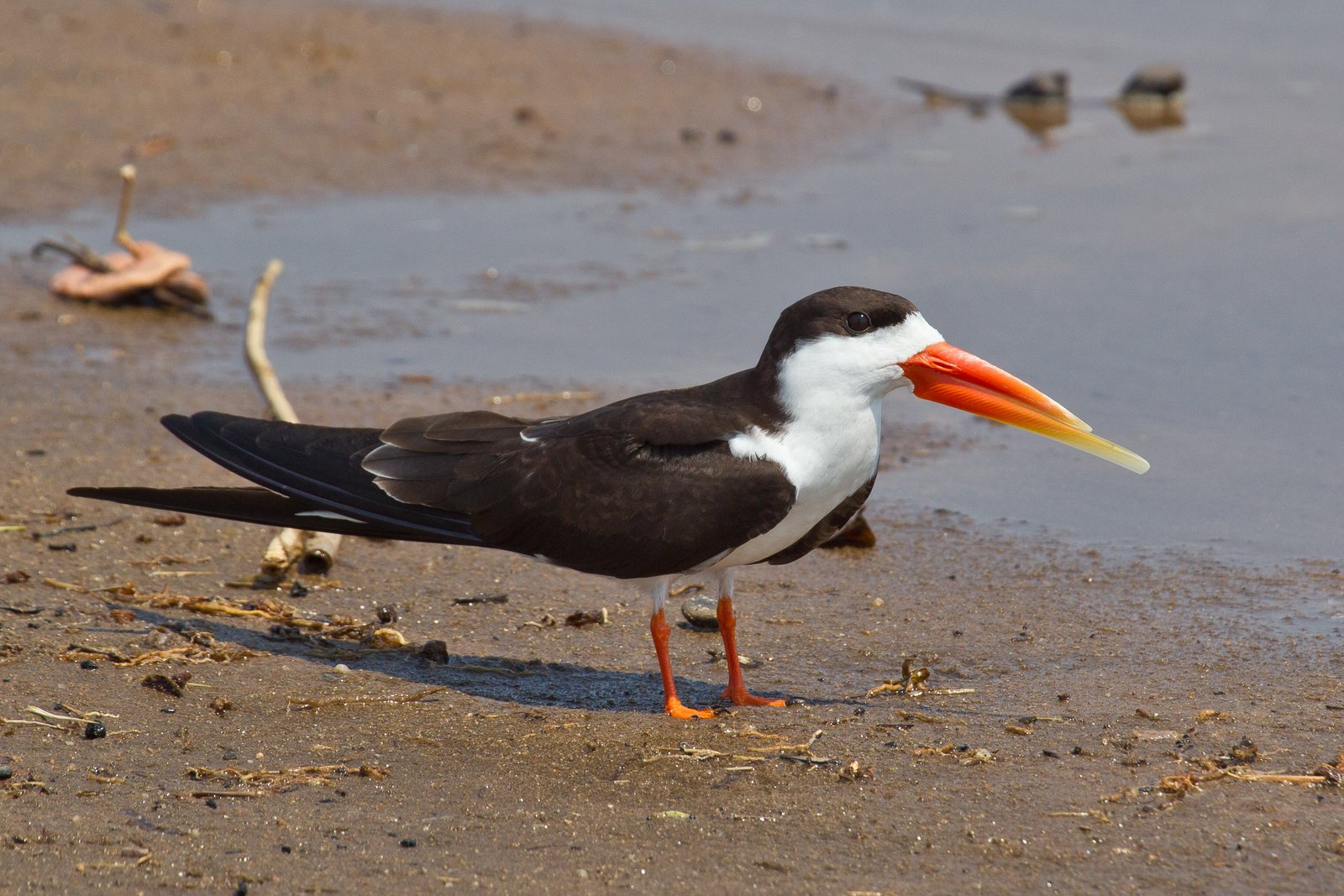
A striking, tern-like bird with a unique bill: the lower mandible is much longer than the upper, and it skims low over the water in flight to scoop up fish. It is a bird of the large African rivers south of the Sahara; in the region it formerly occurred along the Nile in Upper Egypt, but today it is an extremely rare vagrant here.
Voice
A sharp, short kip or kik, often in series, and a shrill yapping in flocks; heard mainly when a roost is disturbed.
Recording: Phil Gregory — CC BY-NC-SA 4.0 · converted to mono · xeno-canto
Identification
Upperparts, cap and hindneck dark blackish-brown, forehead, cheeks and underparts bright white. The long, laterally compressed bill is orange-red with a yellowish tip; the lower mandible clearly projects beyond the upper. Short red legs. Outside the breeding season the hindneck is whiter, forming a white collar. Juveniles are browner with pale fringes on the upperparts and a duller, shorter bill. In flight long, narrow wings with a white trailing edge and a short, slightly forked tail; flies with slow, deep beats low over the water.
Confusion species
Its bill and feeding method rule out confusion with any other species in the region. At a distance and at rest it may recall a dark tern such as Caspian Tern (Hydroprogne caspia), which also has a red bill but a grey mantle and black cap. The American Black Skimmer (Rynchops niger) does not occur in the region.
Habitat
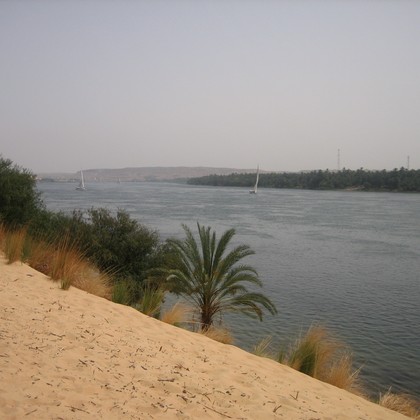
Large, slow-flowing rivers and lakes with bare sandbars and islets, where it rests and breeds. Feeds mainly at dusk and in calm weather, low over smooth water with the lower mandible slicing the surface. In the region to be expected on the Nile and Lake Nasser.
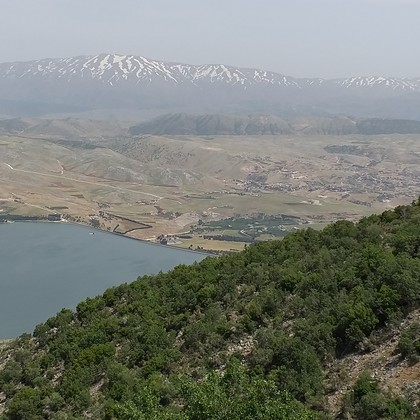
Where the bird is most at home, classified by the habitats of North Africa and the Middle East.
Range and movements
In the region known only from Egypt. In the nineteenth century it occurred regularly along the Nile in Upper Egypt, possibly as a breeder; during the twentieth century it became ever rarer and since then there have been only a few records, mainly in the south around Lake Nasser. The most recent documented record dates from 2013; a report from the Pyramids of Giza in 2022 is considered doubtful. Beyond the region it breeds along the large rivers and lakes of sub-Saharan Africa, from Senegal and Sudan to Angola and northern South Africa; north to the Nile in Sudan.
How and when to look
A sighting in the region is a great exception. The best chance is the south of Lake Nasser near Abu Simbel, with its sandy islands, especially after a period of records in northern Sudan. Search the shores at dawn and dusk, when the birds skim low over the water.
Conservation status
Not globally threatened, but the population is declining as dams flood sandbars, people and livestock disturb breeding sites, and water levels fluctuate. Its disappearance from Egypt is linked to the regulation of the Nile, which largely removed the seasonal sandbars.
Scientific name
Rynchops flavirostris | Vieillot, 1816
Vieillot described the species in 1816 and placed it straight away in the genus where it still stands. The genus Rynchops was introduced in 1758 by Linnaeus. Rynchops comes from the Greek rhunkhos, 'bill', and ōps, 'face' — a 'bill-face', for the striking bill with its much longer lower mandible. flavirostris comes from the Latin flavus, 'yellow', and rostrum, 'bill' — for the orange-yellow bill. The specimen the first description was based on came from Senegal.