All species › Cranes, rails and allies › Rails and crakes › Yellow-breasted Crake
Yellow-breasted Crake | Laterallus flaviventer
Geelbuikporseleinhoen | Polluela pecho amarillo
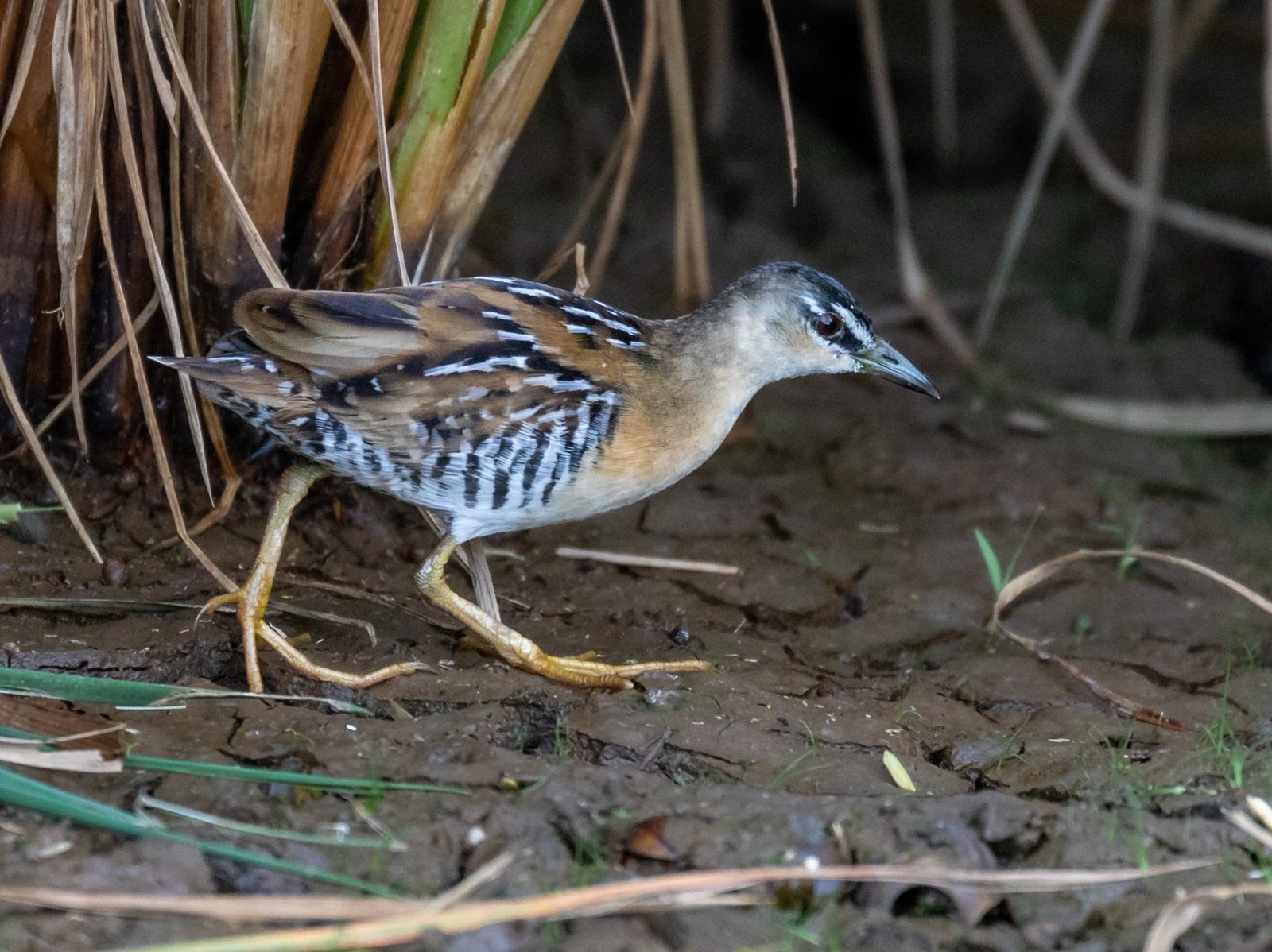
The Yellow-breasted Crake is one of the smallest rails in the region, barely larger than a sparrow. It lives in dense, low marsh vegetation and floating plants and is usually noticed only when it flutters briefly over the vegetation or walks across floating leaves. The Greater Antilles have their own subspecies, one on Cuba and Jamaica and another on Hispaniola and Puerto Rico.
Voice
A low, harsh, rolling series, something like k'kuk kurr-kurr, and a high, whistled peep. It calls mainly at dusk and at night.
Recording: Juan Freile — CC BY-NC-SA 4.0 · shortened to the first 60 s, mono · xeno-canto
Identification
12–14 cm, small and short-tailed, with a short dark bill. The face is buffy yellow, with a dark eye-stripe and a pale, whitish supercilium; the crown is dark. This head pattern is unique among the rails of the New World. The upperparts are brown, with black and white streaks and spots. Throat and breast are pale yellow to buff, the flanks and undertail barred black and white. The legs are yellow. The sexes are alike. In its weak, short flight the yellow legs dangle.
Confusion species
Black Rail Laterallus jamaicensis is just as small, but slate grey with white speckles on the back, a rufous nape and a red eye, and lacks any yellow tones. Sora Porzana carolina is larger, grey and brown, with a yellow bill and no supercilium. In Trinidad, Grey-breasted Crake Laterallus exilis is grey on the head and breast, with a chestnut nape.
Habitat
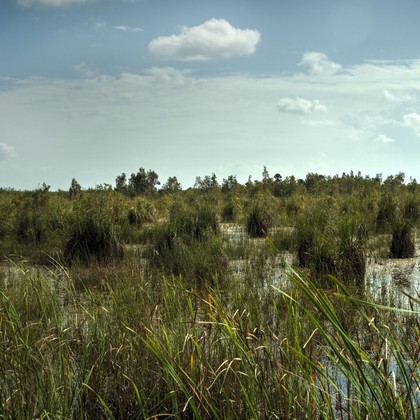
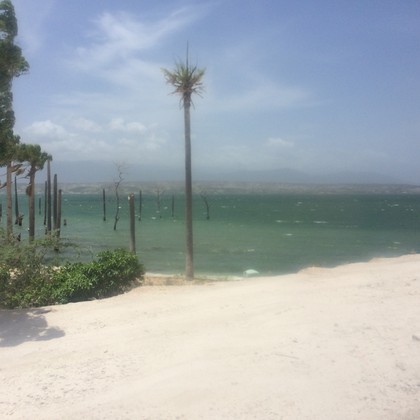
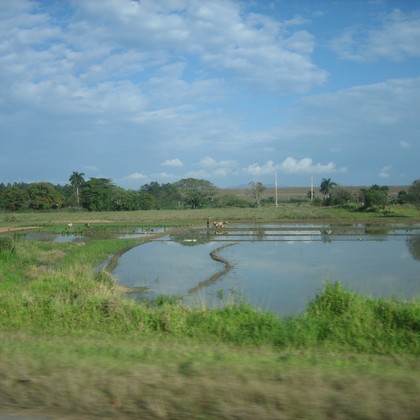
Freshwater marshes and the edges of ponds and canals with low, dense vegetation and floating plants such as water hyacinth and water lilies; also flooded meadows, rice fields and ditches with dense vegetation. It eats insects, spiders and small snails, picked from plants and floating leaves. The nest is a woven ball of plant material in floating vegetation or reeds.
Where the bird is most at home, classified by the vegetation types of the Caribbean.
Range and movements
Resident in Cuba, Jamaica, Hispaniola (mainly the Dominican Republic; few data from Haiti), Puerto Rico and Trinidad. Scarce and local on all islands and probably often overlooked. Not known from Tobago or the Lesser Antilles. Outside the region from Mexico through Central America to northern Argentina, locally and with large gaps in the range.
- Resident
- Winter visitor (c. Apr–Sep)
- dark = core range, pale = thinly spread
How and when to look
In Puerto Rico most often reported from the nature reserves of Humacao, Boquerón, Caño Tiburones and Laguna Cartagena; in Cuba from the marshes of the Zapata Peninsula. The best chance is in calm weather at the edge of a marsh with floating plants, early in the morning or late in the afternoon, when the bird briefly comes out onto open leaves. Flushed birds flutter a few metres and drop back in.
Conservation status
Not threatened and locally common in much of its range. On the islands the species depends on freshwater marshes and small wetlands, which in many places are being drained or filled in; introduced predators such as mongooses may also play a part.
Scientific name
Laterallus flaviventer | (Boddaert, 1783) (GBIF: Porzana flaviventer)
Boddaert described the species in 1783 as Rallus flaviventer; because it was later moved to another genus, the author and year stand in brackets. The genus Laterallus was introduced in 1855 by Gray. Laterallus is a contraction of Rallus lateralis, an old synonym of the Rufous-sided Crake; Latin lateralis 'of the side' refers to the coloured flanks. flaviventer is Latin, from flavus 'yellow' and venter 'belly', after the yellowish underparts. The specimen the first description was based on came from Cayenne, French Guiana.