All species › Hummingbirds and swifts › Swifts › White-collared Swift
White-collared Swift | Streptoprocne zonaris
Witkraaggierzwaluw | Vencejo cuello blanco
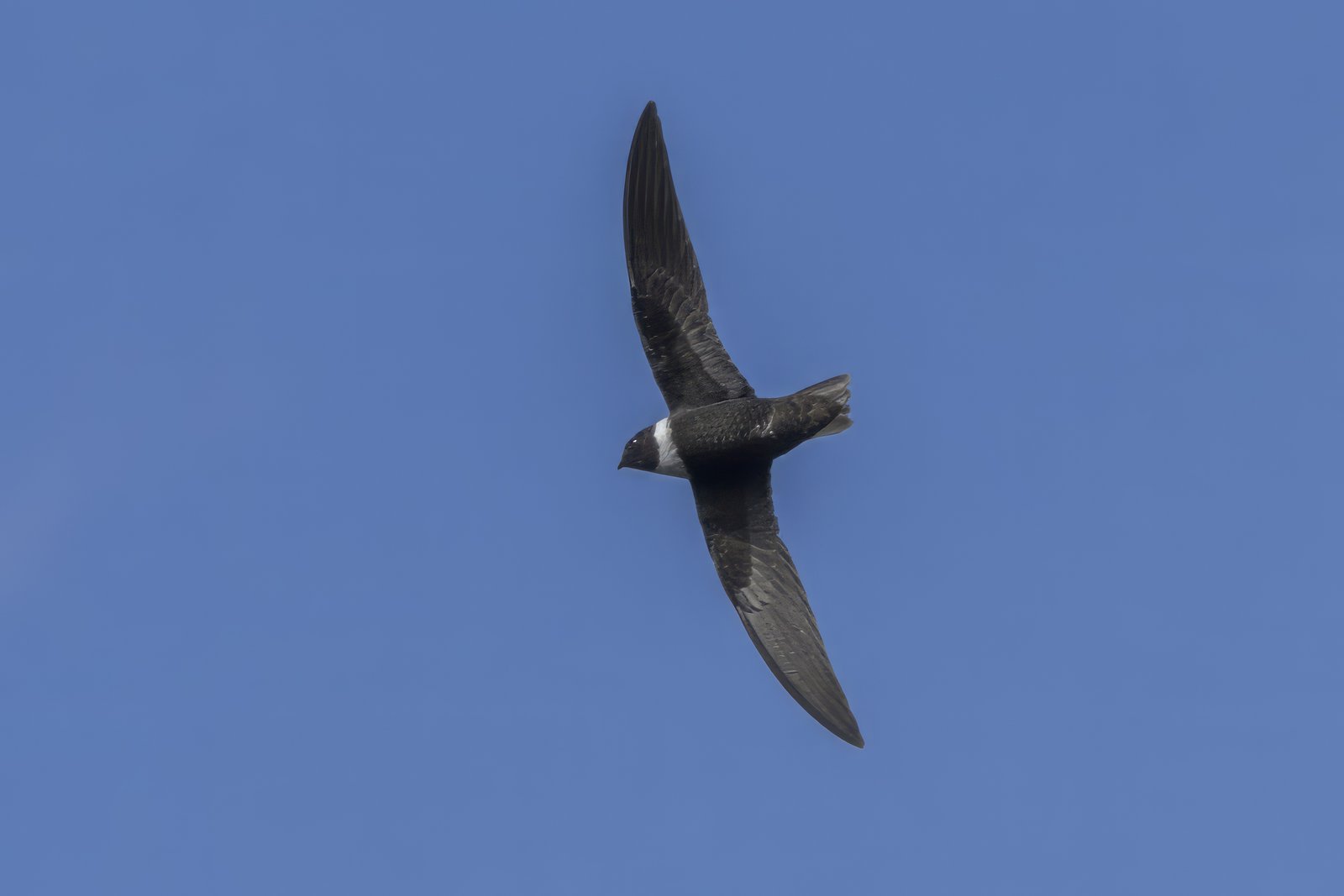
The White-collared Swift is the largest swift in the Caribbean. Flocks of tens to hundreds of birds sweep at speed over mountains and valleys, often ahead of approaching rain. They roost and breed in caves and behind waterfalls and may travel long distances each day to their feeding areas.
Voice
Flocks are noisy. Besides a nasal twittering chee-chee-chee, there are scratchy tseet and chirrio calls and a hissing whiss-whiss; birds in a flock often call together.
Recording: Ricardo José Mitidieri — CC BY-NC-SA 4.0 · converted to mono · xeno-canto
Identification
20–22 cm, large and heavily built, with long, broad, sickle-shaped wings and a short, slightly notched tail. The plumage is black, with a faint blue gloss on the back. A white band encircles the neck and is widest on the breast; at a distance the white breast band is the most visible part. The forehead is slightly browner. The sexes are alike. Juveniles are duller, with a narrower, incomplete or grey-mottled collar and pale feather edges.
Confusion species
Distinguished by its size and white collar. American Black Swift Cypseloides niger is smaller and slimmer and has no collar; young White-collared Swifts with a faint collar resemble it but are still larger and heavier. On Trinidad, Chestnut-collared Swift Streptoprocne rutila is much smaller, with a rufous collar. Caribbean Martin Progne dominicensis and other swallows have broader wings, a different flight and no white neck band.
Habitat
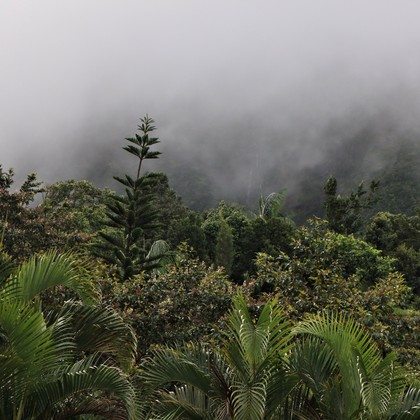
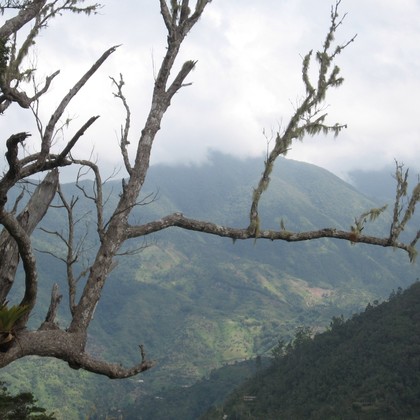
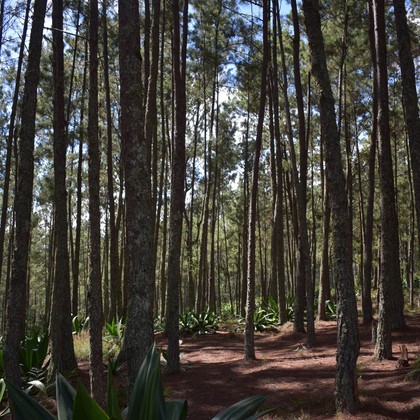
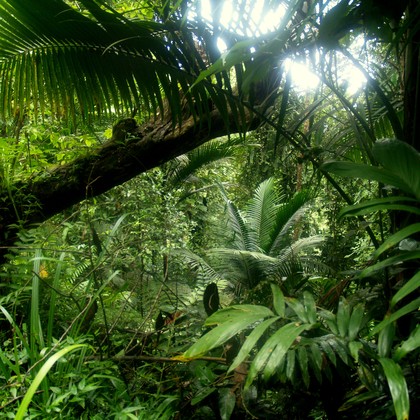
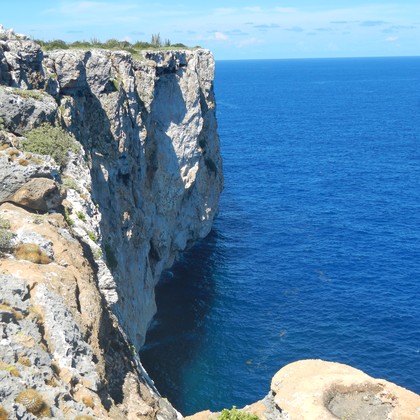
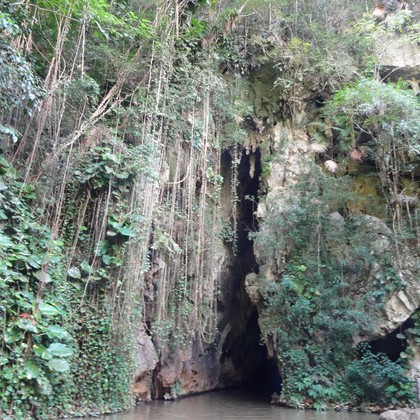
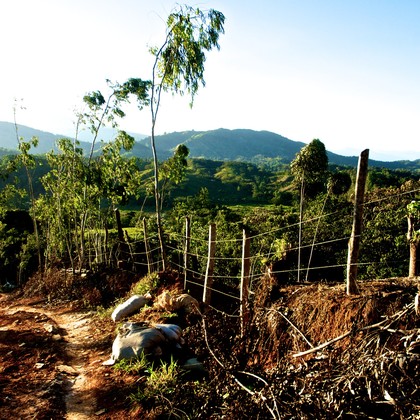
Over montane forest, cloud forest and pine forest, but when feeding also over lowland forest, farmland, towns and the coast, from sea level to the highest peaks. It eats flying insects, often in swarms carried up by the air currents ahead of storms. It nests colonially on ledges in caves, gorges and behind waterfalls; the nest is a flat disc of mud and moss.
Where the bird is most at home, classified by the vegetation types of the Caribbean.
Range and movements
Resident on Jamaica, Hispaniola (Haiti and the Dominican Republic) and Trinidad, where it is common in the mountains. Less common on Cuba, mainly in the eastern and central mountains. Rare visitor or vagrant to Tobago, Puerto Rico and a few islands of the Lesser Antilles. Outside the region from Mexico through Central America to Bolivia, Brazil and northern Argentina.
- Resident
- Summer visitor (c. Oct–Mar)
- Winter visitor (c. Apr–Sep)
- Passage (Mar–Apr, Oct–Nov)
- dark = core range, pale = thinly spread
How and when to look
On Jamaica in the Blue Mountains and Cockpit Country, on Hispaniola in the Sierra de Bahoruco and the Cordillera Central, on Trinidad in the Northern Range. The best chance is in changeable weather, when flocks feed ahead of showers over ridges and valleys. The rushing sound of the wings can be heard from low-flying flocks.
Conservation status
Not threatened. The species has a very large range. Colonies in caves and behind waterfalls are sensitive to disturbance, but no clear decline is known in the Caribbean.
Scientific name
Streptoprocne zonaris | (Shaw, 1796)
Shaw described the species in 1796 as Hirundo zonaris; because it was later moved to another genus, the author and year stand in brackets. The genus Streptoprocne was introduced in 1906 by Oberholser. Streptoprocne is Greek, from streptos 'collar' and Procne, the figure of Greek myth turned into a swallow, after the coloured collar. zonaris is Latin for 'belted', from zona 'girdle, band', after the white collar. The specimen the first description was based on came from Brazil (assumed, not specified).