All species › Hummingbirds and swifts › Hummingbirds › White-chested Emerald
White-chested Emerald | Chrysuronia brevirostris
Witborstamazilia | Amazilia pechiblanca
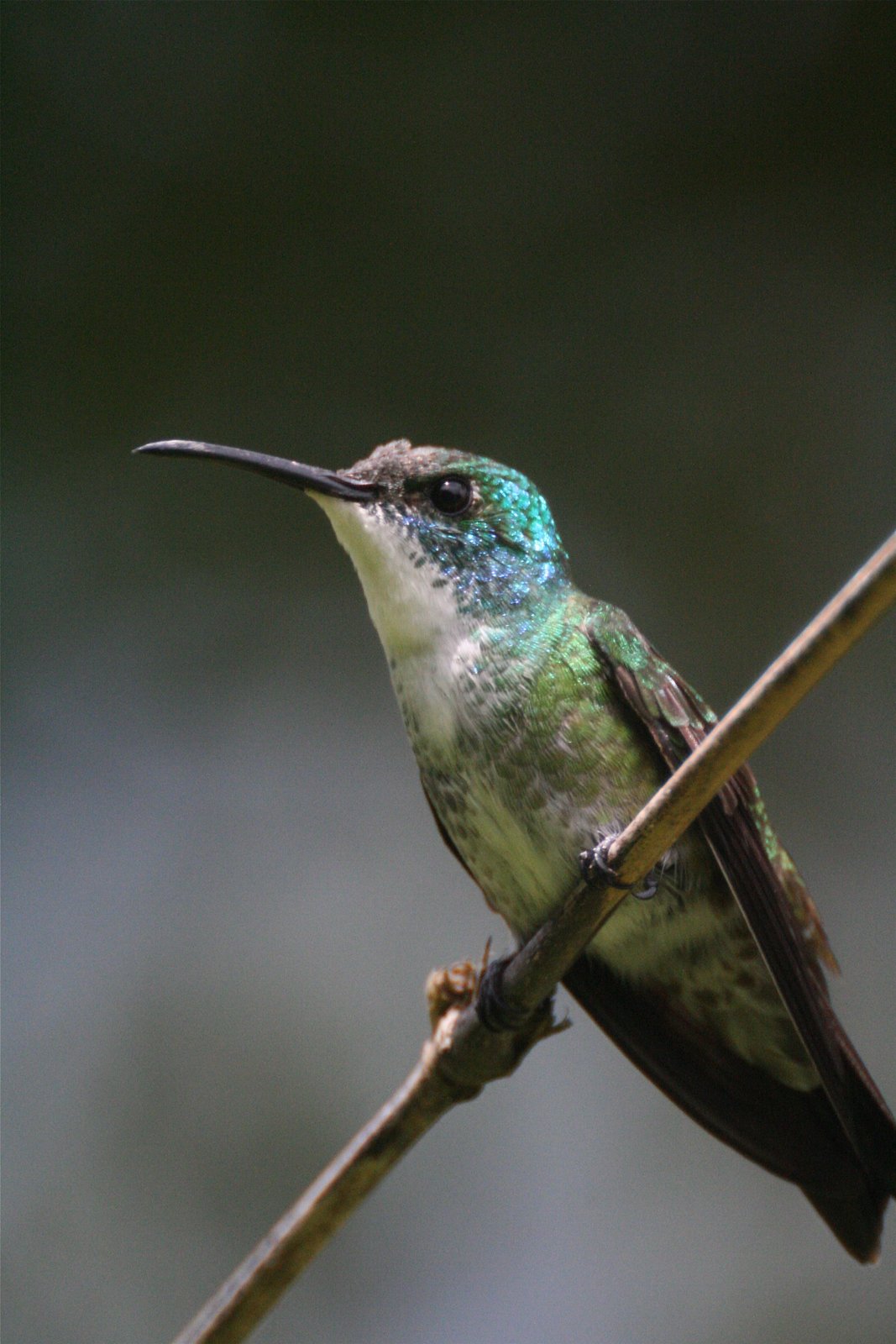
The White-chested Emerald is a small green and white hummingbird of open country and forest edges in north-eastern South America, which in the Caribbean occurs in Trinidad. Male and female are almost alike. Long placed in the genus Amazilia, it has been moved by most checklists to Chrysuronia following a 2014 molecular study. Trinidad birds belong to a subspecies that is larger than the others.
Voice
The song varies but is always nasal and squeaky. Short calls are also given during chases.
Recording: Paul Lenrumé — CC BY-NC-SA 4.0 · converted to mono · xeno-canto
Identification
9–10 cm, with a short, straight, blackish bill. The upperparts are glittering bronze-green, with a more turquoise-green crown and cheeks. Throat, breast and belly are white, with green spotting on the sides of the throat and breast and green flanks. The tail is bronzy green. The sexes are almost identical; juveniles are duller.
Confusion species
Female Blue-chinned Sapphire Chlorestes notata is also white with green spotting below but has a reddish lower mandible and a blue, forked tail. Copper-rumped Hummingbird Saucerottia tobaci has green underparts and a coppery rump. Female White-necked Jacobin Florisuga mellivora is larger, with a blue-green, white-scaled throat and breast. Female Blue-tailed Emerald Chlorostilbon mellisugus has grey underparts and a dark eyestripe with a white line above it.
Habitat
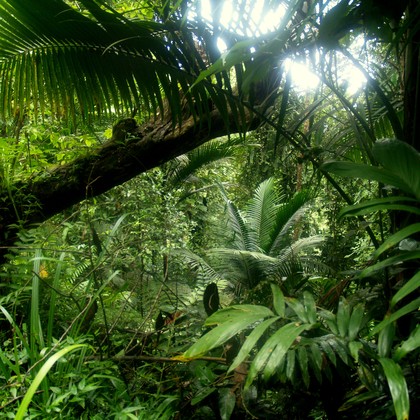
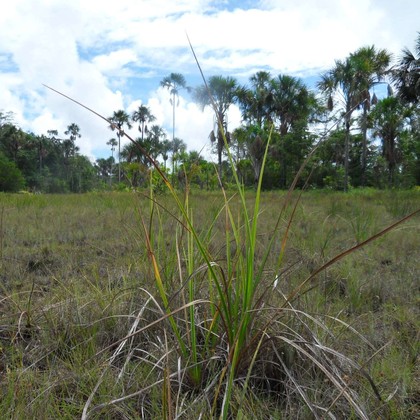
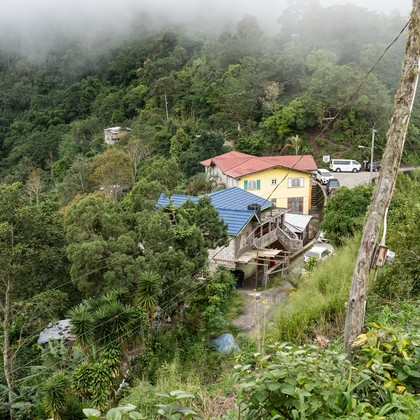
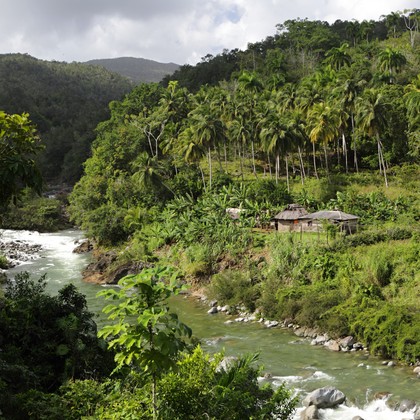
Forest edges, secondary forest, open woodland, scrub, savanna, plantations and gardens with flowering shrubs and trees. More a bird of semi-open country than of closed forest. It also visits feeders.
Where the bird is most at home, classified by the vegetation types of the Caribbean.


Range and movements
Within the region only as a resident in Trinidad, mainly in the lowlands and the foothills. Elsewhere in Venezuela, the Guianas and northern Brazil.
- Resident
- dark = core range, pale = thinly spread
How and when to look
In Trinidad in gardens, at forest edges and along roads in the lowlands, including the foot of the Northern Range, often at flowering shrubs and feeders. The clean white underparts with green side spotting make a perched bird quickly recognisable.
Conservation status
Not threatened. The species is widespread and tolerates man-made habitats well.
Scientific name
Chrysuronia brevirostris | (Lesson, 1830)
Lesson described the species in 1830 as Ornismya brevirostris; because it was later moved to another genus, the author and year stand in brackets. The genus Chrysuronia was introduced in 1850 by Bonaparte. Chrysuronia is Greek, from khrusos 'gold' and oura 'tail', after the golden-glossed tail. brevirostris is Latin, from brevis 'short' and rostrum 'bill', after the fairly short bill. The specimen the first description was based on came from ‘Guiana’ (confused with Rio de Janeiro in the source).