All species › Jacamars and puffbirds › Jacamars › Rufous-tailed Jacamar
Rufous-tailed Jacamar | Galbula ruficauda
Roodstaartglansvogel | Jacamar colirrufo
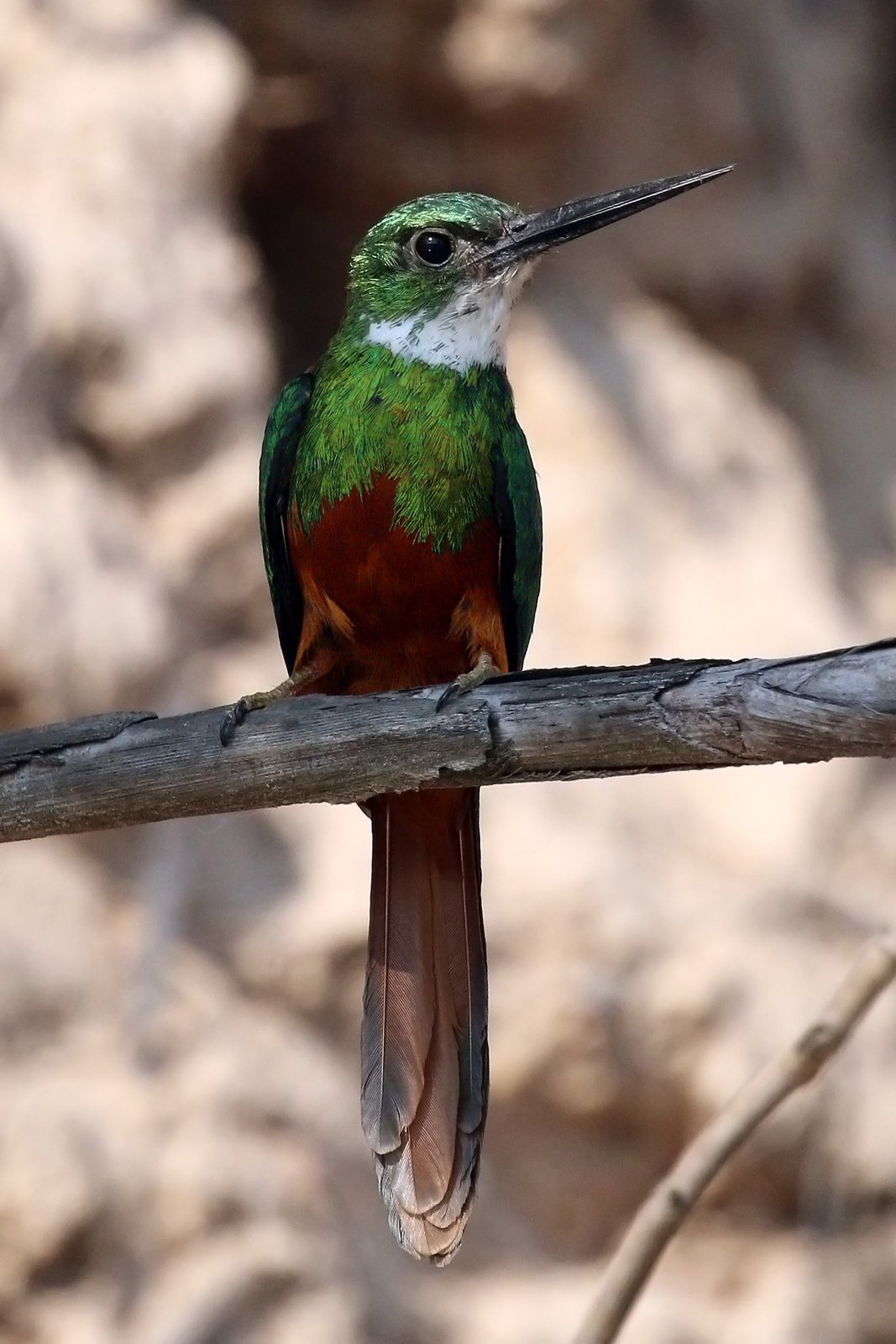
The Rufous-tailed Jacamar is the only jacamar in the region and occurs only in Trinidad and Tobago. Jacamars are slim, metallic insect-eaters of the American tropics with a long, thin bill. It sits still for long periods on an open branch, often with the bill tilted up, then sallies after a flying insect and returns to the same or a nearby perch.
Voice
A sharp, high pee-op or pee-ip, often repeated. The song is a series of high, thin notes that speed up and end in a trill; pairs sometimes sing together.
Recording: JAYRSON ARAUJO DE OLIVEIRA — CC BY-NC-SA 4.0 · converted to mono · xeno-canto
Identification
19–25 cm, much of it tail and bill. The bill is straight, thin and black, about 5 cm long. Upperparts, head and a broad breast band are glossy golden-green. Belly and undertail coverts are rufous. The long, graduated tail has green central feathers and rufous outer feathers. The male has a white throat, the female a buff throat and somewhat paler underparts. Juveniles are duller, with a shorter bill.
Confusion species
There is no other jacamar in the region. Hummingbirds are much smaller and hover at flowers. Green Kingfisher Chloroceryle americana has a heavier bill, a white collar and white spots in the wing, and hunts over water. The combination of long needle bill, green breast and rufous belly makes confusion unlikely.
Habitat
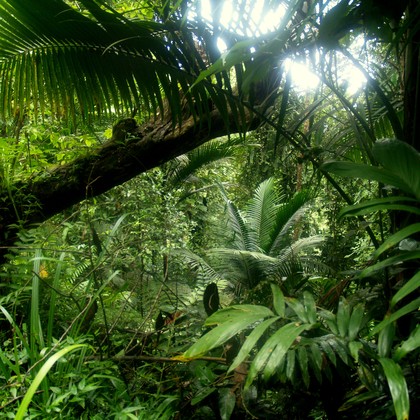
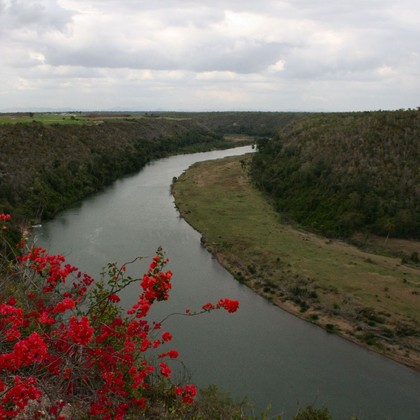
Forest edges, clearings and trails in moist and semi-evergreen forest, secondary forest, shaded cocoa plantations and vegetation along streams; in Tobago also in drier forest. It catches flying insects in the air, including butterflies, dragonflies, bees and wasps, and beats larger prey against the branch before swallowing it. It nests in a self-dug tunnel in a steep bank or in a termite nest.
Where the bird is most at home, classified by the vegetation types of the Caribbean.



Range and movements
In the region only in Trinidad and Tobago, where it is a fairly common resident of forest and forest edge on both islands. Outside the region from southern Mexico through Central America to northern and central South America, as far as Bolivia, Paraguay and northern Argentina.
- Resident
- dark = core range, pale = thinly spread
How and when to look
Along forest trails and streams in the Northern Range of Trinidad and in the Main Ridge forest of Tobago. The bird often perches on a bare branch in the lower storey beside a trail or clearing and returns to the same branch after each sally. Listening for the high call helps to locate it.
Conservation status
Not threatened. The species is widespread and tolerates secondary forest and plantations with shade trees.
Scientific name
Galbula ruficauda | Cuvier, GLCFD, 1816
Cuvier, GLCFD described the species in 1816 and placed it straight away in the genus where it still stands. The genus Galbula was introduced in 1760 by Brisson. Galbula is the Latin word for a small yellow bird. ruficauda is Latin, from rufus 'red' and cauda 'tail', after the rufous tail. The specimen the first description was based on came from the Guianas (unspecified).