All species › Pelicans, herons and ibises › Herons and bitterns › Rufescent Tiger Heron
Rufescent Tiger Heron | Tigrisoma lineatum
Rosse tijgerroerdomp | Garza tigre colorada
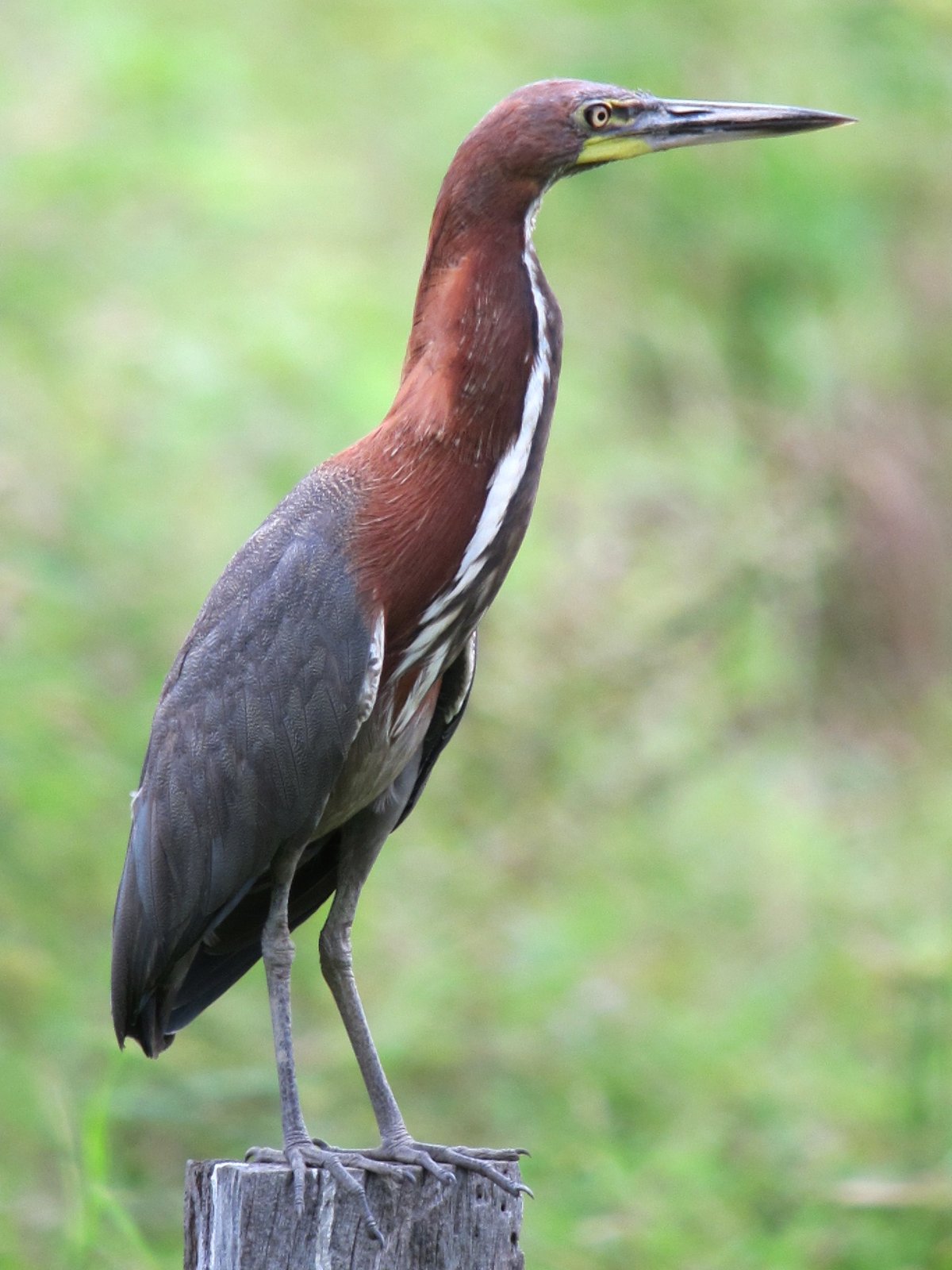
The Rufescent Tiger Heron is a large, shy heron of the marshes and slow waterways of tropical Central and South America. Within the region it occurs only in Trinidad, where it is a secretive and seldom-seen resident. The name refers to the barred plumage of the young birds; adults are largely rufous.
Voice
Mainly at dusk and at night, a low, muffled, often doubled hoo-hoo, and a long, swelling roar that rises sharply at the end. Flushed birds give a hoarse kwok.
Recording: Jacob Wijpkema — CC BY-NC-SA 4.0 · shortened to the first 60 s, mono · xeno-canto
Identification
66–76 cm, heavy and rather short-legged, with a thick neck and a long, straight bill. Adults have a deep rufous head and neck, with a white central stripe down the foreneck bordered on both sides by dark streaks. The upperparts are brownish and finely vermiculated black, the belly pale brown and the flanks barred black and white. The tail is black with narrow white bars. Lores, eye-ring and iris are yellow, the legs greenish. Juveniles are rusty buff to ochre, coarsely barred black all over, especially on the wings, with a white throat and belly. Adult plumage is reached only after several years; intermediate plumages combine rufous and barred feathers.
Confusion species
Pinnated Bittern Botaurus pinnatus resembles a juvenile tiger heron, but is paler sandy brown, with a finely barred neck, a streaked rather than coarsely barred back and no white belly. Juvenile Black-crowned Night Heron Nycticorax nycticorax is smaller, brown with white drop-shaped spots, and streaked rather than barred.
Habitat
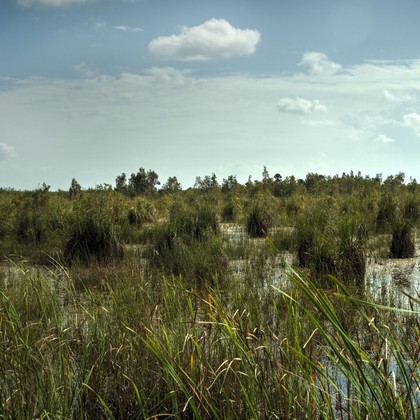
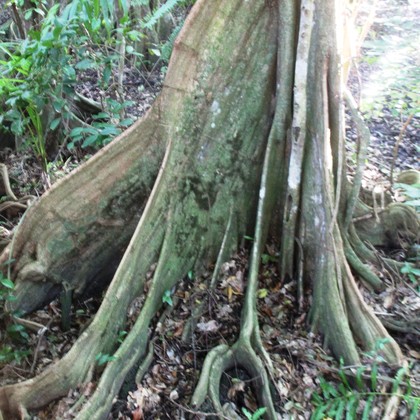
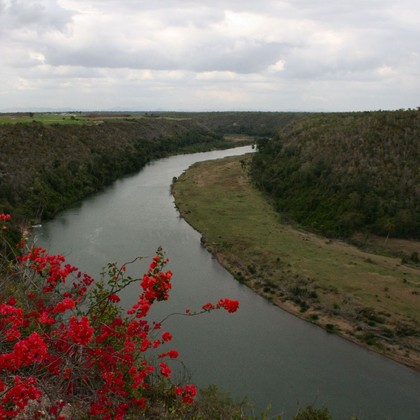
Freshwater marshes with trees and shrubs, swamp forest, slow-flowing streams and rivers with shaded banks, and the landward side of mangroves. It hunts alone, hunched and motionless for long periods in shallow water, taking fish, crustaceans, frogs, aquatic insects and their larvae. The nest is a platform of sticks in a tree over or near water.
Where the bird is most at home, classified by the vegetation types of the Caribbean.

Range and movements
In the region only in Trinidad, in marshy areas and along slow waterways; it is absent from Tobago. Outside the region from Honduras through Central America and South America east of the Andes to Bolivia, Paraguay, southern Brazil and northern Argentina, mostly below 500 m.
- Resident
- dark = core range, pale = thinly spread
How and when to look
Slow, wooded waterways and marsh edges in Trinidad, preferably in early morning or late afternoon, when the birds hunt at the water's edge. A motionless bird in the shade is often overlooked; usually it is noticed only when it flushes and lands again in a tree further on.
Conservation status
Not threatened. The species has a large range in South America. In Trinidad it is scarce and depends on the remaining freshwater marshes, which are under pressure from clearance, fires and drainage.
Scientific name
Tigrisoma lineatum | (Boddaert, 1783)
Boddaert described the species in 1783 as Ardea lineata; because it was later moved to another genus, the author and year stand in brackets. The genus Tigrisoma was introduced in 1827 by Swainson. Tigrisoma is Greek, from tigris 'tiger' and sōma 'body', after the barred plumage. lineatum is Latin for 'lined, striped', after the fine barring of the plumage. The specimen the first description was based on came from Cayenne, French Guiana.