All species › Passerines › Tanagers › Ruddy-breasted Seedeater
Ruddy-breasted Seedeater | Sporophila minuta
Dwergdikbekje | Semillero pechirrufo
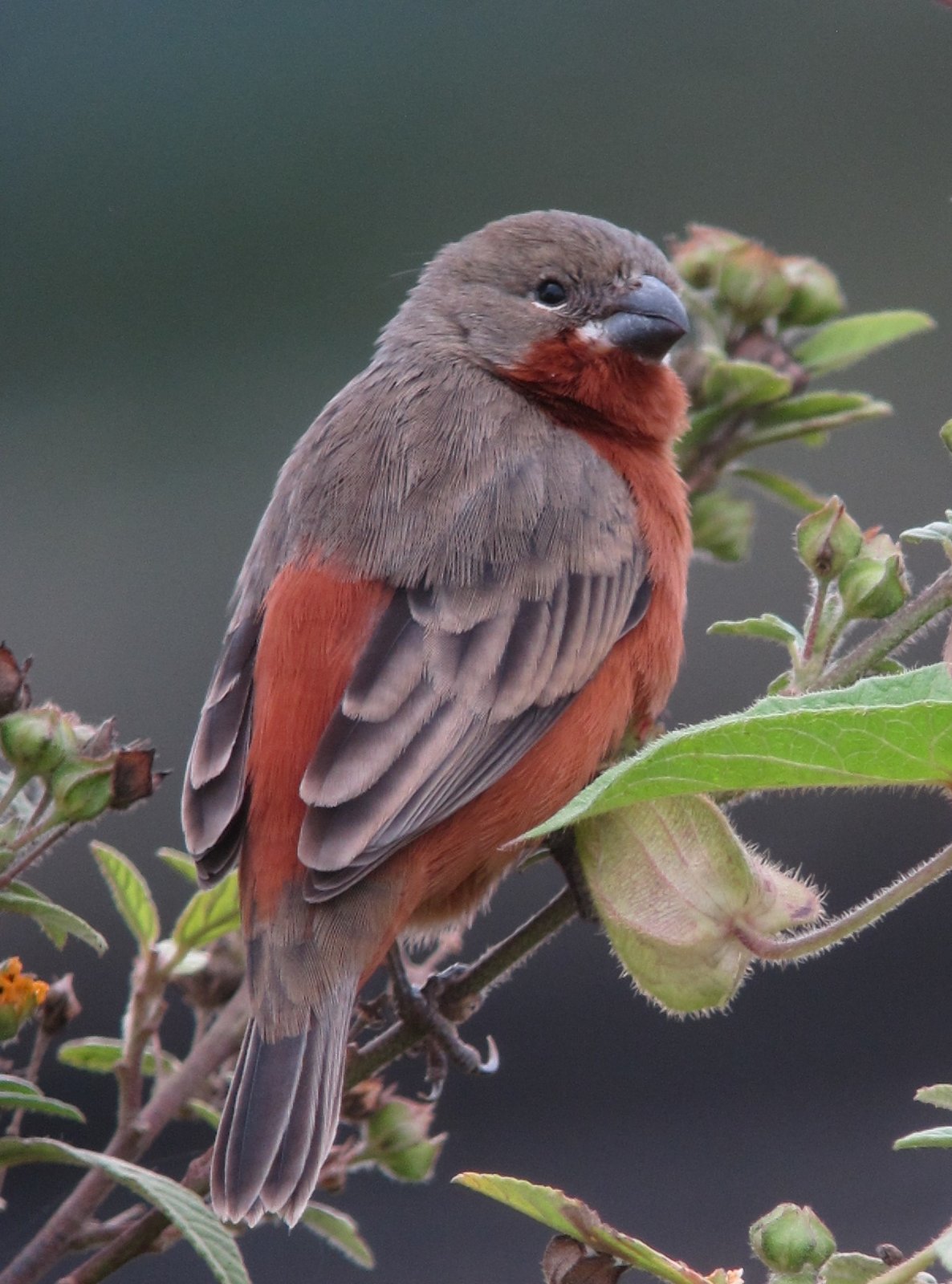
Ruddy-breasted Seedeater is one of the smallest seedeaters and the only one in the region with rufous underparts. It lives in grassland and savanna from Mexico to northern Brazil and, within the Caribbean, is resident only on Trinidad.
Voice
The song is a fairly short, melodious series of whistled notes, given from a grass stem or low bush. The call is a soft chip.
Recording: Olivier SWIFT — CC BY-NC-SA 4.0 · converted to mono · xeno-canto
Identification
9–10 cm, small and compact, with a short, thick, dark bill. The male has a grey to grey-brown crown, back and wings, a small white wing patch and a rufous rump. Throat, breast and belly are uniformly rufous to cinnamon. The female is brown above and paler buff below, without streaks. Young males resemble the female, with some rufous on the underparts.
Confusion species
No other seedeater in the region has rufous underparts. Females closely resemble those of related species: Yellow-bellied Seedeater Sporophila nigricollis is more olive-brown, Grey Seedeater Sporophila intermedia larger with a heavier bill. Female Blue-black Grassquit Volatinia jacarina has a more pointed bill and a streaked breast.
Habitat
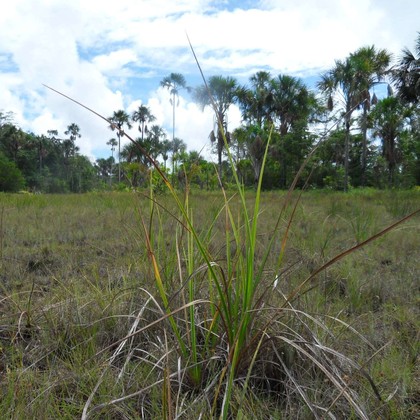
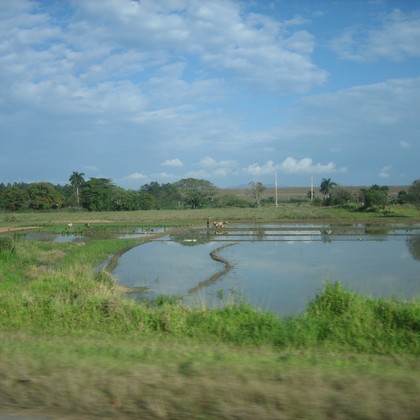
Wet and dry savanna, moist grassland, rice fields, rough pasture and marsh edges in the lowlands. It feeds on grass seeds; outside the breeding season often in small groups, sometimes with other seedeaters and Blue-black Grassquits.
Where the bird is most at home, classified by the vegetation types of the Caribbean.


Range and movements
On Trinidad a local resident of open grassland and savanna in the lowlands. Not known from Tobago or the other islands. Elsewhere from western Mexico through Central America to Colombia, Ecuador, Venezuela, the Guianas and northern Brazil.
- Resident
- dark = core range, pale = thinly spread
How and when to look
In open grassland, savanna and around rice fields on Trinidad, especially in the wet season when males sing. In seedeater flocks, look for the rufous underparts, which stand out even at a distance.
Conservation status
Not threatened. Common in much of its range and also found in man-made grassland and rice fields.
Scientific name
Sporophila minuta | (Linnaeus, 1758)
Linnaeus described the species in 1758 as Loxia minuta; because it was later moved to another genus, the author and year stand in brackets. The genus Sporophila was introduced in 1844 by Cabanis. Sporophila is Greek, from sporos 'seed' and philos 'lover': 'seed-lover'. minuta is Latin for 'small', after its very small size. The specimen the first description was based on came from Suriname.