All species › Waders, gulls and terns › Gulls and terns › Roseate Tern
Roseate Tern | Sterna dougallii
Dougalls stern | Charrán rosado
The Roseate Tern is the palest and most slender of the medium-sized terns and a characteristic breeder on rocky and sandy cays in the Caribbean. The Caribbean breeding population is one of the most important in the western Atlantic, but has been declining since the 1990s. Birds often switch colony sites, so an islet occupied one year may be deserted the next.
Voice
A distinctive two-syllable chu-weet or chee-vik, unlike the calls of other terns, and a harsh, rasping aaach in alarm.
Recording: Ricardo Hevia — CC BY-NC-SA 4.0 · converted to mono · xeno-canto
Identification
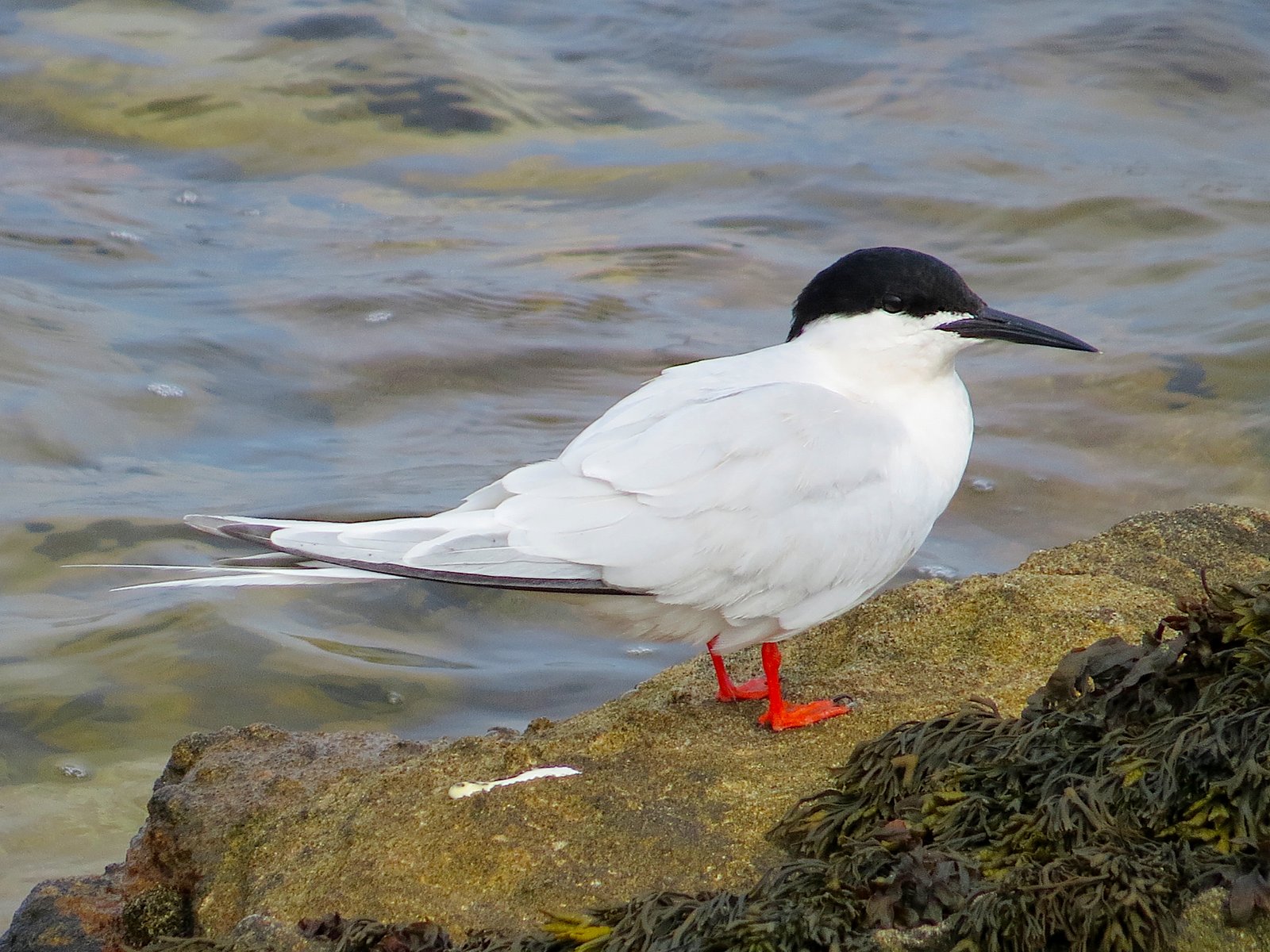
33–43 cm, the upper figure including the very long tail streamers. Pale: the upperparts are very pale grey and the underparts white, in breeding plumage with a pink flush visible only in good light. The cap is black, the bill long and thin, mostly black early in the breeding season and later red at the base; the legs are red. At rest the white streamers project well beyond the wing tips. In flight the wings are short and the wingbeats fast and stiff; only the outer primaries are darker, forming a narrow dark leading edge. Outside the breeding season the forehead is white. Juveniles have a dark cap and forehead, a scaly back and black legs.
Confusion species
Common Tern Sterna hirundo is greyer, with grey underparts in breeding plumage, a dark wedge in the primaries, shorter streamers and a red, black-tipped bill. Arctic Tern Sterna paradisaea has grey underparts and very short legs. Forster's Tern Sterna forsteri has silvery-white primaries and an orange-red bill. Sandwich Tern Thalasseus sandvicensis is larger, with a yellow-tipped black bill and a short tail.
Habitat
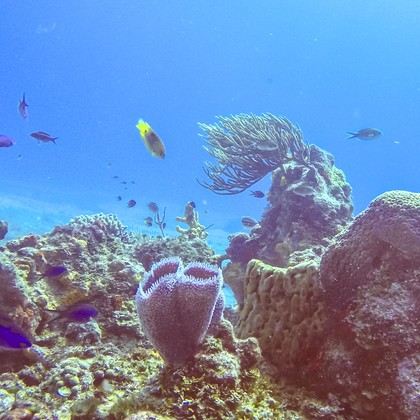
Clear coastal water over reefs, around cays and in shallow bays, where it fishes by steep plunge-dives from a good height. It breeds in colonies on small rocky or sandy islets and cays, often among stones or low vegetation, sometimes with other terns.
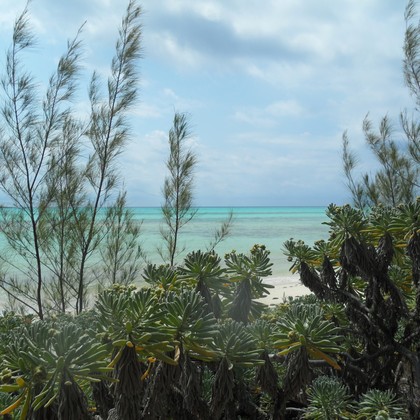
Where the bird is most at home, classified by the vegetation types of the Caribbean.

Range and movements
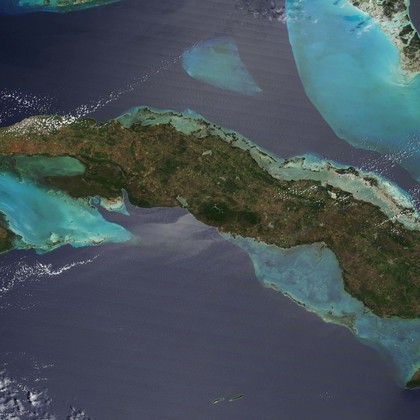
Breeds throughout the region, with the largest numbers in the Virgin Islands and on the cays around Puerto Rico and Culebra. Further colonies in the Bahamas, off Cuba, Jamaica and Hispaniola, on Anguilla and several islands of the Lesser Antilles, and in the ABC Islands. After breeding the birds leave, probably for the coasts of South America. Beyond the region it breeds in the north-eastern United States, Florida, western Europe and the tropical Indian and Pacific Oceans.
- Summer visitor (c. Oct–Mar)
- Winter visitor (c. Apr–Sep)
- dark = core range, pale = thinly spread
How and when to look
From May to August the birds are best seen at cays and rocky islets with tern colonies and among fishing flocks over reefs. Colonies must not be entered; staying well off by boat avoids disturbance.
Conservation status
Not threatened globally, but in the United States the Caribbean population is listed as Threatened and the north-eastern population as Endangered. Caribbean numbers are declining; predation by rats, herons and Laughing Gulls is a major cause of nest failure, while disturbance and, formerly, egg collecting also play a part.
Scientific name
Sterna dougallii | Montagu, 1813
Montagu described the species in 1813 and placed it straight away in the genus where it still stands. The genus Sterna was introduced in 1758 by Linnaeus. Sterna goes back to Old English stearn, which appears in the poem The Seafarer; the Frisians used a related word for terns. dougallii honours the Scottish physician and collector Peter McDougall (1777–1814), who supplied the first specimen. The specimen the first description was based on came from the Cumbraes, Scotland.