All species › Waterfowl › Ducks and geese › Ring-necked Duck
Ring-necked Duck | Aythya collaris
Ringsnaveleend | Porrón acollarado
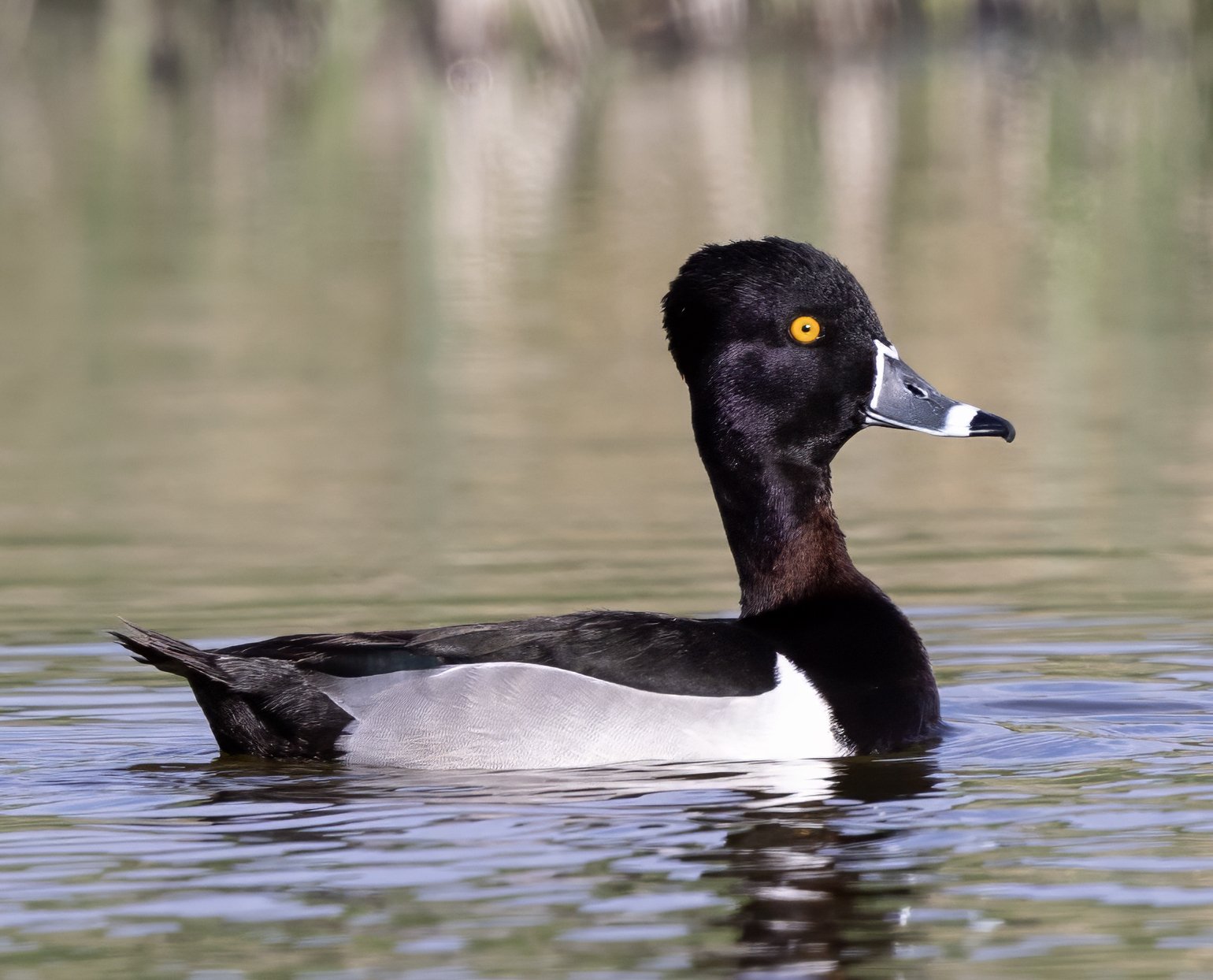
The Ring-necked Duck is a compact diving duck with an angular head and a white ring around the bill. It breeds in the boreal forest of North America and in the Caribbean is a winter visitor, mostly on fresh water in the Greater Antilles. In Cuba it is called pato cabezón.
Voice
Usually silent in winter. The female gives a rolling, growling krrr; the displaying male a soft whistle.
Recording: Stanislas Wroza — CC BY-NC-SA 4.0 · converted to mono · xeno-canto
Identification
39–46 cm, with a high head peaked at the rear and a fairly short tail. The male has a black head, breast and back with a purple gloss on the head, grey flanks with a white spur pointing up in front of the wing, and a grey bill with a white ring, a white edge at the base and a black tip. The chestnut collar that gives the English name is seldom visible in the field. The female is brown with a greyer head, a white eye-ring often with a white line behind it and a pale area around the bill base; the bill also has a pale ring. In flight the wing stripe on the secondaries is grey, not white.
Confusion species
Male Lesser Scaup Aythya affinis has a grey, finely vermiculated back, white flanks and no white bill ring; the female has a sharp white blaze at the bill base and a white wing stripe in flight. Greater Scaup Aythya marila resembles Lesser, with a rounder head. Tufted Duck Aythya fuligula, a vagrant, has white flanks and a drooping crest in the male. Redhead Aythya americana has a red head in the male and a plainer brown female with a rounder head.
Habitat
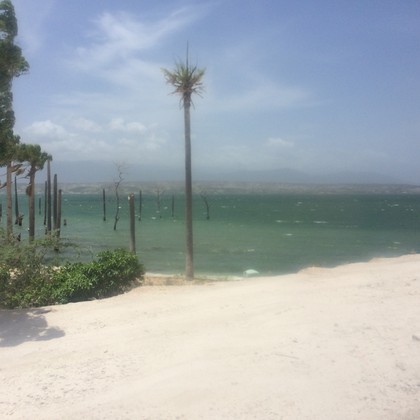
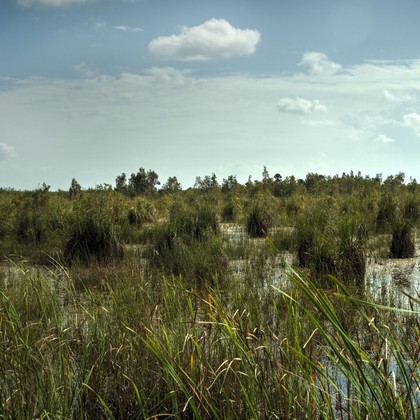
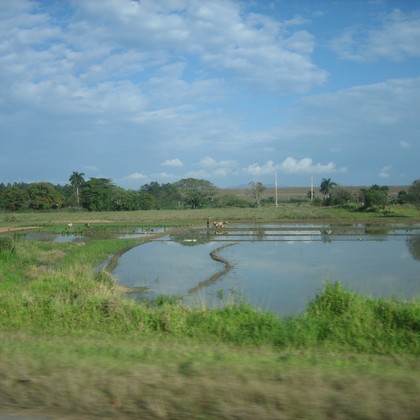
Freshwater lakes, ponds and reservoirs, including those with floating and submerged plants, marshes with open water and the reservoirs at rice fields; less often brackish water. It dives for seeds, water plants and invertebrates, often in flocks.
Where the bird is most at home, classified by the vegetation types of the Caribbean.
Range and movements
A fairly common winter visitor and passage migrant in Cuba, and a winter visitor in the Bahamas, the Cayman Islands, Jamaica and Hispaniola, in varying numbers. Rare in Puerto Rico, where some sources treat it as accidental, and in the Lesser Antilles; a vagrant on Trinidad. Outside the region it breeds in Alaska, Canada and the northern United States and winters in the United States, Mexico and Central America.
- Winter visitor (c. Apr–Sep)
- dark = core range, pale = thinly spread
How and when to look
Best in winter on lakes and reservoirs in Cuba, where flocks often sit with other diving ducks. A resting male can be told from Lesser Scaup at long range by the white spur in front of the wing.
Conservation status
Not threatened globally. In the Caribbean a winter visitor, which is hunted like other ducks.
Scientific name
Aythya collaris | (Donovan, 1809)
Donovan described the species in 1809 as Anas collaris; because it was later moved to another genus, the author and year stand in brackets. The genus Aythya was introduced in 1822 by Boie. Aythya is from Greek aithuia, an unidentified diving seabird mentioned by Aristotle and Hesychius. collaris is Latin for 'of the neck', from collum 'neck', after the chestnut ring around the throat. The specimen the first description was based on came from Lincolnshire, England.