All species › Gannets and cormorants › Gannets and boobies › Masked Booby
Masked Booby | Sula dactylatra
Maskergent | Bobo enmascarado
The Masked Booby is the largest tropical booby and the scarcest breeding booby in the Caribbean. It nests on bare, remote rocky islets and cays and forages far out at sea, so it is rarely seen from the main islands.
Voice
Silent at sea, noisy at the colony. The male gives a descending, whistled fiew, the female a loud, hoarse honking honk.
Recording: Eric S. J. Tan — CC BY-NC-SA 4.0 · converted to mono · xeno-canto
Identification
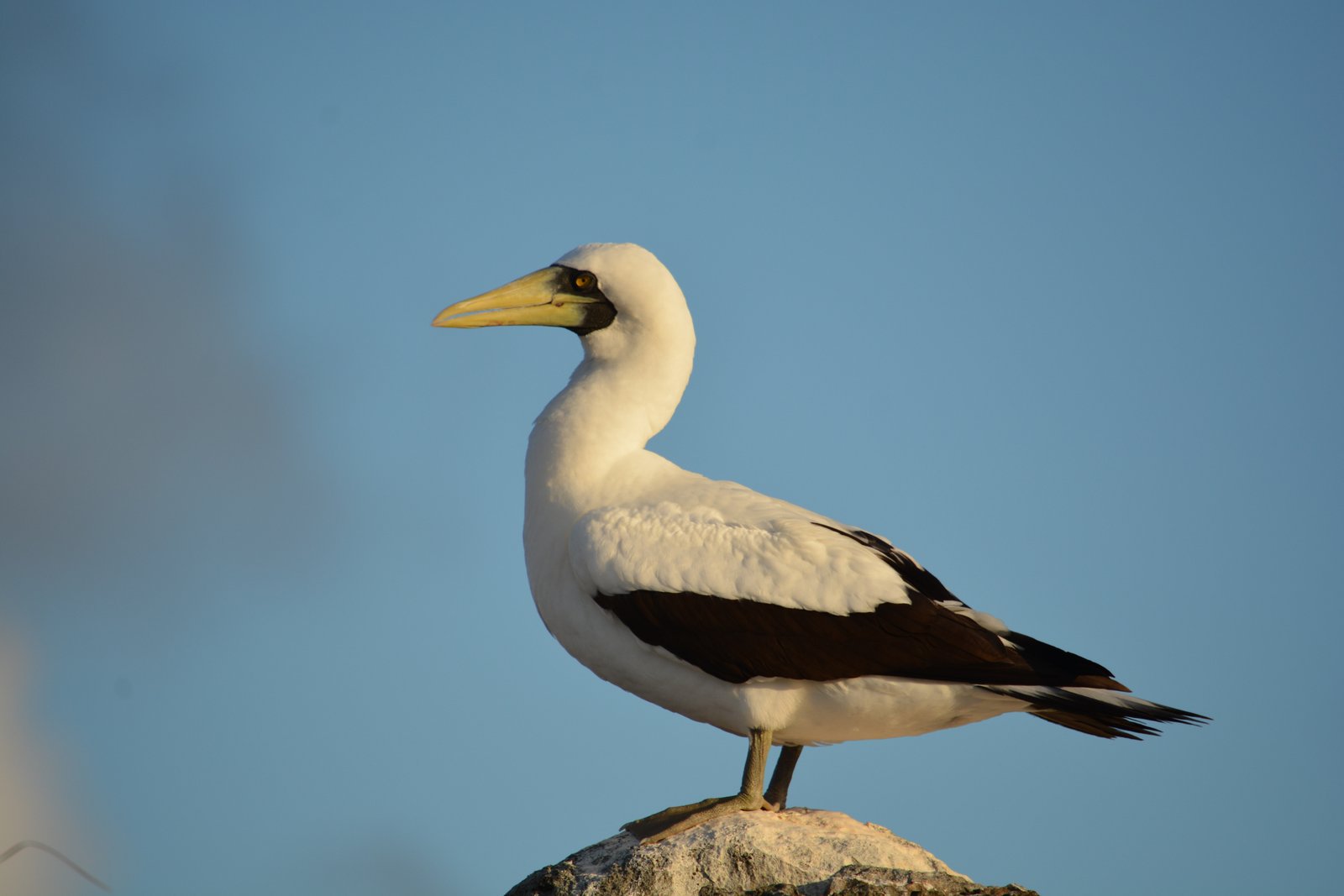
75–85 cm, heavy-bodied, with a wingspan of over one and a half metres. Adults are white with black primaries, secondaries and tail, giving the wing a broad black trailing edge. The bare skin around bill and eye forms a black mask; the bill is yellow, the eye yellow and the feet olive-grey. The sexes are alike but differ in voice. Juveniles are brown on head, neck and upperparts, with a white collar on the hindneck and a white belly; the bill is greyish. Adult plumage is reached in about three years.
Confusion species
The white morph of Red-footed Booby Sula sula is smaller, with a white tail, red feet, a blue bill and a black carpal patch on the underwing. Northern Gannet Morus bassanus is larger, with a white tail, a yellowish head and black only at the wingtips. Young Masked Boobies resemble Brown Boobies Sula leucogaster, but have a white collar separating the brown hood from the mantle; young Brown Boobies are more uniform brown with a less sharply defined belly.
Habitat
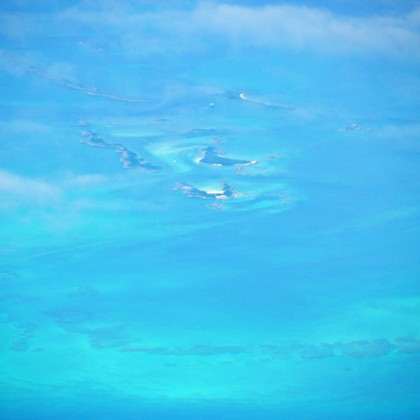
Open, deep water far offshore, where birds plunge steeply from a great height for flying fish and other shoaling fish. They nest on bare ground on flat parts of rocky islets and sandy cays, without a real nest. Of the two eggs almost always only one chick is raised: the older chick ousts the younger.
Where the bird is most at home, classified by the vegetation types of the Caribbean.

Range and movements
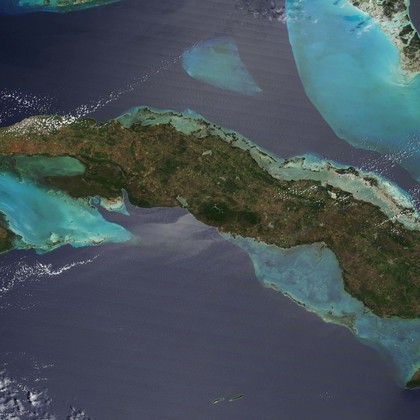
Breeds in small numbers on remote islets, including the Pedro and Morant Cays off Jamaica, Monito off Puerto Rico, Sombrero off Anguilla and a few rocky islets in the Virgin Islands and Lesser Antilles. Away from colonies a scarce visitor at sea around almost all islands, from the Bahamas to Trinidad and Tobago, the ABC Islands and San Andrés. Outside the region in all tropical oceans, including the Campeche Bank in the Gulf of Mexico.
- Resident
- Summer visitor (c. Oct–Mar)
- Passage (Mar–Apr, Oct–Nov)
- dark = core range, pale = thinly spread
How and when to look
The best chances are on pelagic trips and inter-island ferries, and from headlands in strong winds. Most colonies can only be reached by boat and with a permit.
Conservation status
Not threatened. In the Caribbean the population is small and spread over few colonies. Threats are introduced rats, cats and goats, disturbance, the taking of eggs and chicks, and mining or guano extraction on breeding islands.
Scientific name
Sula dactylatra | Lesson, 1831
Lesson described the species in 1831 and placed it straight away in the genus where it still stands. The genus Sula was introduced in 1760 by Brisson. Sula goes back to súla, the Old Norse and Icelandic word for the gannet; the name passed to the boobies. dactylatra combines Greek daktulos 'finger' and Latin ater 'black': 'black fingers', after the splayed black wingtips in flight. The specimen the first description was based on came from Ascension Island (South Atlantic).