All species › Passerines › Tyrant flycatchers › Lesser Elaenia
Lesser Elaenia | Elaenia chiriquensis
Kleine elenia | Elenia menor
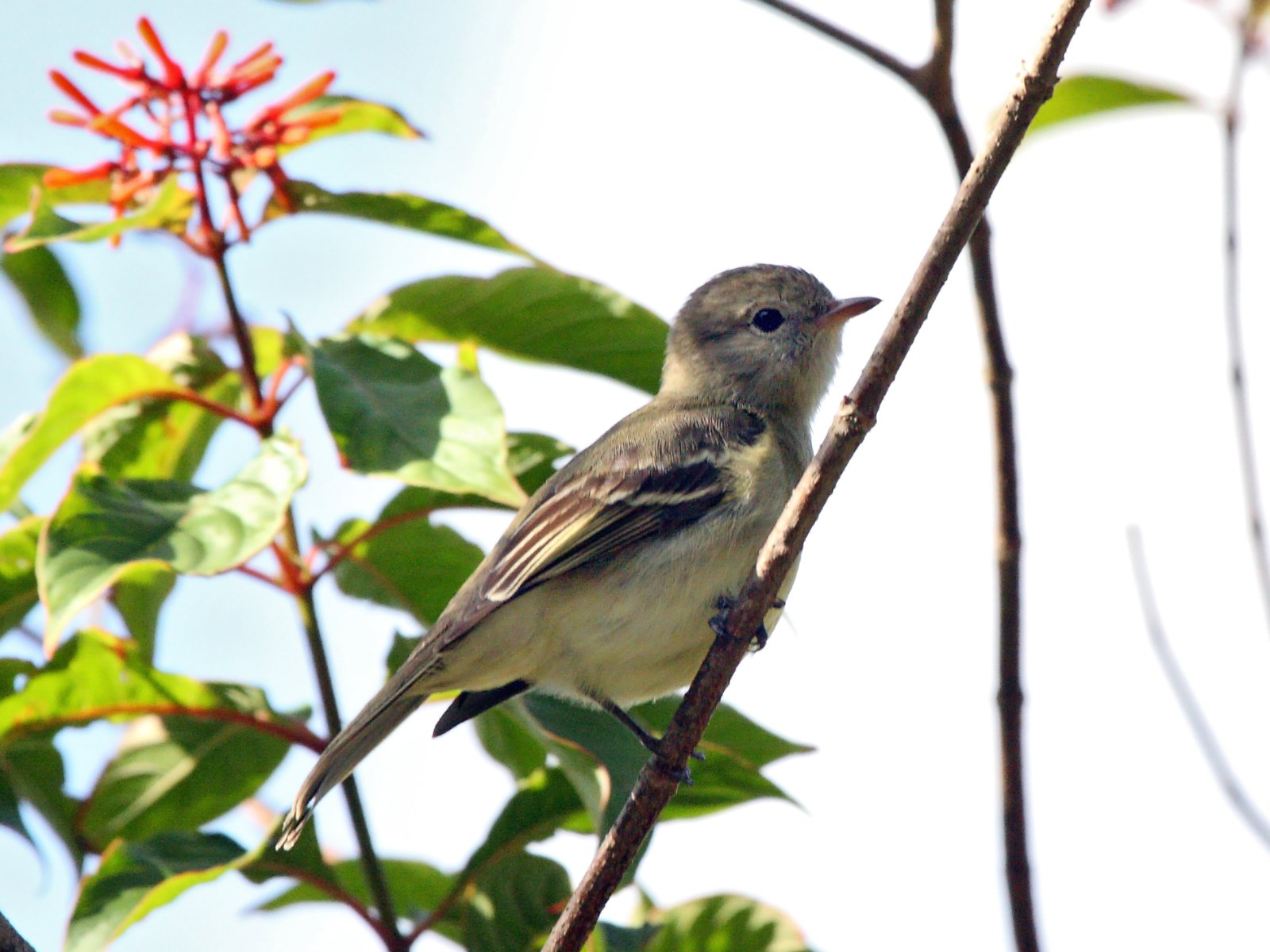
The Lesser Elaenia is a small grey-olive elaenia of savannas and open scrub in tropical America. In Trinidad it is a scarce inhabitant of savannas and open country, where it closely resembles the much commoner Yellow-bellied Elaenia and Small-billed Elaenia. Trinidad birds belong to the subspecies albivertex.
Voice
A clear whistled weeeéa and burry calls such as beer-ta or chee-bur. The dawn song is a high, hurried series: tju-wee tju-wee-der-wee.
Recording: JAYRSON ARAUJO DE OLIVEIRA — CC BY-NC-SA 4.0 · converted to mono · xeno-canto
Identification
13–14 cm, with a rounded head and a small crest that is rarely raised, and a partly concealed white crown patch. The upperparts are grey-olive, the face slightly paler with a whitish eye-ring. The wings have two white wing bars. The throat is grey, the breast olive-grey, the belly pale yellow. In albivertex the underparts are paler overall. The sexes are alike.
Confusion species
Yellow-bellied Elaenia Elaenia flavogaster is larger, with a bushy, often parted crest and louder, hoarse calls. Small-billed Elaenia Elaenia parvirostris is whiter below with a more contrasting eye-ring and occurs only in the austral winter. Northern Scrub Flycatcher Sublegatus arenarum has a short all-black bill, a pale supercilium and a sharp division between grey breast and yellow belly.
Habitat
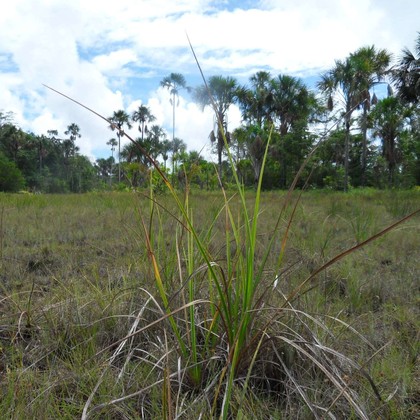
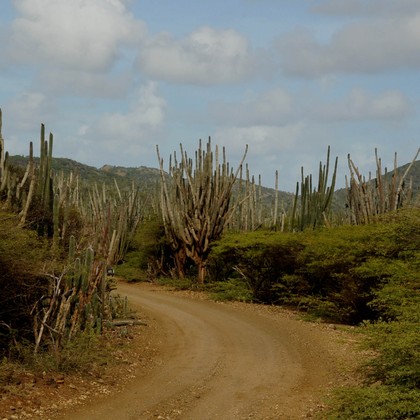
Savanna with scattered shrubs and trees, open scrub, light woodland, secondary growth and thickets and hedgerows in open farmland. In Trinidad mainly in the remaining savannas and open country in the east and centre of the island. It searches shrubs and low trees for insects and berries.
Where the bird is most at home, classified by the vegetation types of the Caribbean.

Range and movements
Within the region a scarce and local resident in Trinidad; there are no certain records from Tobago. A few records from Curaçao and Bonaire are uncertain. Outside the region from Costa Rica and Panama through much of South America to Bolivia, Paraguay, northern Argentina and Brazil.
- Resident
- Summer visitor (c. Oct–Mar)
- Winter visitor (c. Apr–Sep)
- Passage (Mar–Apr, Oct–Nov)
- dark = core range, pale = thinly spread
How and when to look
The Aripo Savannas and other open savannas in central and eastern Trinidad offer the best chance. Voice is the most reliable feature; a bird in savanna with a small round head and no parted crest is worth checking.
Conservation status
Not globally threatened. In Trinidad the species is scarce and tied to the few remaining savannas and open areas, which are shrinking through development and scrub encroachment.
Scientific name
Elaenia chiriquensis | Lawrence, 1865
Lawrence described the species in 1865 and placed it straight away in the genus where it still stands. The genus Elaenia was introduced in 1836 by Sundevall. Elaenia comes from Greek elaineos 'oily, olive-coloured', after the olive-green plumage. chiriquensis refers to Chiriquí in western Panama, where the type was collected. The specimen the first description was based on came from near David, Chiriquí, Panama.