All species › Grebes › Grebes › Least Grebe
Least Grebe | Tachybaptus dominicus
Amerikaanse dodaars | Zambullidor menor
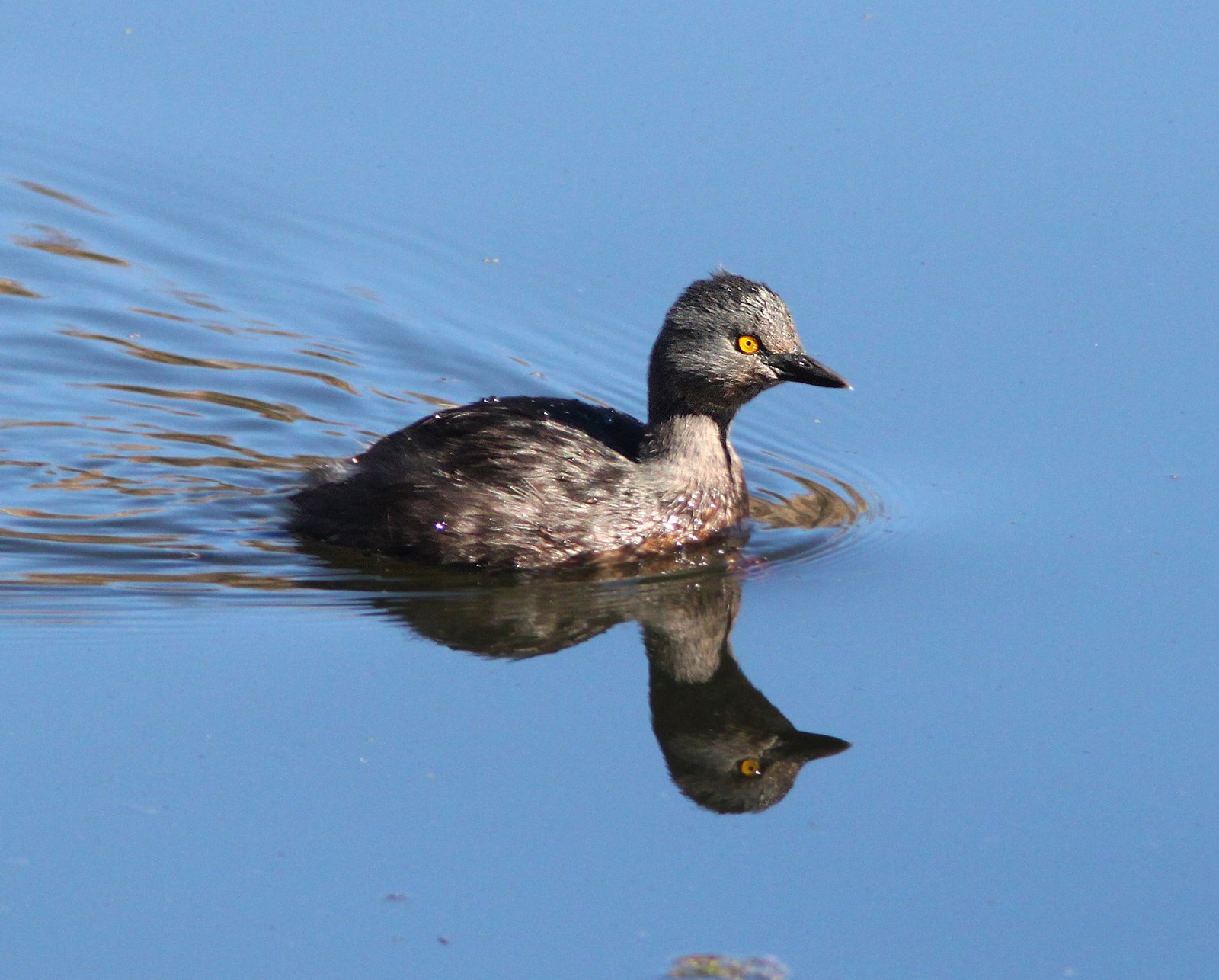
The Least Grebe is a very small, dark grebe with a yellow eye. It lives on small, densely vegetated freshwater pools and when disturbed prefers to dive rather than fly. It is resident in the Greater Antilles, the Bahamas and Trinidad and Tobago.
Voice
A rapid, rattling trill, often given as a duet by both birds of a pair; also a short, shrill peek or beeng. The display call has been likened to a horse whinnying.
Recording: Manuel Grosselet — CC BY-NC-SA 4.0 · converted to mono · xeno-canto
Identification
21–26 cm, small and round, with a thin, pointed, dark bill and a golden-yellow to orange-yellow eye. In breeding plumage almost uniformly dark grey-brown, with a blackish crown and throat and a greyer head; the flanks and breast are browner. Outside the breeding season paler, with a white throat and a pale base to the bill. Juveniles have dark and pale stripes on the head. In its infrequent flights a white wing patch shows. It sits low in the water with no visible tail, sometimes with the white rear end fluffed up.
Confusion species
Pied-billed Grebe Podilymbus podiceps is larger and browner, with a thick, pale bill and a dark eye. The female Masked Duck Nomonyx dominicus also swims low and dives, but is a duck, with a broad bill, a stiff tail and two dark stripes across the face.
Habitat
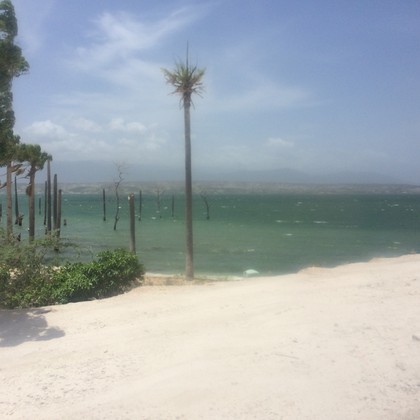
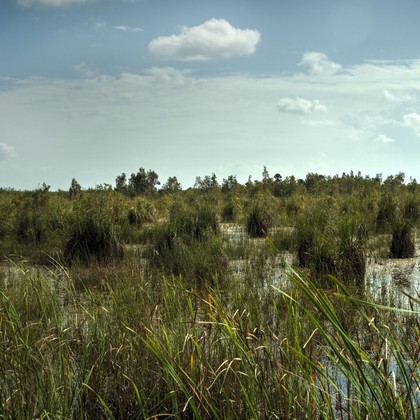
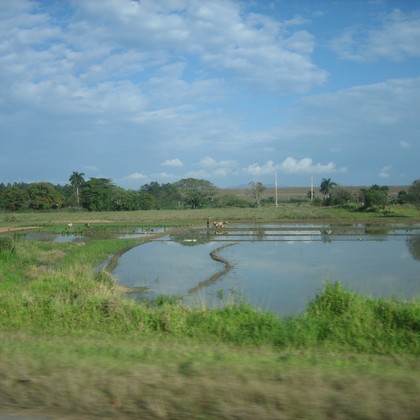
Small, shallow freshwater pools and ponds with plenty of floating plants and fringing vegetation, cattail marshes, ditches and canals, rice fields and temporary rain pools; locally also brackish pools behind mangroves. It eats small fish, insects and their larvae and other invertebrates, caught by diving. The nest is a floating heap of plant material anchored to vegetation.
Where the bird is most at home, classified by the vegetation types of the Caribbean.

Range and movements
Resident in the Bahamas, Cuba, Jamaica, Hispaniola and Puerto Rico, including Vieques and Culebra, and in Trinidad and Tobago. On the other islands the species is scarce or irregular; scattered records are known from the Lesser Antilles. Beyond the region from the south-western United States and Mexico through Central America to Argentina.
- Resident
- dark = core range, pale = thinly spread
How and when to look
In Puerto Rico regularly in the Caño Tiburones nature reserve, in Cuba in the marshes and ponds of the Zapata Peninsula. Small, well-vegetated ponds with some open water offer the best chance; the bird dives quickly and often resurfaces half hidden among the plants.
Conservation status
Not threatened; the world population is considered stable. On the islands the species loses habitat locally through the draining and filling of small wetlands, but it also takes up newly created waters, such as farm ponds and reservoirs.
Scientific name
Tachybaptus dominicus | (Linnaeus, 1766)
Linnaeus described the species in 1766 as Colymbus dominicus; because it was later moved to another genus, the author and year stand in brackets. The genus Tachybaptus was introduced in 1853 by Reichenbach. Tachybaptus is Greek, from takhus 'fast' and baptō 'to sink under, dive'. dominicus means 'of Santo Domingo', the old name for Hispaniola. The specimen the first description was based on came from Hispaniola (Santo Domingo).