All species › Gamebirds › Guineafowl › Helmeted Guineafowl
Helmeted Guineafowl | Numida meleagris
Helmparelhoen | Pintada común
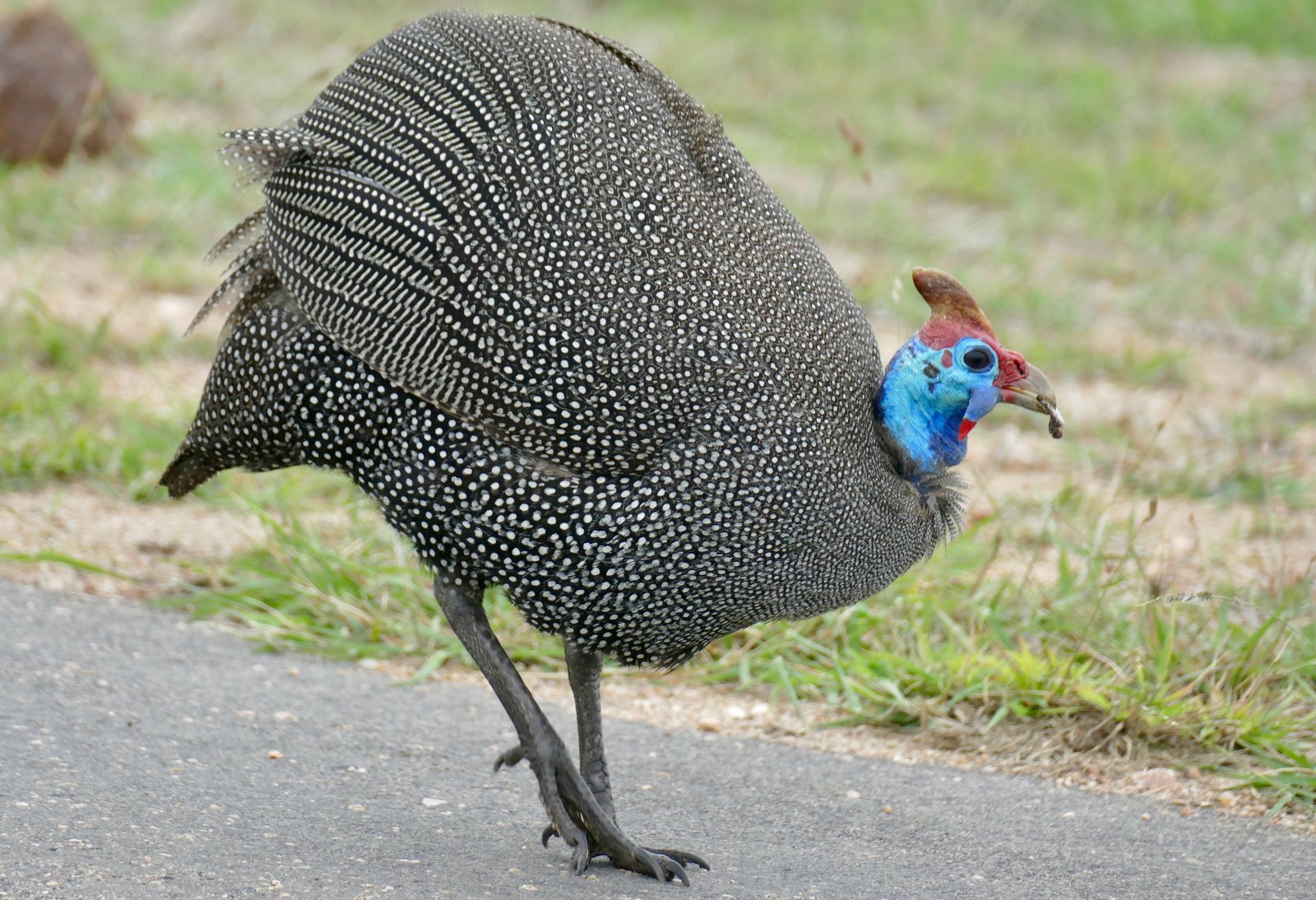
The Helmeted Guineafowl is a dumpy, slate-grey fowl densely spotted with white, with a bare blue-and-red head topped by a horny casque. It is not native to the Caribbean: the species comes from Africa and was brought to the islands as a domestic bird as early as the colonial period. Feral flocks live on Hispaniola and in Cuba, where they are also hunted.
Voice
A harsh, grating kek-kek-kek-kaaa and a repeated, two-syllable ker-rek ker-rek from the female. When disturbed the flock keeps up a continuous hoarse cackling.
Recording: Walter Wallner — CC BY-NC-SA 4.0 · converted to mono · xeno-canto
Identification
53–63 cm, round-bodied, with a small head and a short, drooping tail. The plumage is slate-grey, densely spotted with white. Head and upper neck are bare and blue-grey, with red wattles at the base of the bill and a bony casque on the crown. The sexes are alike. Domestic birds and their descendants can differ: paler, whitish or partly white birds occur. It prefers running to flying; when flushed it flies off low on whirring wings.
Confusion species
Not to be confused with any other bird in the region. Domestic guineafowl in aberrant colours belong to the same species.
Habitat
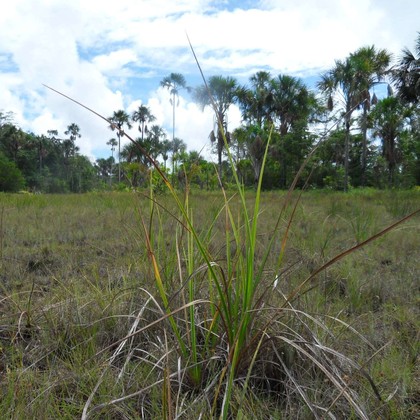
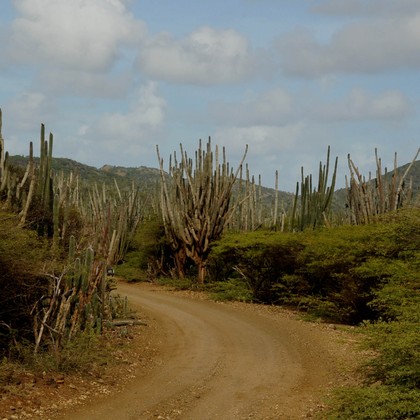
Open country: savanna, pasture, fields, dry scrub and forest edge, often near farms and villages. It forages in groups on the ground for seeds, insects and other small food and roosts in trees at night.
Where the bird is most at home, classified by the vegetation types of the Caribbean.


Range and movements
Feral on Hispaniola, chiefly in the Dominican Republic, where it is locally common, and in Haiti; locally in the wild in Cuba. In Puerto Rico, the US and British Virgin Islands, Antigua and Barbuda, Barbados and the Cayman Islands the birds are mostly kept or semi-wild; how far self-sustaining populations have become established there is not well known. Native to Africa south of the Sahara; kept as a domestic bird worldwide and feral in further places.
- Resident
- dark = core range, pale = thinly spread
How and when to look
In the Dominican Republic in open, dry farmland, where flocks forage along roads and field edges early in the morning and late in the afternoon. On many islands kept birds roam freely in farmyards.
Conservation status
Not threatened globally. In the Caribbean an alien. The feral flocks are hunted; little is known about effects on native species.
Scientific name
Numida meleagris | (Linnaeus, 1758)
Linnaeus described the species in 1758 as Phasianus Meleagris; because it was later moved to another genus, the author and year stand in brackets. The genus Numida was introduced in 1764 by Linnaeus. Numida is Latin for 'Numidian', an inhabitant of North Africa. meleagris is the Greek word for guineafowl. The specimen the first description was based on came from Nubia on the upper Nile.