All species › Pelicans, herons and ibises › Herons and bitterns › Grey Heron
Grey Heron | Ardea cinerea
Blauwe reiger | Garza real
The Grey Heron is the large grey heron of Europe, Africa and Asia. Young birds occasionally cross the Atlantic on the trade winds and end up in the Lesser Antilles or Trinidad and Tobago. A bird shot on Trinidad in 1959 had been ringed as a nestling in France; it was the first record for the New World.
Voice
Usually silent. On take-off a loud, harsh fraank.
Recording: Philippe Grange — CC0 · converted to mono · xeno-canto
Identification
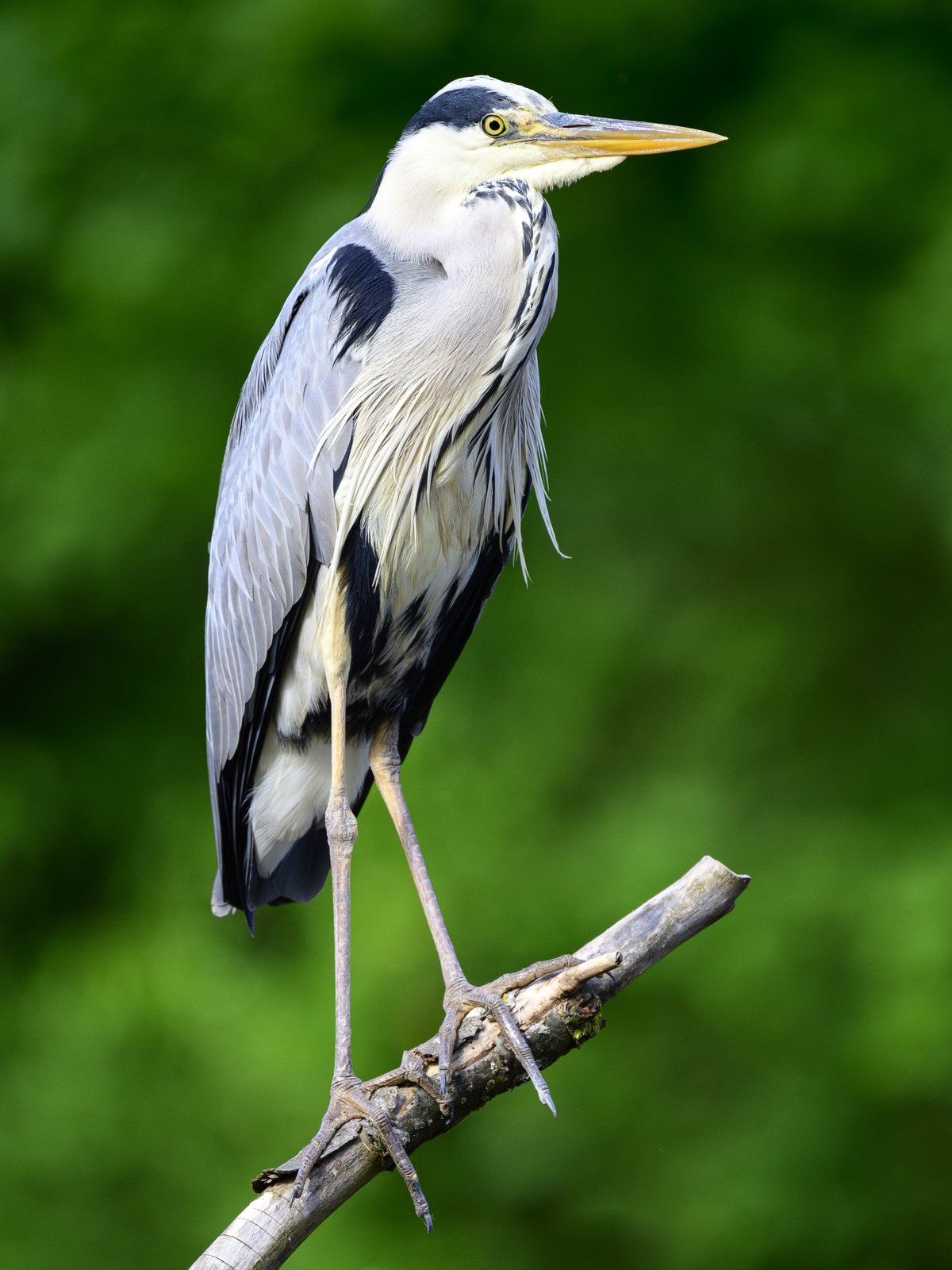
84–102 cm, large and slender, with a long neck and a dagger-shaped yellow bill. Adults are blue-grey above, with a white head and a broad black stripe from above the eye to a short black crest. The neck is white to pale grey, with black streaks down the front; the underparts are white to pale grey, with a black band on the side. The thighs are white or whitish and the bend of the wing is white. Juveniles, which make up most vagrants, are plainer grey, with a grey crown without a clear cap, a greyish neck and a darker bill. In flight the black flight feathers contrast with the grey coverts.
Confusion species
Great Blue Heron Ardea herodias is larger and heavier, with a stouter bill, cinnamon to rufous thighs and wing bend, a darker, vinous-tinged neck and, in young birds, a dark cap. These features need careful documentation for birds in the Lesser Antilles. Cocoi Heron Ardea cocoi has an all-black crown, a white neck and black flanks and belly.
Habitat
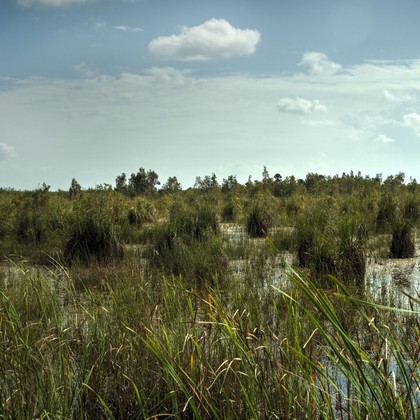
In the region mainly at salt pans, lagoons, mudflats and mangroves along the coast, also at freshwater pools. It eats mainly fish, also amphibians, small mammals and large insects, caught standing or wading slowly in shallow water.
Where the bird is most at home, classified by the vegetation types of the Caribbean.




Range and movements
Records from Trinidad and Tobago (five between 1959 and 2006, four on Trinidad and one on Tobago), Barbados, Guadeloupe, Martinique and Montserrat. On Barbados up to six birds stayed long-term from about 1997. The map shows a few scattered reports; not every report is documented. Outside the region the species breeds across much of Europe, Africa and Asia.
How and when to look
Any large grey heron in the Lesser Antilles or Trinidad and Tobago deserves a careful look at the colour of the thighs and wing bend, which separates it from Great Blue Heron. Photographs of the bird in flight and of the thighs are needed to document a record.
Conservation status
Not threatened. The species is common across much of its range.
Scientific name
Ardea cinerea | Linnaeus, 1758
Linnaeus described the species in 1758 and placed it straight away in the genus where it still stands. He introduced the genus Ardea in that same work. Ardea is the Latin word for 'heron'. cinerea is Latin for 'ash-grey', from cinis 'ashes'. The specimen the first description was based on came from Sweden.