All species › Hummingbirds and swifts › Hummingbirds › Green-throated Carib
Green-throated Carib | Eulampis holosericeus
Groenkeelkolibrie | Colibrí caribeño gorjiverde
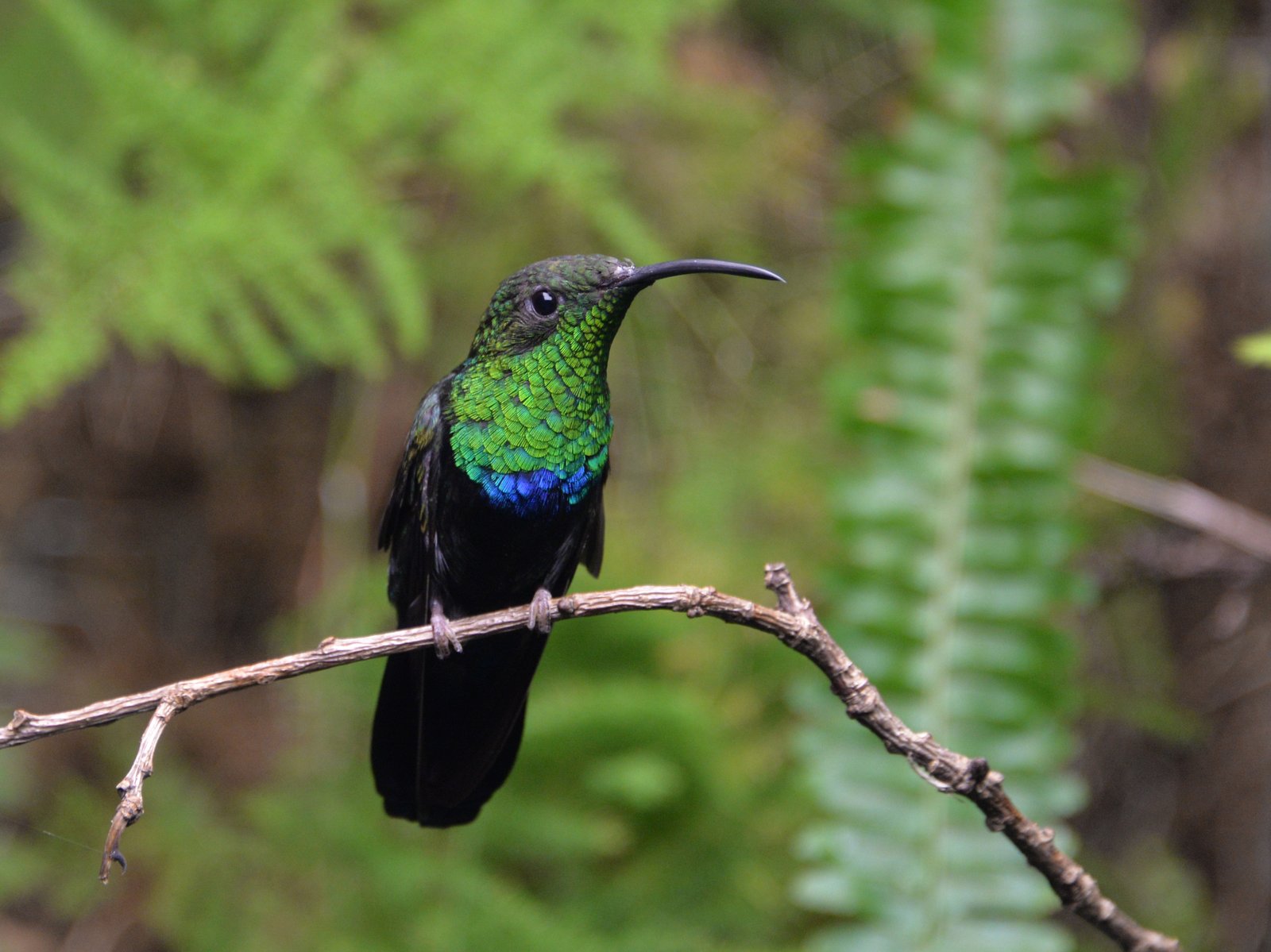
The Green-throated Carib is the common large hummingbird of the lowlands of the Lesser Antilles and the Virgin Islands, often the first hummingbird a visitor sees in a hotel garden. It is the closest relative of the Purple-throated Carib, with which it forms the genus Eulampis. It defends flowering shrubs and feeders vigorously against other hummingbirds.
Voice
A sharp, dry chup or chewp, often repeated while chasing other hummingbirds. In territorial disputes it also makes rattling and whirring sounds with the wings.
Recording: Daniel Lane — CC BY-NC-SA 3.0 · converted to mono · xeno-canto
Identification
10–12 cm, with a curved black bill, slightly longer in the female than in the male. Upperparts glossy green, throat and upper breast glittering emerald, with a small bright blue patch in the centre of the breast below. Belly blackish, tail blue-black. In shade the bird looks all dark and the blue breast patch is often invisible. Sexes alike; juveniles are duller, with a less glossy throat.
Confusion species
Purple-throated Carib Eulampis jugularis is the same size but has a black body, a garnet throat and green wing coverts. Antillean Crested Hummingbird Orthorhyncus cristatus is much smaller, with a short straight bill and a crest. In Puerto Rico, Green Mango Anthracothorax viridis and Puerto Rican Mango (Anthracothorax aurulentus, see Hispaniolan Mango) differ by white tips to the outer tail feathers or a green throat over black underparts without a blue breast patch. Blue-headed Hummingbird Riccordia bicolor has a straight bill, and the male a blue head.
Habitat
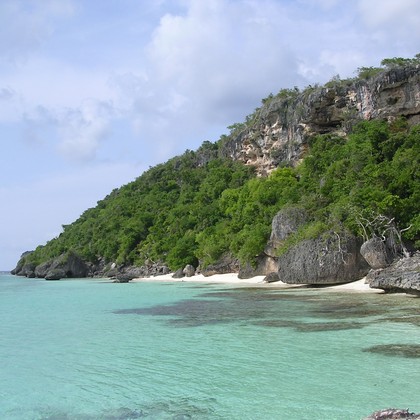
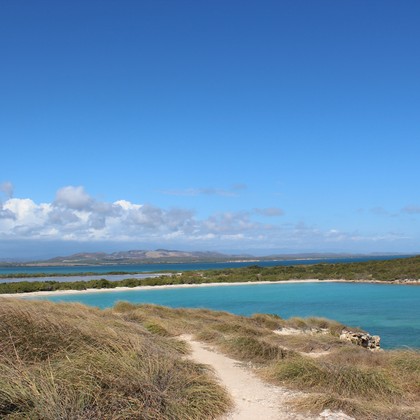
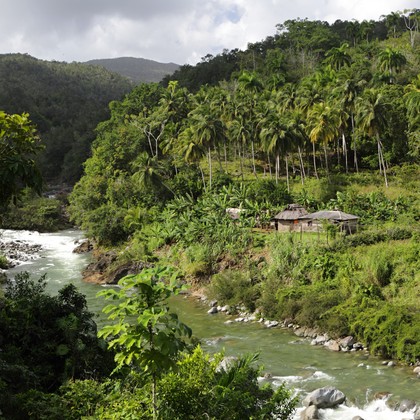
Gardens, parks, coastal woodland and scrub, dry and semi-evergreen forest, plantations and forest edges; on most islands mainly from sea level to the lower slopes, on Dominica chiefly in the hills. On Martinique also in drier country. Frequently visits flowering trees and shrubs, including garden ornamentals.
Where the bird is most at home, classified by the vegetation types of the Caribbean.



Range and movements
Resident from eastern Puerto Rico (with Culebra and Vieques) through the US and British Virgin Islands and the whole Lesser Antilles chain to Grenada and Barbados; birds on Grenada belong to a separate subspecies. Scarce in western Puerto Rico. A few records elsewhere, such as Trinidad and Tobago, concern wanderers at most. Does not occur outside the region.
- Resident
- dark = core range, pale = thinly spread
How and when to look
Almost anywhere within its range in gardens with flowering shrubs and at feeders, including in coastal towns. A perched bird in sunlight is best: only then does the blue breast patch light up.
Conservation status
Not threatened. The species is common and benefits from gardens and plantings. Numbers can drop locally for a time after severe hurricanes.
Scientific name
Eulampis holosericeus | (Linnaeus, 1758)
Linnaeus described the species in 1758 as Trochilus holosericeus; because it was later moved to another genus, the author and year stand in brackets. The genus Eulampis was introduced in 1831 by Boie. Eulampis is Greek, from eu 'fine, good' and lampis 'lamp, torch': 'finely shining', after the glittering plumage. holosericeus combines Greek holos 'entire' and Latin sericeus 'silky': 'all silky', after the glossy plumage. The specimen the first description was based on came from Lesser Antilles.