All species › Waterfowl › Ducks and geese › Greater White-fronted Goose
Greater White-fronted Goose | Anser albifrons
Kolgans | Ánsar careto
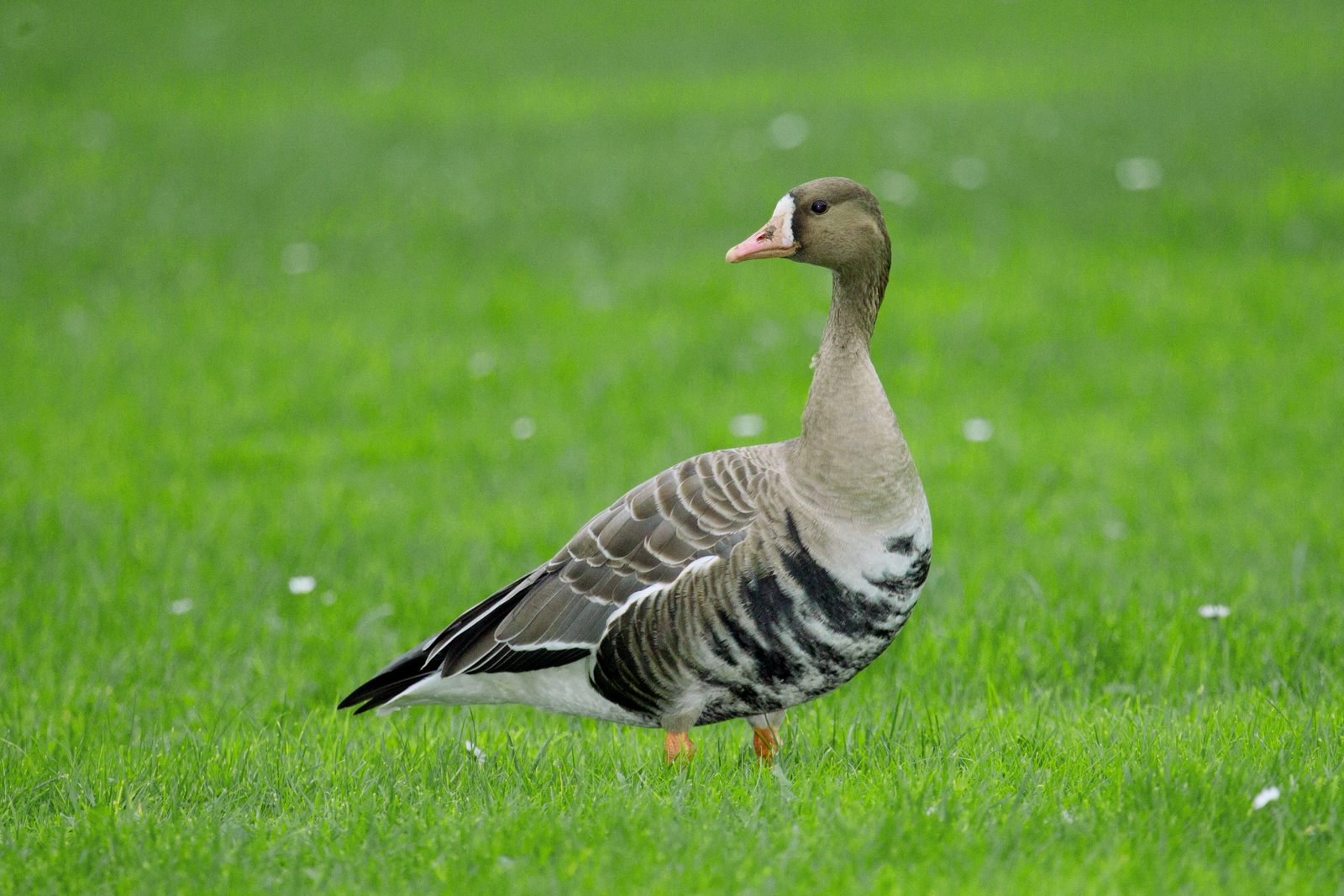
The Greater White-fronted Goose is a greyish-brown goose with a white blaze at the base of the bill and black bars across the belly. It breeds on the tundra of the far north and in North America winters mainly in the southern United States and Mexico. In the Caribbean it is a rare vagrant; in Cuba it is called guanana.
Voice
A high, laughing kow-lyow or lyo-lyok, often in flight and mainly from flocks; a lone bird in the region is usually silent.
Recording: David Darrell-Lambert — CC BY-NC-SA 4.0 · converted to mono · xeno-canto
Identification
64–81 cm, a medium-sized greyish-brown goose with a darker head and neck. The adult has a sharply defined white blaze around the base of the bill and irregular black bars and blotches on the paler belly. The bill is pink to orange-pink and the legs orange. The undertail coverts and a narrow line along the flank are white. Juveniles lack the blaze and belly markings and have a duller bill with a dark tip; they are the birds most often seen in the region. In flight the wings are greyish-brown, without the pale grey forewing of Greylag Goose.
Confusion species
Domestic geese, which live by farms and ponds on many islands, are heavier, often show white in the plumage and lack the combination of white blaze and black belly bars. Canada Goose Branta canadensis has a black head and neck with a white cheek patch. Snow Goose Anser caerulescens of the dark morph (Blue Goose) has a white head and a dark body, and a bill with a black 'grin'. Juvenile White-fronts without the blaze differ from domestic Greylag-type geese in their slimmer build and orange legs.
Habitat
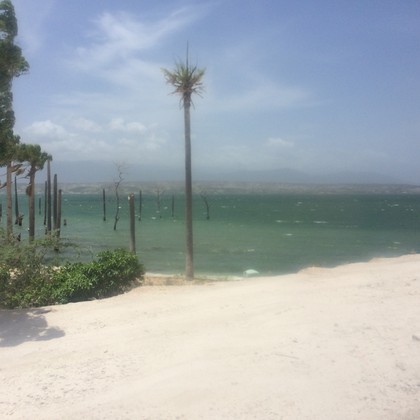
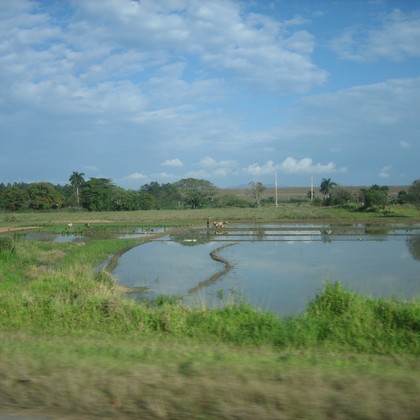
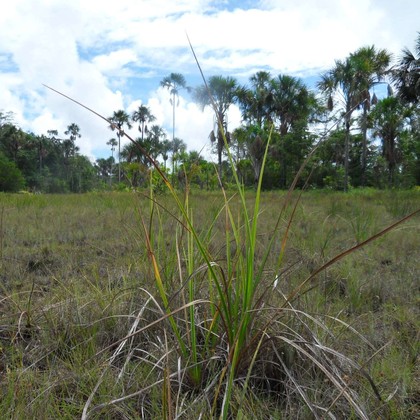
In the Caribbean mainly at freshwater lakes and ponds, rice fields and short grassland or pasture, often with other waterfowl or domestic geese. It eats grass, seeds and grain, on land and in shallow water.
Where the bird is most at home, classified by the vegetation types of the Caribbean.

Range and movements
The main sites for records are the Bahamas and Cuba; in Cuba the species is considered rare. Most records fall in the north of the region. Most islands have no records. Outside the region it breeds around the Arctic, in Alaska, northern Canada, Greenland and northern Russia, and winters in the southern United States, Mexico, Europe and Asia.
How and when to look
A White-front in the region often sits among domestic geese or ducks on a pond or in a rice field. With any wild goose it pays to check for the white blaze, the belly bars and the orange legs.
Conservation status
Not threatened globally. In the Caribbean a rare vagrant.
Scientific name
Anser albifrons | (Scopoli, 1769)
Scopoli described the species in 1769 as Branta albifrons; because it was later moved to another genus, the author and year stand in brackets. The genus Anser was introduced in 1760 by Brisson. Anser is the Latin word for 'goose'. albifrons is Latin, from albus 'white' and frons 'forehead', after the white blaze around the base of the bill. The specimen the first description was based on came from northern Italy.