All species › Passerines › Vireos › Cuban Vireo
Cuban Vireo | Vireo gundlachii
Cubaanse vireo | Juan chiví
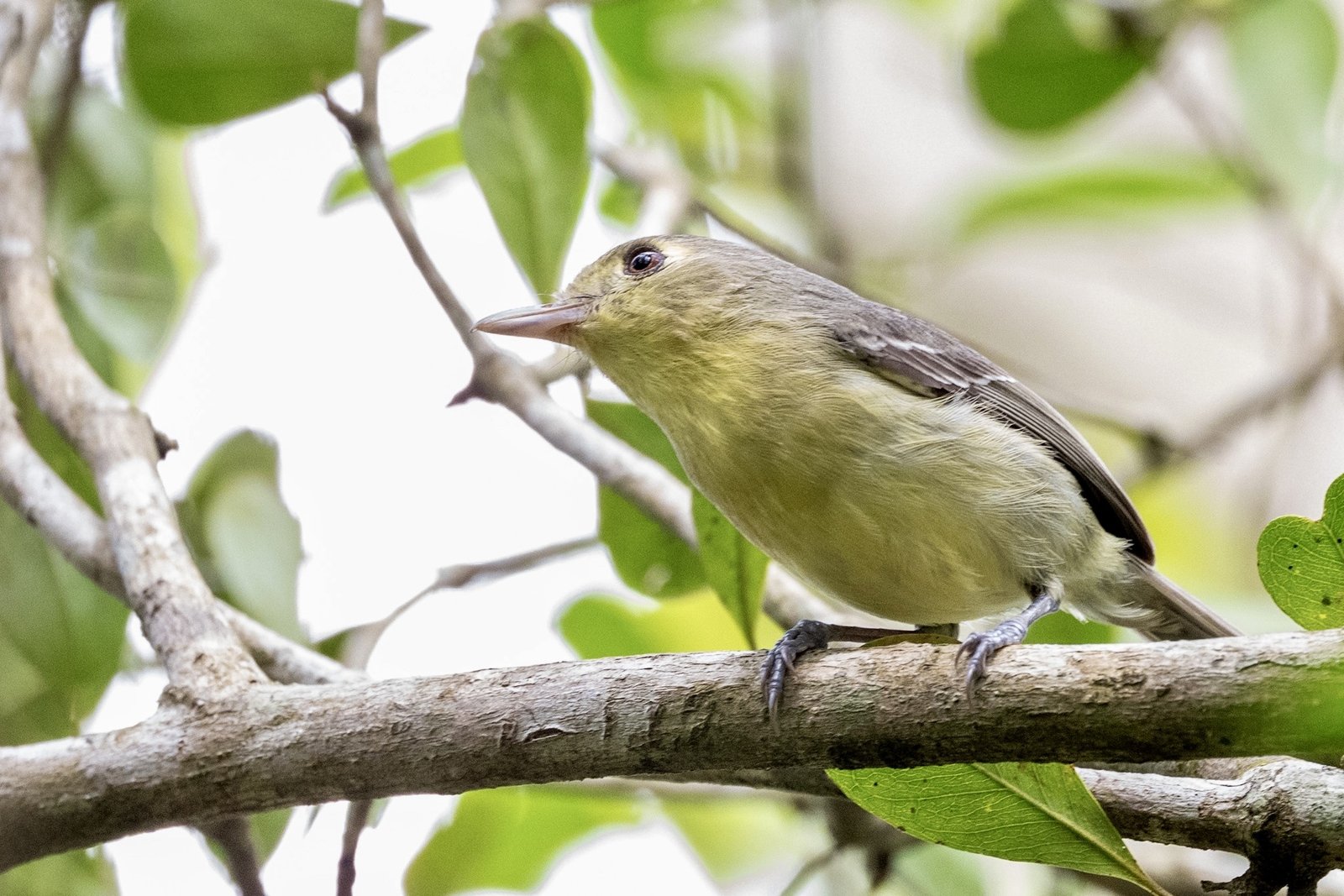
The Cuban Vireo is a stocky, large-headed vireo found only in Cuba, the Isla de la Juventud and a number of cays. It is common on the island and draws attention mainly through its endlessly repeated call, the source of the Spanish name juan chiví. Most classifications recognise four subspecies, spread over the main island, the Isla de la Juventud and some offshore islets.
Voice
The song is a high, endlessly repeated wi-chiví, often given for hours from the same perch. Also a rapid descending series of chi notes, scolding sounds and a soft rattling call.
Recording: FREDERIC Lionel — CC BY-NC-SA 4.0 · converted to mono · xeno-canto
Identification
About 13 cm, plump, with a large head and a fairly heavy, pale bill. Crown, nape and ear coverts are olive-grey. Around and behind the eye there is a broad yellow to creamy-white patch, forming an indistinct spectacle through the eye; the iris is dark. The upperparts are olive-grey, the throat and breast yellowish, the belly and undertail paler and the flanks greyish yellow. The wing has two faint pale wing bars and pale-edged flight feathers. The sexes are alike; juveniles are duller.
Confusion species
White-eyed Vireo Vireo griseus, a winter visitor mainly in western Cuba, is slimmer, with narrow yellow spectacles, clear white wing bars, yellow flanks and, in adults, a white iris. On some cays off the north coast lives Thick-billed Vireo Vireo crassirostris, with a heavier bill and more distinct wing bars. Yellow-throated Vireo Vireo flavifrons, a scarce winter visitor, has a bright yellow throat and breast, a white belly and two clear white wing bars.
Habitat
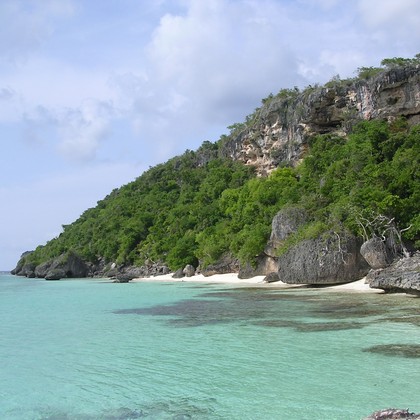
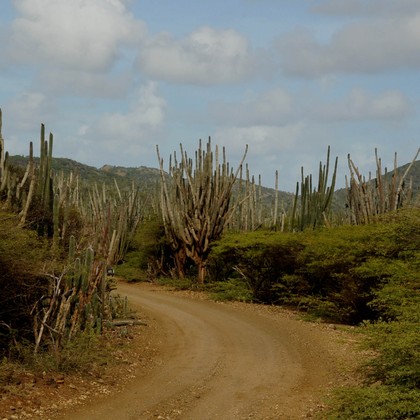
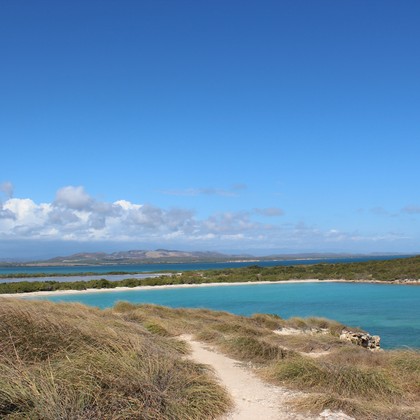
Edges of evergreen and deciduous forest, dense thickets, brushland and scrub, including coastal scrub and the limestone forest of the mogotes, from sea level to about 700 m and locally higher. It forages in the lower and middle storeys for insects and caterpillars and also takes small fruits. The nest is a suspended cup in the fork of a branch, low in the undergrowth.
Where the bird is most at home, classified by the vegetation types of the Caribbean.



Range and movements
Only in Cuba, the Isla de la Juventud and some cays, across the whole island wherever there is forest or scrub. The species does not occur outside Cuba.
- Resident
- dark = core range, pale = thinly spread
How and when to look
In almost any forest or scrub in Cuba, for example on the Zapata Peninsula and in the Sierra del Rosario. The repeated call is the best lead; the bird itself moves slowly through dense vegetation and is seen only with some searching.
Conservation status
Not threatened. The species is common and tolerates secondary forest and scrub.
Scientific name
Vireo gundlachii | Lembeye, 1850
Lembeye described the species in 1850 and placed it straight away in the genus where it still stands. The genus Vireo was introduced in 1808 by Vieillot. Vireo was used by Latin authors for a small, green, migratory bird, probably the Eurasian golden oriole, though the European greenfinch has also been suggested. gundlachii honours the German-Cuban naturalist Juan (Johannes) Gundlach (1810–1896), who studied the fauna of Cuba for over sixty years. The specimen the first description was based on came from Cienfuegos, Cuba.