All species › Passerines › Tanagers › Cuban Grassquit
Cuban Grassquit | Phonipara canora
Kleine Cubavink | Tomeguín del pinar
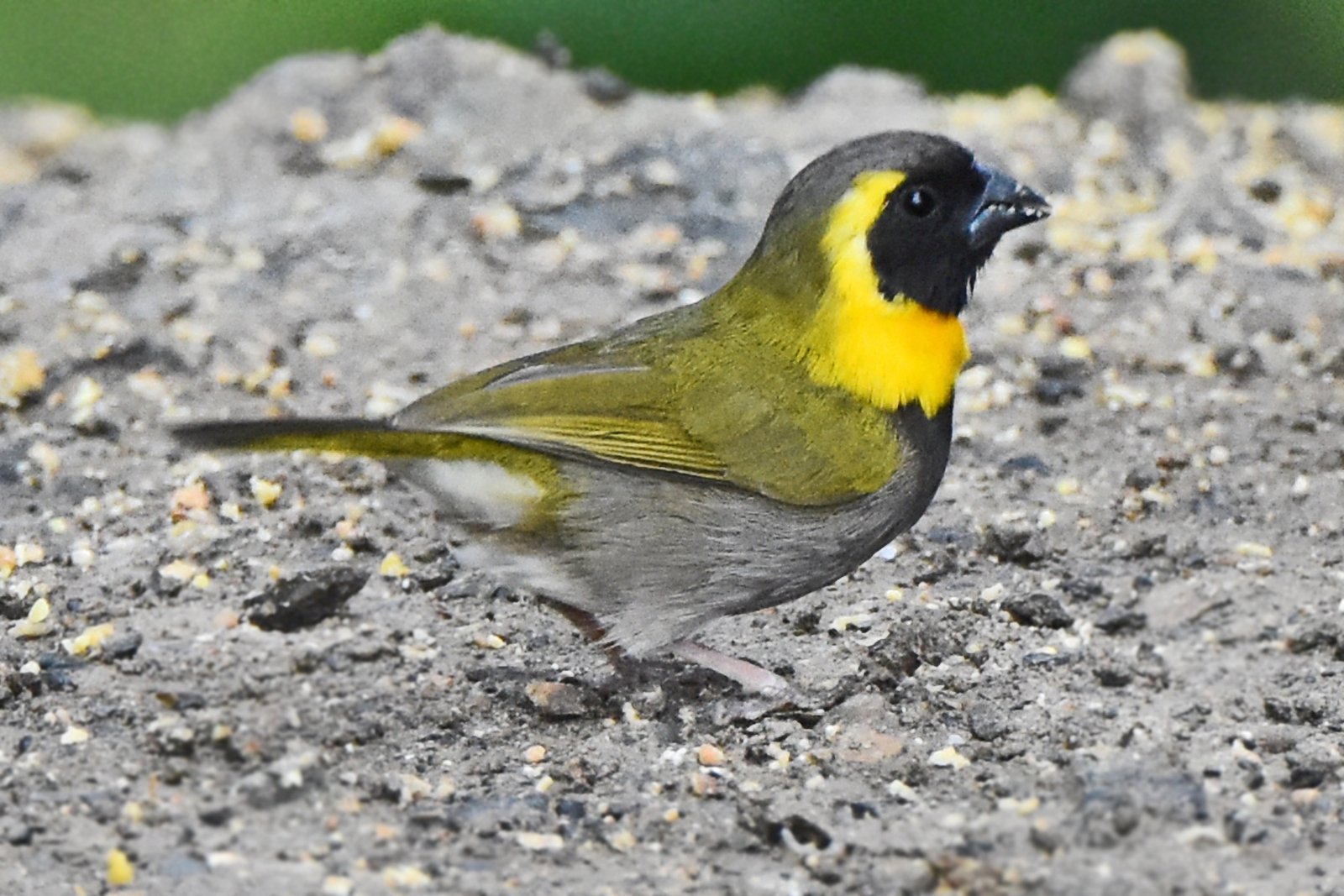
The Cuban Grassquit is a grassquit endemic to Cuba, where it is called tomeguín del pinar. It is a popular cage bird for its song, and in the early 1960s it was released on New Providence in the Bahamas, where it has become established. Outside the breeding season it forms small flocks, sometimes with Yellow-faced Grassquits.
Voice
The call is a short chip. There is also a high, rasping sound, compared with the song of the Bee Hummingbird, and a melodious whistle, which gives the alternative English name Melodious Grassquit.
Recording: FREDERIC Lionel — CC BY-NC-SA 4.0 · shortened to the first 60 s, mono · xeno-canto
Identification
11–12 cm, with a short, black, conical bill and pink legs. The male has olive-green upperparts, a grey-olive crown and a black face and throat. A bright yellow crescent runs from above the eye around the ear coverts to the lower throat and is often broken in the centre. The lower breast is black, the belly and breast sides grey. The female is duller, with a dark chestnut instead of black face, a paler yellow crescent and an all-grey breast. Juveniles resemble the female but are duller still.
Confusion species
Yellow-faced Grassquit Tiaris olivaceus has a yellow supercilium and a yellow throat; the male has a yellow throat and black breast, without a yellow crescent around the ear coverts. Black-faced Grassquit Melanospiza bicolor, in Cuba only on a few cays off the north coast, lacks any yellow.
Habitat
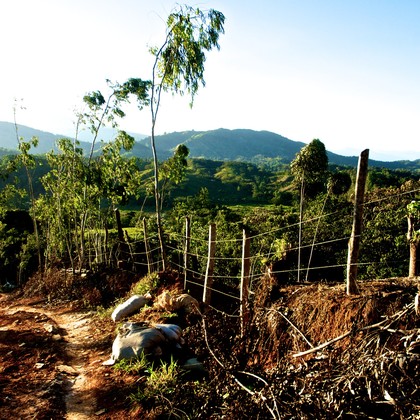
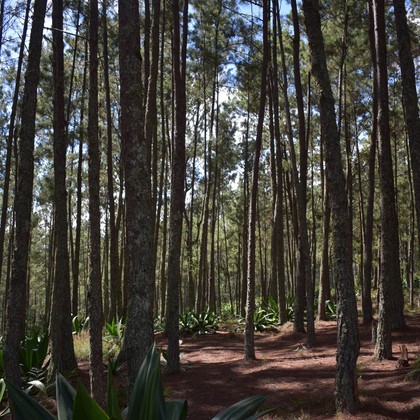
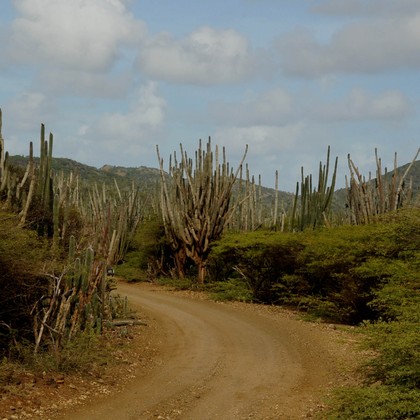
Forest edges, scrub, dry forest and semi-arid country, pine forest, coastal scrub, coffee and citrus plantations and other farmland with rough growth, from sea level to mid-elevations. It eats mainly seeds, plus small fruits and young shoots, often on the ground; seeds are also taken from stems with an upward hop. Males defend territories vigorously. Both partners build a bulky, globular nest of dry grass with a side entrance, often low in spiny vegetation. The breeding season runs from March to October; the clutch is two or three eggs.
Where the bird is most at home, classified by the vegetation types of the Caribbean.




Range and movements
Fairly common throughout Cuba, including the Isla de la Juventud. Introduced on New Providence in the Bahamas, where it has become established. Not recorded elsewhere in the region; a few records in Florida probably involve escaped cage birds.
- Resident
- dark = core range, pale = thinly spread
How and when to look
Forest edges and thickets in western Cuba, for example around Soroa in the Sierra del Rosario, are good places. Flocks of grassquits on the ground are worth checking: the yellow crescent around the ear coverts separates this species from Yellow-faced Grassquit.
Conservation status
Not threatened. The species is fairly common in Cuba, but local declines are reported near settlements. Trapping for the cage-bird trade and deforestation are named as threats.
Scientific name
Phonipara canora | (Gmelin, 1789)
Gmelin described the species in 1789 as Loxia canora; because it was later moved to another genus, the author and year stand in brackets. The genus Phonipara was introduced in 1850 by Bonaparte. Phonipara combines Greek phōnē 'voice' with Latin parus 'tit': a 'vocal tit', after the bird's song. canora is Latin for 'melodious', after the song. The specimen the first description was based on came from Cuba (originally given in error as 'New Spain', Mexico).