All species › Passerines › Thrushes › Cocoa Thrush
Cocoa Thrush | Turdus fumigatus
Cacaolijster | Zorzal cacao
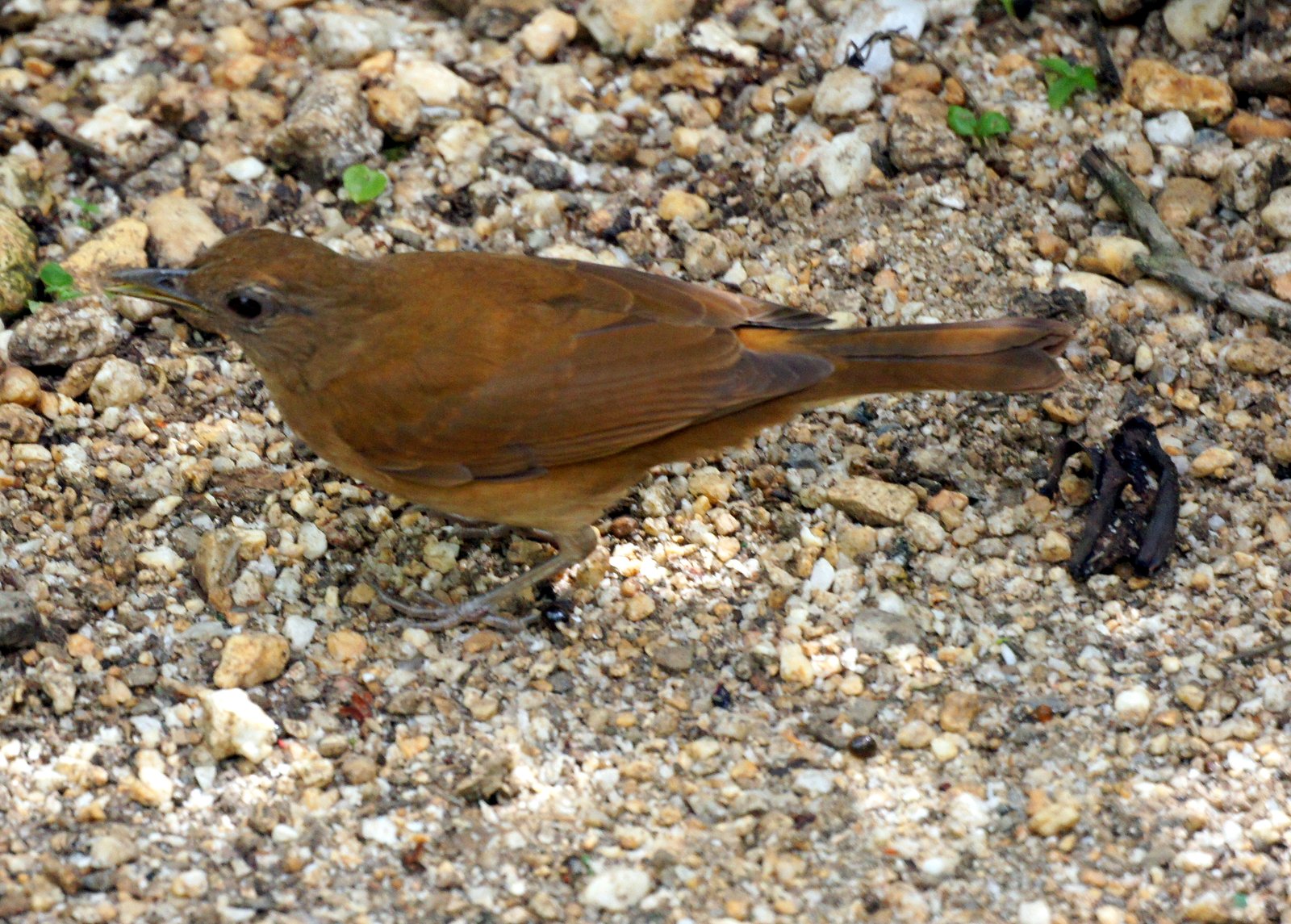
The Cocoa Thrush is a plain rufous-brown thrush of forest and shaded plantations, named for its liking for cacao groves. In the Caribbean it lives on Trinidad and on Grenada and Saint Vincent, each with its own subspecies; it is absent from Tobago. On Trinidad it is used to people in some places and comes to feeders.
Voice
A long, musical caroling of numerous strung-together phrases, faster and higher than that of Spectacled Thrush. Calls are a rough bak, a chuck in flight, a rattling chat-shat-shat when alarmed and a harsh kik-ik-ik-ik alarm.
Recording: Jelle Scharringa — CC BY-NC-SA 4.0 · converted to mono · xeno-canto
Identification
22–24 cm. Head, upperparts, wings and tail are warm foxy brown. The throat is pale buff to whitish with dark streaks, the breast and flanks pale orange-brown, the belly to undertail whitish with brown feather tips. Iris dark, bill and legs brownish grey; there is no contrasting eye-ring. The sexes are alike. Juveniles have pale streaks above, orangey spots on the wing-coverts and dark brown mottling below.
Confusion species
Spectacled Thrush Turdus nudigenis is greyer olive-brown, with a broad bare yellow eye-ring and a yellow bill. The female Yellow-legged Thrush Turdus flavipes has a yellowish eye-ring and yellow legs. White-necked Thrush Turdus albicollis has a white half-collar below the streaked throat, a grey breast and an orange eye-ring.
Habitat
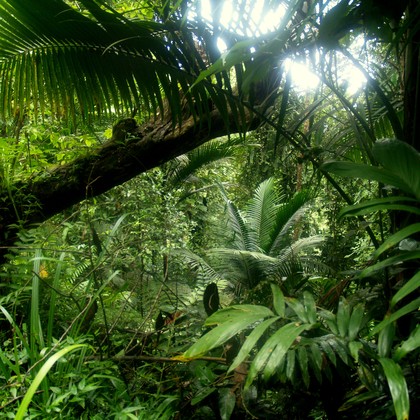
The interior, clearings and edges of humid forest, gallery and streamside forest, and shaded cacao and coffee plantations; on Trinidad also parks and gardens next to forest. On Trinidad mainly below 1000 m. It forages on the ground and in low vegetation for invertebrates and climbs into fruiting trees. The nest is a cup of plant material and mud with moss on the outside, up to 5 m up. On Trinidad it breeds almost year-round, peaking in May and June.
Where the bird is most at home, classified by the vegetation types of the Caribbean.



Range and movements
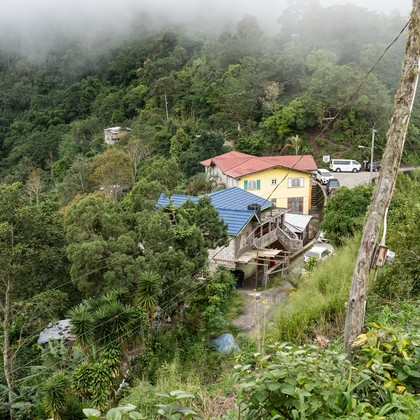
Common in forested areas on Trinidad, especially the Northern Range; absent from Tobago. Also on Grenada and Saint Vincent, in montane forest. Outside the area in Venezuela, Colombia, the Guianas and Amazonian Brazil.
- Resident
- dark = core range, pale = thinly spread
How and when to look
In the forests of the Northern Range on Trinidad, where birds often come close at lodges and feeders. On Saint Vincent and Grenada in montane forest, best early in the morning when the song is heard.
Conservation status
Least Concern. The species has a large range and also uses plantations and gardens. The small island populations on Grenada and Saint Vincent depend on the remaining forest.
Scientific name
Turdus fumigatus | Lichtenstein, 1823
Lichtenstein described the species in 1823 and placed it straight away in the genus where it still stands. The genus Turdus was introduced in 1758 by Linnaeus. Turdus is the ordinary Latin word for 'thrush'. fumigatus is Latin for 'smoked', after the uniform smoky-brown plumage. The specimen the first description was based on came from Rio Espírito Santo, Brazil.