All species › Passerines › Swallows and martins › Cave Swallow
Cave Swallow | Petrochelidon fulva
Holenzwaluw | Golondrina pueblera
The Cave Swallow is the common breeding swallow of the Greater Antilles: numerous on Puerto Rico, Hispaniola and Jamaica, and on Cuba in the breeding season. It nests in colonies in caves, sinkholes, under bridges and under eaves. Several forms are usually recognised in the Greater Antilles, differing little from one another; Cuban birds have also bred in southern Florida since the 1980s.
Voice
A clear, nasal chee, and a song of squeaky notes that run into a varied, twittering warble. Much twittering around the colony.
Recording: Andrew Spencer — CC BY-NC-SA 3.0 · shortened to the first 60 s, mono · xeno-canto
Identification
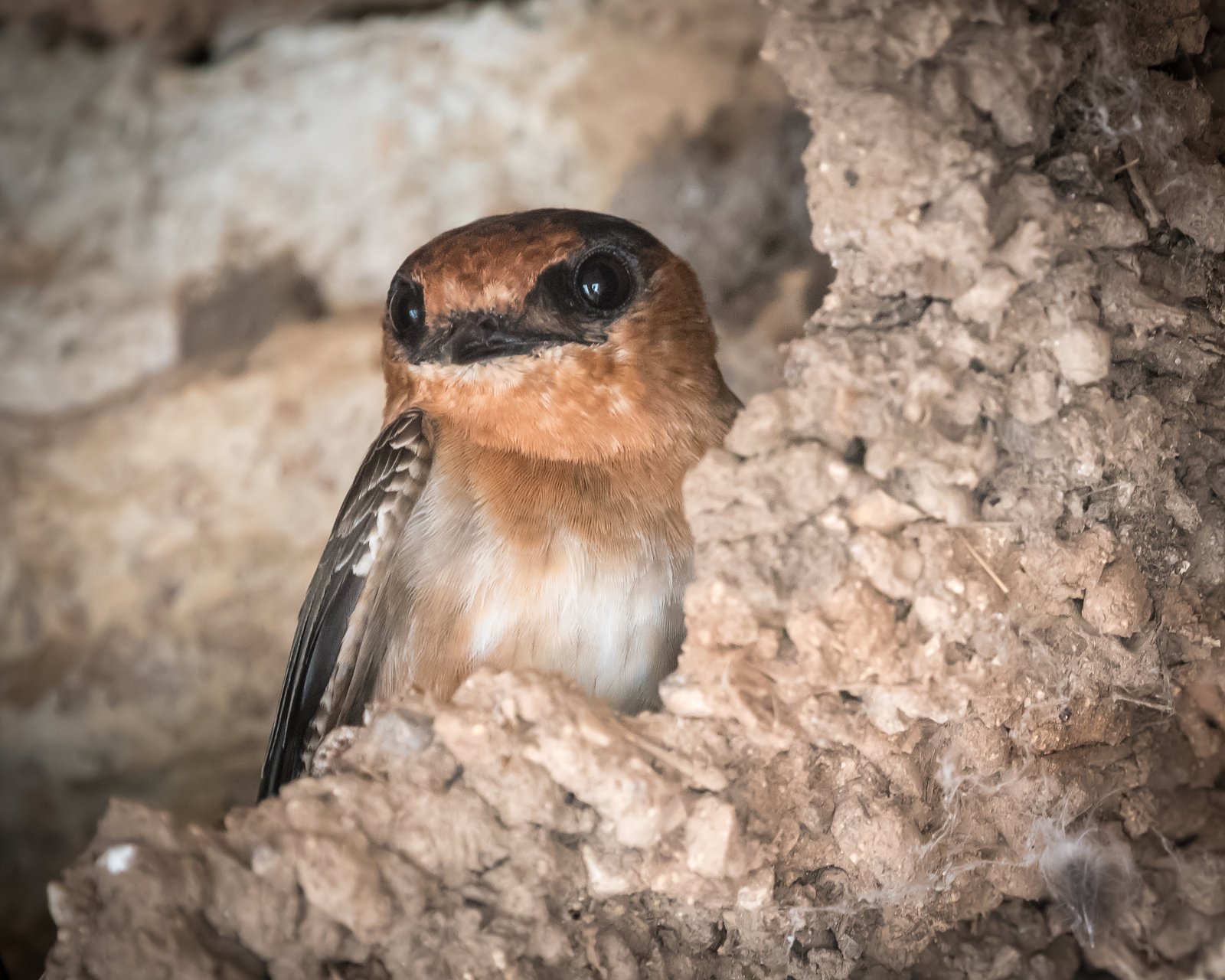
12–14 cm, stocky, with a square or slightly notched tail. The crown and back are dark blue-black, with pale streaks on the back. The forehead is cinnamon; the cheeks, throat and sides of the neck are pale buff to rufous. The breast and flanks are buffy brown, the belly paler. The rump is rufous to dark cinnamon. The sexes are alike. Juveniles are duller and browner.
Confusion species
American Cliff Swallow Petrochelidon pyrrhonota, a scarce passage migrant, usually has a white forehead, a dark chestnut throat with a black patch and a paler rump. Barn Swallow Hirundo rustica has a deeply forked tail, a dark rump and a dark band below the throat. Golden Swallow Tachycineta euchrysea and Caribbean Martin Progne dominicensis have white underparts and no rufous rump.
Habitat
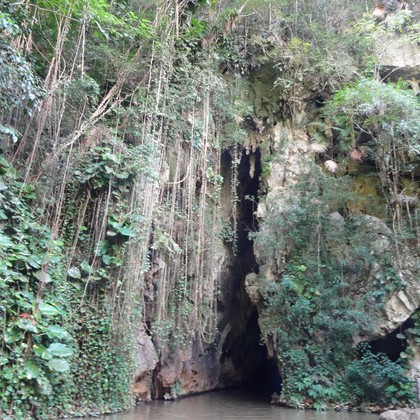
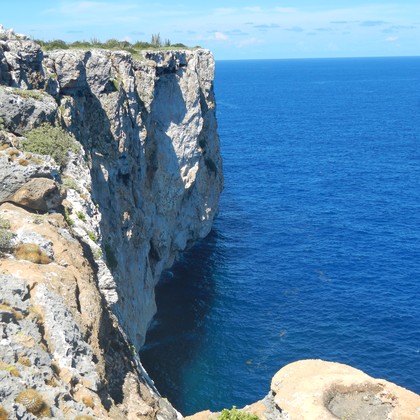
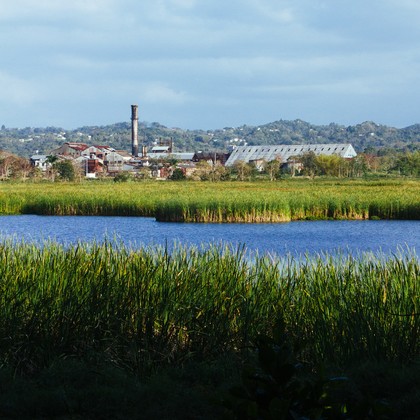
Open country, pastures, farmland, coast, mangroves, marshes and built-up areas, from sea level into the mountains, often in limestone country with caves. It hunts flying insects in flocks. It breeds in colonies; the nest is an open cup of mud, sometimes with bat guano, on the wall of a cave or sinkhole, under a bridge, in a culvert or under eaves. On Puerto Rico it breeds year-round, peaking in June.
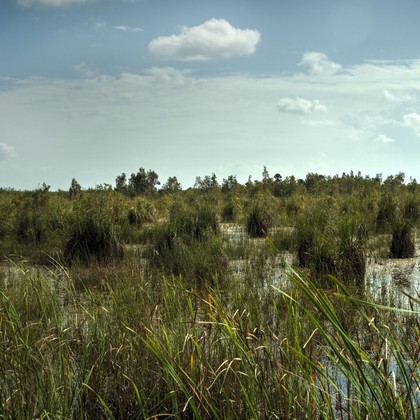
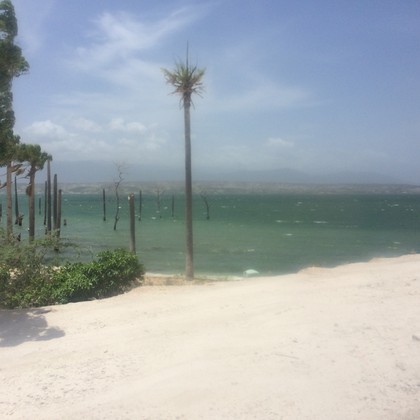
Where the bird is most at home, classified by the vegetation types of the Caribbean.


Range and movements
Resident on Jamaica, Hispaniola (Haiti and the Dominican Republic) and Puerto Rico, where it is common; on Vieques mainly a passage migrant. On Cuba and the Isla de la Juventud mainly a summer visitor, largely absent in winter. A rare visitor to the Bahamas, the Cayman Islands and the Virgin Islands; records from the Lesser Antilles and the ABC Islands are rare. Outside the region in southern Florida, the southern United States and Mexico.
- Resident
- Summer visitor (c. Oct–Mar)
- Winter visitor (c. Apr–Sep)
- Passage (Mar–Apr, Oct–Nov)
- dark = core range, pale = thinly spread
How and when to look
On Puerto Rico almost anywhere in the lowlands, including at bridges, road culverts and caves in the karst region of the north of the island. On a square-tailed swallow with a rufous rump, the colour of the throat and forehead are the features that rule out Cliff Swallow.
Conservation status
Least Concern. The species uses bridges, culverts and buildings as nest sites, and its numbers are increasing.
Scientific name
Petrochelidon fulva | (Vieillot, 1808)
Vieillot described the species in 1808 as Hirundo fulva; because it was later moved to another genus, the author and year stand in brackets. The genus Petrochelidon was introduced in 1851 by Cabanis. Petrochelidon comes from the Greek petros, 'rock', and khelidōn, 'swallow' — for the cliff swallows' habit of building their mud nests against rock faces. fulva is Latin for 'tawny', after the warm buff throat and rump. The specimen the first description was based on came from Santo Domingo (Hispaniola).