All species › Hummingbirds and swifts › Hummingbirds › Bahama Woodstar
Bahama Woodstar | Nesophlox evelynae
Bahamaboself | Colibrí de las Bahamas
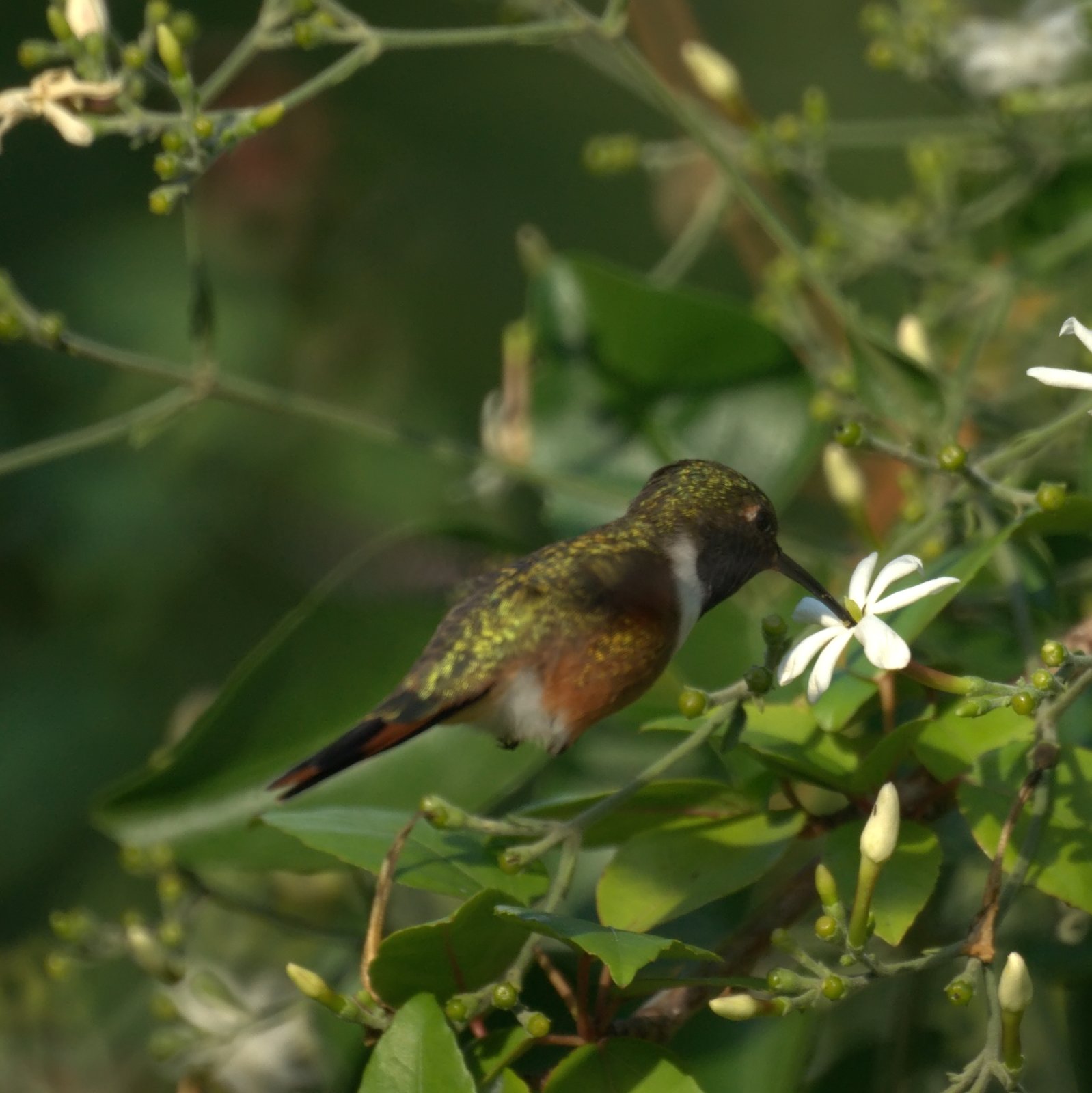
The Bahama Woodstar is a small hummingbird found only in the Lucayan Archipelago, where it can be seen in gardens on almost every inhabited island. The male has a glittering purple gorget with a white band below it and a deeply forked tail. The birds of Great and Little Inagua are now treated as a separate species, Inagua Woodstar.
Voice
Short chip calls, scolding twitters during chases, and a high, drawn-out song that can last up to half a minute.
No recording with a suitable Creative Commons licence is available for this species yet.
Identification
8–9.5 cm, with a short, slightly curved black bill. Green to golden-green above, with brownish wings. The male has a glittering magenta to purple gorget, which looks dark in shade, with a white breast band below; the flanks are mixed green and cinnamon. The tail is deeply forked, blackish-purple with cinnamon on the inner webs. The female has a greyish-white throat, a pale breast, cinnamon belly and flanks, and a rounded tail, cinnamon with a black band.
Confusion species
Cuban Emerald Riccordia ricordii on Grand Bahama, Abaco and Andros is larger and entirely green (male) or grey (female) below, with a long, forked greenish-black tail. The female Ruby-throated Hummingbird Archilochus colubris, a winter visitor to the northern Bahamas, has a white throat and a grey belly without cinnamon, and white tail tips. Inagua Woodstar Nesophlox lyrura is to be expected only on Inagua.
Habitat
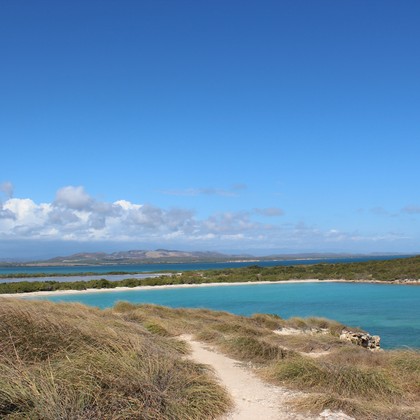
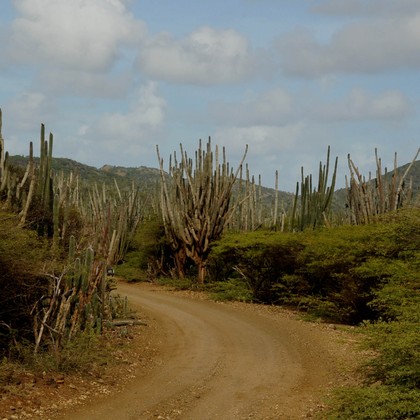
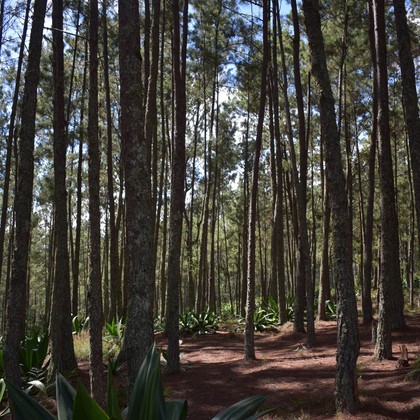
Gardens and parks, coastal scrub, dry lowland scrub and dry forest, secondary growth, forest edges and pine forest. Common in villages and towns at flowering shrubs and feeders.
Where the bird is most at home, classified by the vegetation types of the Caribbean.


Range and movements
Endemic to the Lucayan Archipelago: widespread on almost all islands of the Bahamas except Great and Little Inagua, and on the Turks and Caicos Islands. Beyond, a few vagrant records in Florida and one in Pennsylvania.
- Resident
- dark = core range, pale = thinly spread
How and when to look
On New Providence and the other larger islands in gardens with flowering shrubs, including in Nassau. In the breeding season, especially around April, the male performs shuttle and dive displays in front of the female.
Conservation status
Not threatened. Common and well adapted to gardens and other man-made habitats.
Scientific name
Nesophlox evelynae | (Bourcier, 1847)
Bourcier described the species in 1847 as Trochilus Evelynae; because it was later moved to another genus, the author and year stand in brackets. The genus Nesophlox was introduced in 1910 by Ridgway. Nesophlox is Greek, from nēsos 'island' (the Bahamas) and phlox 'flame': 'island flame'. evelynae honours an Evelyn who has never been identified, perhaps a granddaughter of the hummingbird collector George Loddiges. The specimen the first description was based on came from Nassau, New Providence, Bahamas.