All species › Kingfishers, bee-eaters and rollers › Kingfishers › American Pygmy Kingfisher
American Pygmy Kingfisher | Chloroceryle aenea
Groene dwergijsvogel | Martín pescador enano
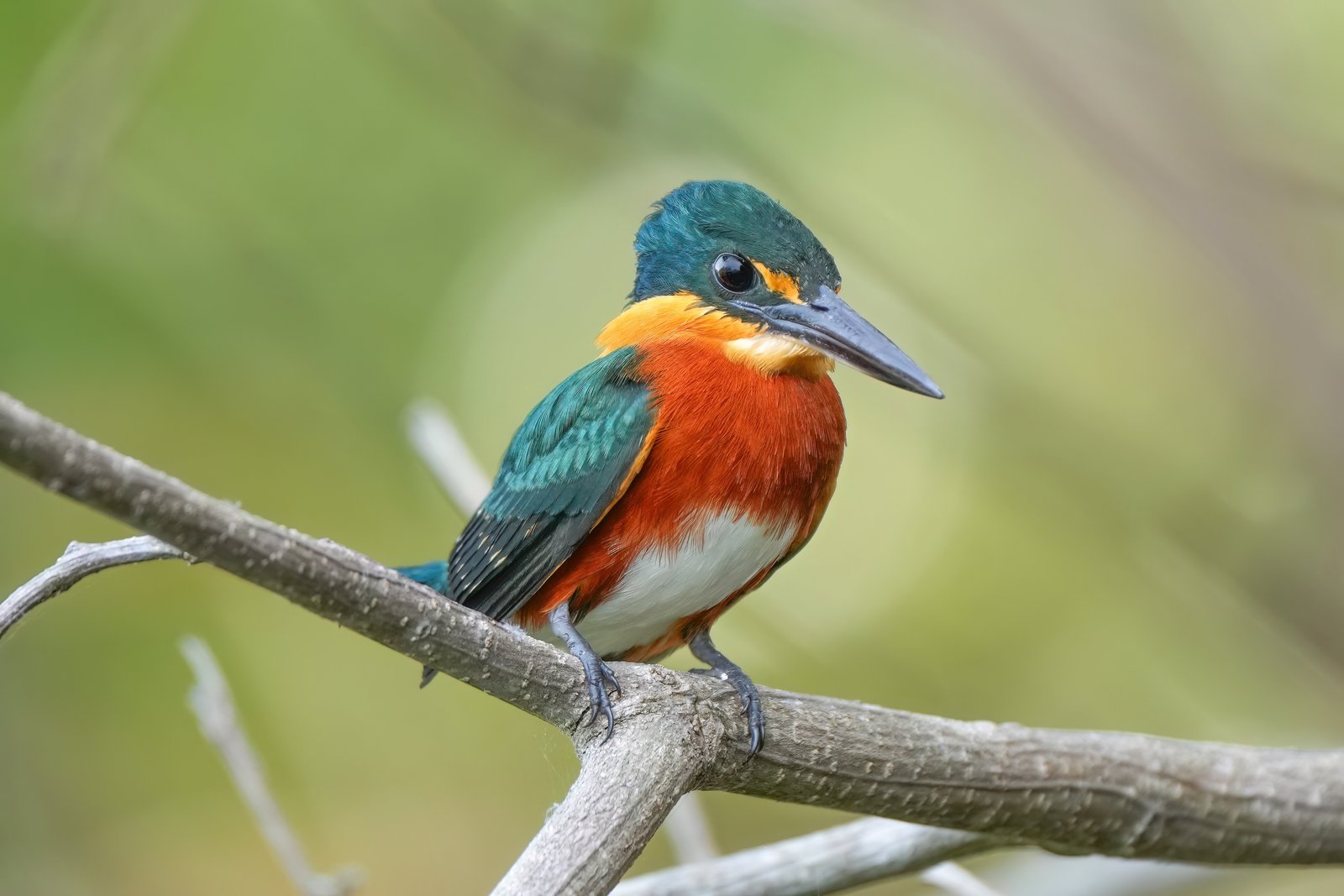
The American Pygmy Kingfisher is the smallest kingfisher in the region, barely larger than a sparrow. Among the islands it occurs only on Trinidad, where it lives in swamp forest and mangroves along small, shaded creeks. It sits low and still over the water and is often overlooked.
Voice
A weak, repeated tik or dzit, and a series of soft, chirping notes.
Recording: Johan Chaves — CC BY-NC-SA 4.0 · converted to mono · xeno-canto
Identification
13 cm, with a large head, a short tail and a relatively long black bill. Head and upperparts are dark glossy green with a golden wash; the wings have small pale spots. A rufous collar runs round the neck. Throat and underparts are rufous, with a white centre to the belly and white undertail coverts. The female has a narrow dark green band across the upper breast, which the male lacks. Juveniles are paler below, with pale wing spots.
Confusion species
Green Kingfisher Chloroceryle americana is larger, with a white collar and white throat and belly, and in the male only a rufous breast band. The other kingfishers in the region are much larger.
Habitat
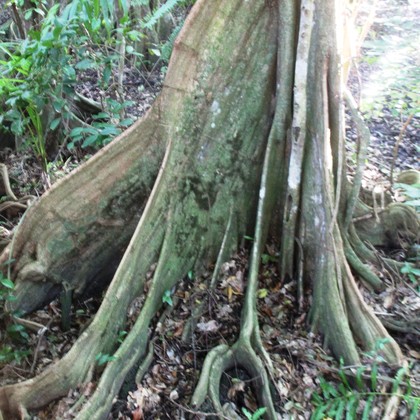
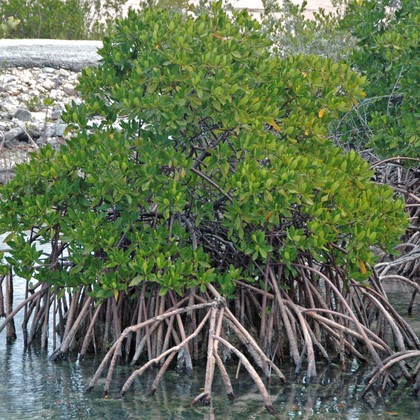
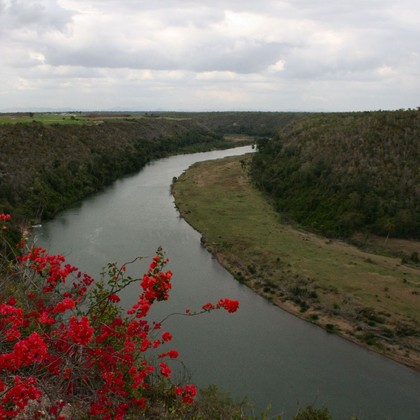
Swamp forest, palm swamp and mangroves with narrow creeks, and small, shaded streams and pools in lowland forest. It hunts from a low branch just above the water for small fish and aquatic insects. It nests in a 30–40 cm tunnel in an earth bank.
Where the bird is most at home, classified by the vegetation types of the Caribbean.

Range and movements
Among the islands only on Trinidad, mainly in the swamps and mangroves of the west and east coasts; absent from Tobago. On the mainland from southern Mexico through Central America to Bolivia and southern Brazil.
- Resident
- dark = core range, pale = thinly spread
How and when to look
On Trinidad in Caroni Swamp and Nariva Swamp, for example from a boat along the mangrove channels. The bird often sits low in the shade and flies off only when approached; a soft tik may give away its position.
Conservation status
Globally not threatened. On Trinidad it depends on swamp forest and mangroves, which are locally declining through clearance and drainage.
Scientific name
Chloroceryle aenea | (Pallas, 1764)
Pallas described the species in 1764 as Alcedo aenea; because it was later moved to another genus, the author and year stand in brackets. The genus Chloroceryle was introduced in 1848 by Kaup. Chloroceryle combines Greek khlōros 'green' with the genus Ceryle: 'green Ceryle', after the green upperparts. aenea is Latin for 'bronze', after the metallic sheen of the green upperparts. The specimen the first description was based on came from Suriname.