All species › Waders, gulls and terns › Sandpipers and snipes › Wood Sandpiper
Wood Sandpiper | Tringa glareola
Bosruiter | Andarríos bastardo
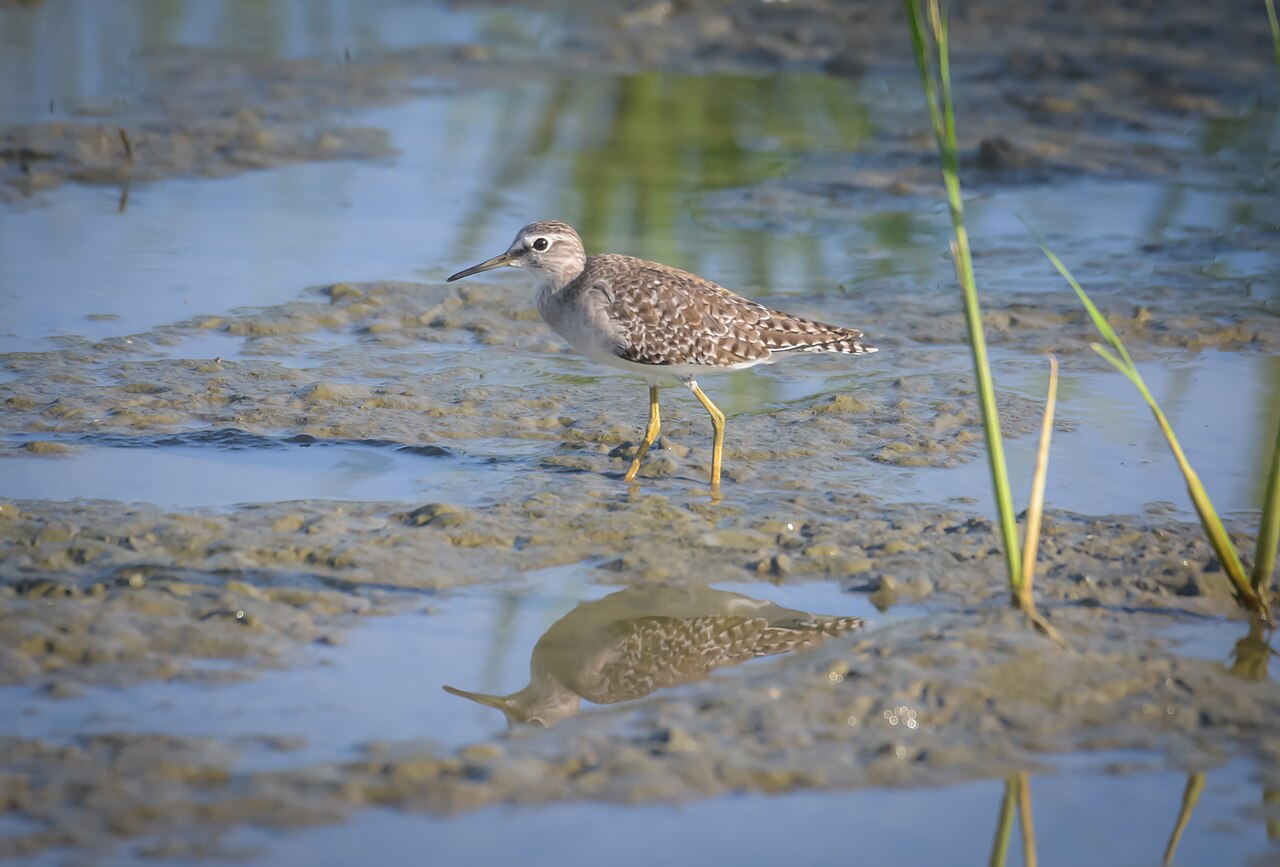
The Wood Sandpiper is a small, slender shank of inland waters: finely spangled, long-legged and never still along the edge of a shallow pool. Despite its name it has nothing to do with woodland away from the breeding grounds; it breeds in Scandinavian bogs and visits western Europe only on passage.
Click a thumbnail to switch the photo above.
Voice
It nearly always calls as it flushes, and that is usually the first sign of its presence: a rapid, high, slightly nasal chiff-if-if of three or four syllables, hurried and cheerful in tone. Over the breeding bog it performs a drawn-out song flight with a yodelling, insistent tlee-dle tlee-dle tlee-dle. Away from the breeding grounds you will hear almost only the flight call, from late April into September, and at night over inland country from birds passing overhead.
Recording: Pascal Christe — CC BY-SA 4.0 · Wikimedia Commons
Identification
Small and slim, with a short straight bill, yellow to olive-yellow legs and a long pale supercilium that runs clearly behind the eye. The upperparts are brown with many conspicuous rounded pale spots, giving a spangled look at close range, and the finely streaked breast is sharply cut off against a white belly. In flight the square white rump, the finely barred tail and above all the pale grey, uncontrasting underwing catch the eye, while the feet project well beyond the tail tip. Juveniles are warmer brown with buff spotting and slightly duller legs, but that age rarely causes trouble in the field.
Confusion species
Green Sandpiper is the main confusion species: darker and dumpier, with a short supercilium that stops in front of the eye, a blackish-looking underwing, a broad black tail band and feet that barely clear the tail. Common Sandpiper is shorter-legged, creeps along in a crouch with a bobbing rear end, and shows a white wing bar and a white wedge in front of the wing bend. Juvenile Ruff can mislead at range, but is larger, small-headed, more hump-backed, with orange-yellow legs and no crisp supercilium.
Habitat
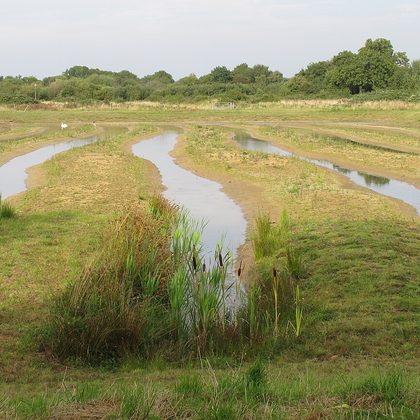
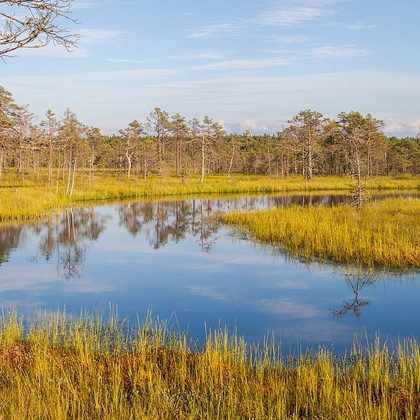
Shallow fresh water with bare or low-growing margins: wet grassland flooded to a film of water, clay pits, dredge deposits, sewage lagoons, rice fields and fish ponds. Where a Green Sandpiper picks a sheltered ditch, a Wood Sandpiper picks an open muddy edge with a clear view; it largely avoids salt tidal flats. It nests on the ground in open bog, swamp forest and wet birch mire in the taiga, occasionally in an abandoned thrush nest.
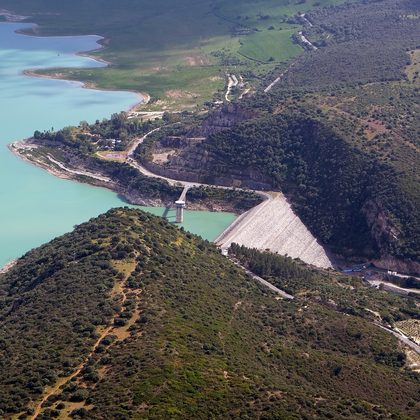
Where the bird is most at home, classified with EUNIS — the European standard for habitats.


Range and movements
Breeds from the British Isles — a handful of pairs — and Fennoscandia east through the taiga, with the bulk in Fennoscandia and the north of eastern Europe. All European birds winter south of the Sahara; elsewhere passage only: in north-west and central Europe a short wave in late April and May and a broader return from late June into September, in the Mediterranean numerous in the rice fields of the Ebro delta and La Albufera and the marshes of Doñana.
- Resident
- Breeding (summer)
- Winter
- Passage
- dark = core range, pale = thinly spread
How and when to look
In early May walk a shallow-flooded field, a freshly inundated plot or a flooded rice paddy and scan the wet mud; Wood Sandpipers rarely stand far out in the water but work the margin itself. In August drying clay pits, sludge lagoons and newly created wetland sites produce the most birds. Go early: at sunrise they are settled, feed close to the bank and call at every move.
Conservation status
Least Concern globally, and with hundreds of thousands of pairs in Fennoscandia and the taiga further east it is one of the commonest waders of the boreal zone. Along the southern edge of the range — central Europe and the Baltic region — drainage of raised bogs has caused steep declines and local extinction. For migrants what matters most is the supply of shallow temporary water, and that has become scarcer as landscapes dry out and water levels are managed ever more tightly.
Scientific name
Tringa glareola | Linnaeus, 1758
Linnaeus described the species in 1758 and placed it straight away in the genus where it still stands. He introduced the genus Tringa in that same work. Tringa is the Neo-Latin name Aldrovandi gave to the green sandpiper, after Ancient Greek trungas, a thrush-sized, white-rumped, tail-bobbing wading bird mentioned by Aristotle. glareola is Latin, a diminutive of glarea 'gravel', after the gravelly shores the bird frequents. The specimen the first description was based on came from Sweden.