All species › Owls › Barn owls › Western Barn Owl
Western Barn Owl | Tyto alba
Kerkuil | Lechuza común
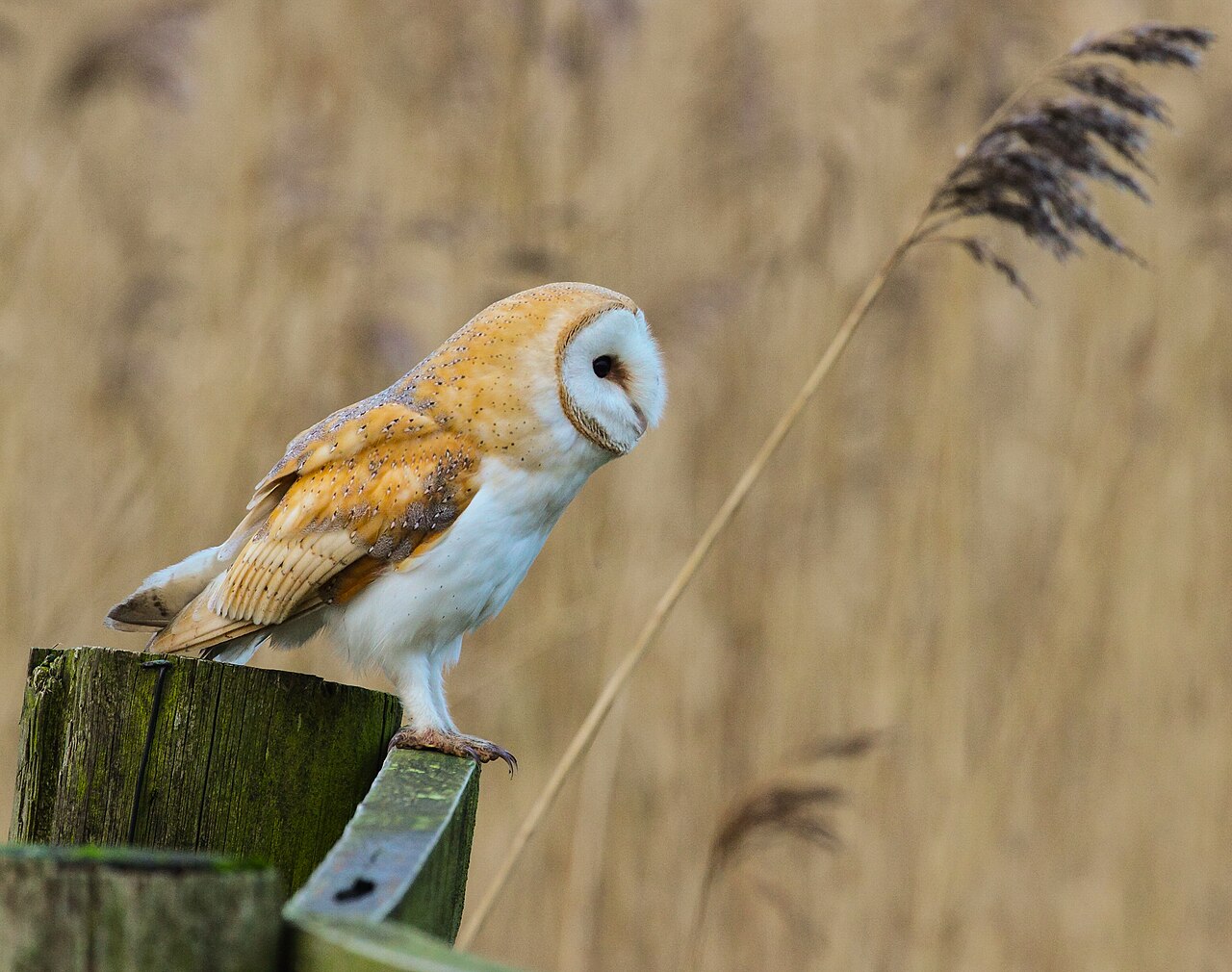
A near-white owl that drifts silently over verges and rough grassland, hunting more by ear than by eye. The heart-shaped face works as a dish that pins the rustle of a vole to within a centimetre.
Click a thumbnail to switch the photo above.
Voice
It does not hoot but screams: a long, hoarse, blood-curdling shrrreeee, often given in flight and audible far off. Add snoring and hissing from young at the nest. Most vocal from February to April and again in late summer, always after dark.
Recording: Joost van Bruggen — CC BY-SA 4.0 · Wikimedia Commons
Identification
Slim, long-legged and strikingly pale: white to buff below, golden-brown above with fine grey marbling and white spangles. The white heart-shaped face with small dark eyes is unique. In flight the head looks small and the wings broad and rounded; the flight is light, buoyant and wavering, with fluttering turns.
Confusion species
In headlights it suggests a huge white moth — no other European owl is this pale. Long-Eared and Short-Eared Owls are browner and streaked, with yellow eyes and a rounder face; Short-Eared hunts by day low over rough ground and shows black carpal patches and sharper wings.
Habitat
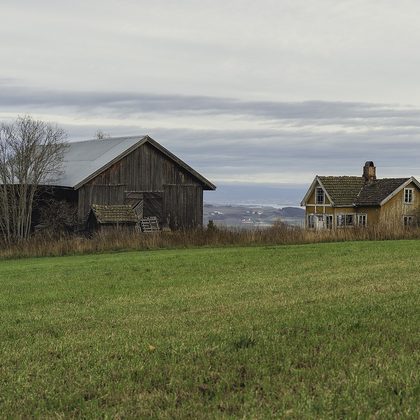
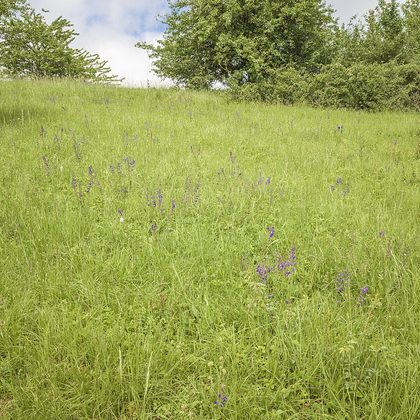
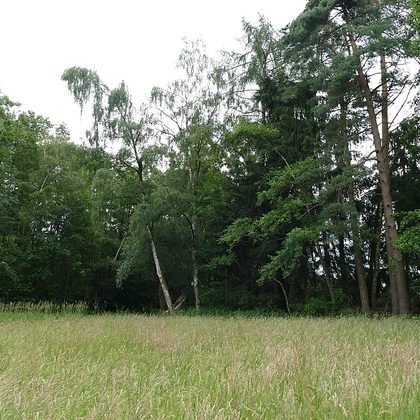
Small-scale farmland with rough verges, ditch banks and untidy corners full of voles, around farms, barns and churches. Nests in dark, undisturbed spaces: hay lofts, church towers, dovecotes and above all purpose-built nest boxes in barns.
Where the bird is most at home, classified with EUNIS — the European standard for habitats.

Range and movements
Almost all of western and southern Europe, north to about the southern edge of Scandinavia; hard winters with lying snow knock back northern populations badly. In Iberia widespread in cortijos, ruins, olive groves, farmland, irrigated land and river valleys.
- Resident
- Breeding (summer)
- Winter
- Passage
- dark = core range, pale = thinly spread
How and when to look
March to May in the last half hour of dusk and the first hour after sunrise, along a quiet country road with wide verges. Drive at walking pace or stand still near a known barn; the screaming in the dark gives the bird away fastest.
Conservation status
Numbers swing with the vole cycle and crash in severe winters; nest boxes have helped in the long run, but farm intensification works against it. Rodenticides are a source of poisoning, and along motorways and railways many low-flying birds are killed by traffic each year.
Scientific name
Tyto alba | (Scopoli, 1769)
Scopoli described the species in 1769 as Strix alba; because it was later moved to another genus, the author and year stand in brackets. The genus Tyto was introduced in 1828 by Billberg. Tyto comes from Ancient Greek tutō 'owl'. alba is Latin for 'white', after the white underparts and pale face. The specimen the first description was based on came from Friuli, Italy.