All species › Waterfowl › Ducks, geese and swans › Tufted Duck
Tufted Duck | Aythya fuligula
Kuifeend | Porrón moñudo
The Tufted Duck is Europe's commonest diving duck and settles happily on town ponds and harbours. Its drooping tuft and blazing yellow eye make it the reference bird against which every other Aythya is judged.

Click a thumbnail to switch the photo above.
Voice
Usually silent. In display the male gives a soft, rapid, bubbling wit-wit-weeoo, barely audible over urban background noise. The female growls hoarsely, krrr-krrr, mainly when flushing or defending ducklings. Most vocal from February to April.
Recording: Jamescandless — CC BY-SA 3.0 · Wikimedia Commons
Identification
Small, rounded diving duck with a high crown, blue-grey bill with a sharply defined black nail and a yellow iris. The male is glossy black with snow-white flanks and a long drooping tuft. The female is dark brown with paler flanks, a short blunt tuft and sometimes white at the bill base. Both show a broad white wingbar in flight.
Confusion species
Scaup is larger and rounder-headed with no tuft, a grey vermiculated back in the male and a broad white bill surround in the female. Ferruginous Duck is smaller and warm chestnut with a white undertail. Female Tufted with extensive white around the bill are routinely called Scaup; check tuft and mantle colour instead.
Habitat
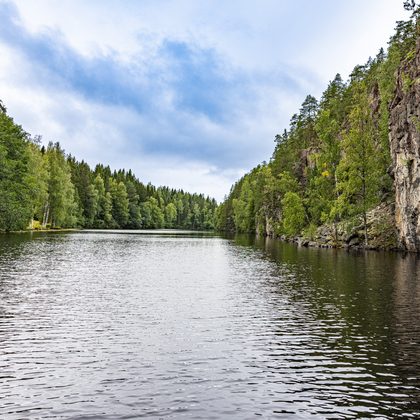
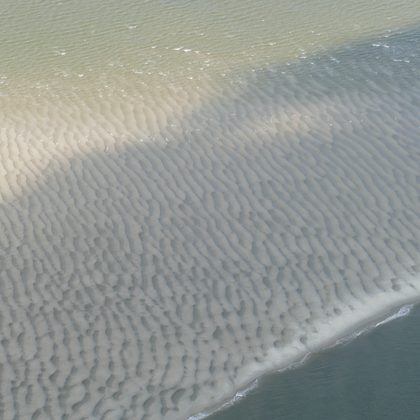
Almost any deep fresh water: lakes, gravel pits, canals, town ponds, harbours and reservoirs, and in winter also brackish water and sheltered estuaries. Breeds on islets and in dense waterside vegetation, often within Black-Headed Gull colonies. Dives mainly for bivalves, with zebra and quagga mussels the staple.
Where the bird is most at home, classified with EUNIS — the European standard for habitats.


Range and movements
Breeds from Iceland and Scandinavia through central Europe and east across eastern Europe and Siberia, and is a common breeder in north-west Europe. Winter numbers on the IJsselmeer and other large lakes swell enormously with birds from the north-east. In Iberia it is a scarce but regular winter visitor to reservoirs and lagoons.
- Resident
- Breeding (summer)
- Winter
- Passage
- dark = core range, pale = thinly spread
How and when to look
Any town pond in January is enough to learn the plumages. In flat light, work every female for tuft length, bill pattern and mantle tone, because Scaup and hybrids are mixed in.
Conservation status
Numerous and not threatened; the species gained greatly from the spread of invasive mussels in European waters. Locally, declining mussel stocks, botulism, disturbance at roosts and lead poisoning cause problems. Winter totals fluctuate with ice conditions.
Scientific name
Aythya fuligula | (Linnaeus, 1758)
Linnaeus described the species in 1758 as Anas fuligula; because it was later moved to another genus, the author and year stand in brackets. The genus Aythya was introduced in 1822 by Boie. Aythya is from Greek aithuia, an unidentified diving seabird mentioned by Aristotle and Hesychius. fuligula combines Latin fuligo 'soot' and gula 'throat'. The specimen the first description was based on came from Sweden.