All species › Waterfowl › Ducks, geese and swans › Mallard
Mallard | Anas platyrhynchos
Wilde eend | Ánade azulón
The Mallard is very common and can be watched at close range almost anywhere. Eclipse plumage, moult sequence and hybrid park ducks are all learned here first.
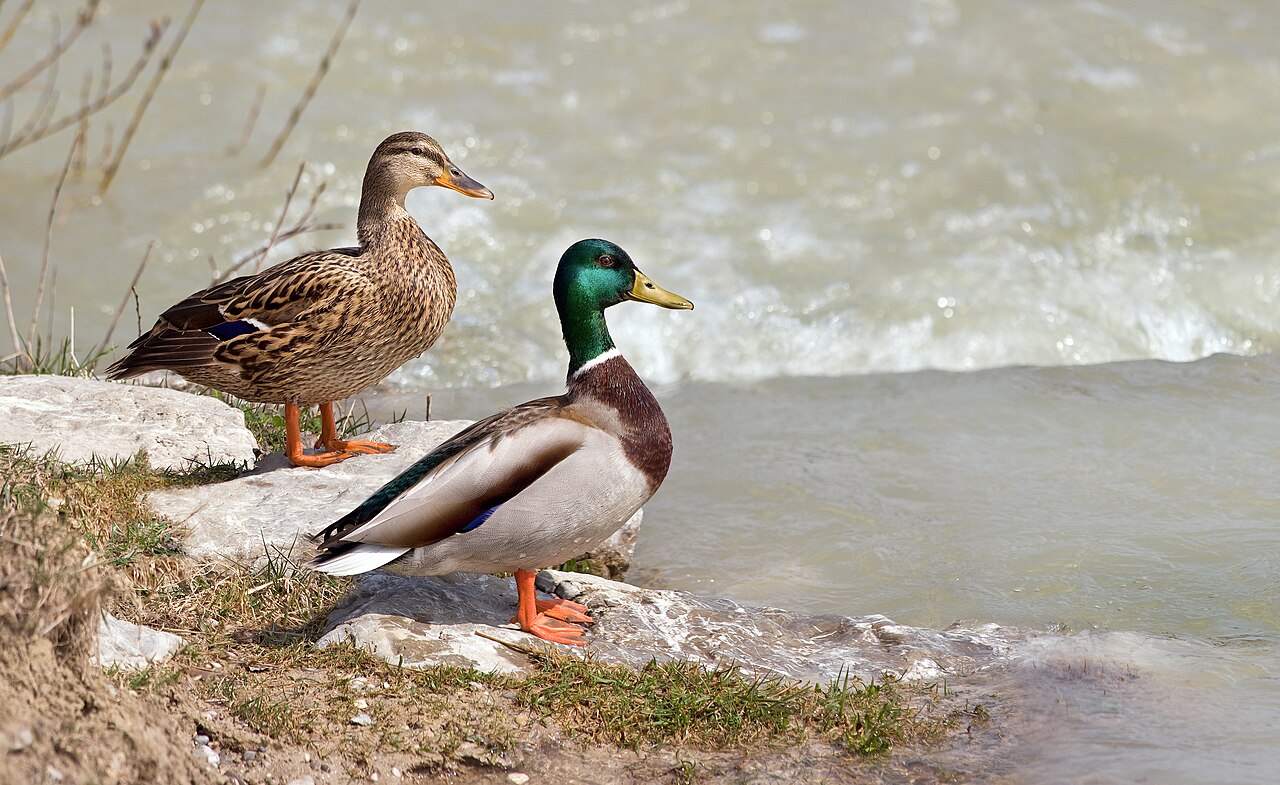
Click a thumbnail to switch the photo above.
Voice
The classic quack-quack-quack is the female: a loud descending series of four to eight notes. The male is much quieter, giving a short, nasal, hoarse rreb and a thin whistled peeu during display. Most vocal from October to April, when courtship parties form on open water.
Recording: Marie-Lan Taÿ Pamart — CC BY-SA 4.0 · Wikimedia Commons
Identification
Large, heavily built dabbling duck. Breeding male: bottle-green head, white collar, purple-brown breast, grey body, black curled central tail feathers and a yellow bill. Female brown-streaked with a dark eye-stripe and an orange bill with a dark saddle. Both sexes show a blue, white-bordered speculum; in July the male resembles a female but keeps the yellow bill.
Confusion species
Gadwall is greyer and neater, with a white speculum and a steeper forehead. Female Pintail is slimmer and longer-necked. The real trap is domestic and feral stock: odd white patches, a bulky build or a piebald head mean mixed ancestry, so check speculum and bill colour first.
Habitat
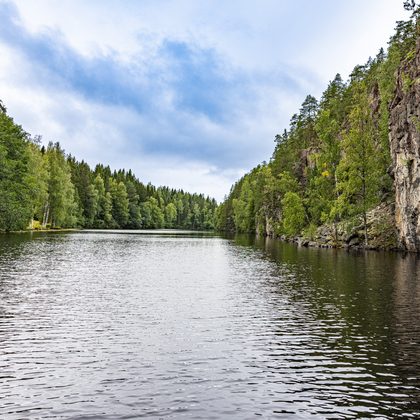
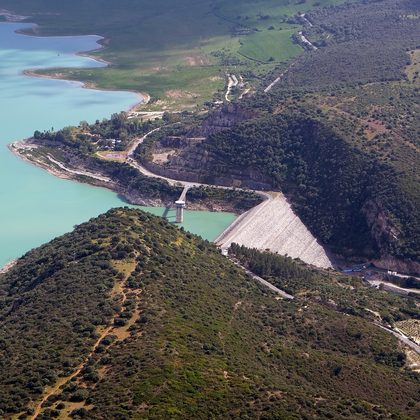
Almost any fresh water: ditches, canals, ponds, gravel pits, rivers, woodland pools and city fountains. In winter also brackish water and shallow estuaries. Birds often feed at night on stubble and flooded arable land, returning to safe open water to loaf through the day.
Where the bird is most at home, classified with EUNIS — the European standard for habitats.



Range and movements
Throughout Europe from Iceland to Iberia. Breeders in north-west Europe are largely sedentary and are joined in winter by large numbers from Scandinavia, the Baltic and eastern Europe. In Iberia it is a widespread breeder on freshwater lagoons, rice fields and reservoirs, with winter peaks in Doñana, the Ebro Delta and the Albufera of Valencia.
- Resident
- Breeding (summer)
- Winter
- Passage
- dark = core range, pale = thinly spread
How and when to look
Spend an hour on a town pond in January or February watching display: head-pumping, the sudden water-flicking rear-up and the tail-raise are easier to see here than anywhere. Then return in July to work through eclipse plumages, the best possible training for rarer ducks.
Conservation status
Abundant and not threatened, yet breeding numbers are falling in north-west Europe: fewer ducklings survive dried-out ditch banks, smooth revetments, predation and traffic. Genetic mixing with released and feral birds matters locally. As a wintering bird it remains as numerous as ever.
Scientific name
Anas platyrhynchos | Linnaeus, 1758
Linnaeus described the species in 1758 and placed it straight away in the genus where it still stands. He introduced the genus Anas in that same work. Anas is the Latin word for 'duck'. platyrhynchos is Greek for 'broad-billed', from platus 'broad' and rhunkhos 'bill'. The specimen the first description was based on came from Sweden.