All species › Waders, gulls and terns › Gulls and terns › Little Gull
Little Gull | Hydrocoloeus minutus
Dwergmeeuw | Gaviota enana | Zwergmöwe | שחף גמדי | Mouette pygmée
The Little Gull is the smallest gull in the world and moves more like a tern or a bat than a gull. Over the IJsselmeer and the Voordelta it flutters low, picking insects from the water.

Click a thumbnail to switch the photo above.
Voice
Usually silent away from the breeding grounds. In flocks and at colonies it gives a high, nasal, repeated kek-kek-kek, strongly recalling a small tern, and a drawn-out kye-kye during chases. In western Europe you hear it at most from parties passing close overhead in May above an inland lake.
Recording: Stanislas Wroza — CC BY-NC-SA 4.0 · Wikimedia Commons
Identification
Tiny, with rounded wingtips, fine dark red bill and red legs. In summer the black hood reaches the nape, with no white eyelid crescents, over a pale grey mantle; the upperwing is plain grey with a broad white trailing edge and no black, the underwing sooty black. Winter birds show a dark crown and ear spot. First-years show a black W across the upperwing, black tail band and white underwing.
Confusion species
Adults are recognised by their black underwing and black-free wingtip, but young birds recall juvenile Kittiwake, which is larger, longer-winged and shows a black neck collar. Black-Headed Gull is much bigger with a white primary wedge. A feeding Little Gull can suggest a Black Tern at distance, but has broad, blunt wings and a paler, whiter overall look.
Compare gulls: legs, head, bill and wing tip side by side
Habitat
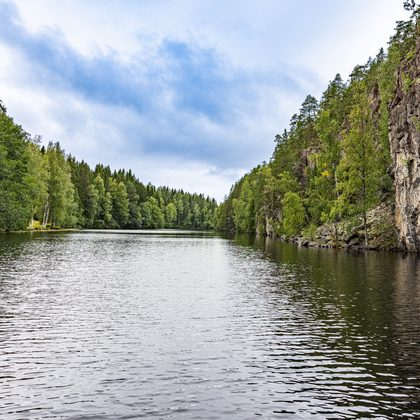
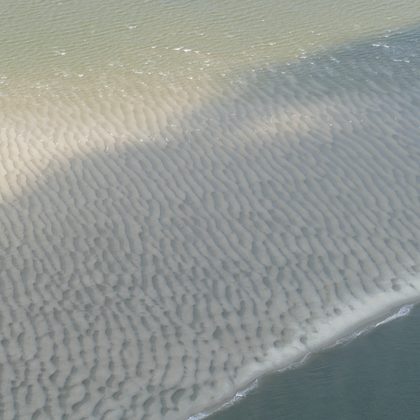
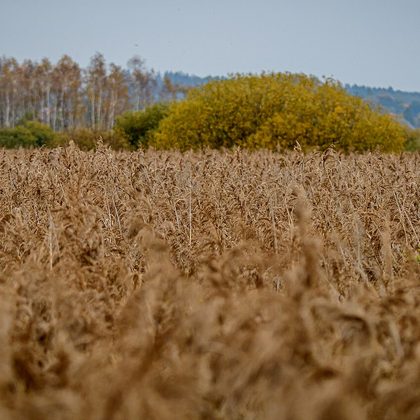
Breeds at shallow, marshy lakes and peat pools in northern and eastern Europe. Outside the breeding season on large inland lakes, estuaries, coastal waters and sandbanks, often over turbid water where currents concentrate food. Feeds by fluttering and dipping at the surface for insects, small crustaceans and tiny fish.
Where the bird is most at home, classified with EUNIS — the European standard for habitats.

Range and movements
The European breeding range lies in eastern Fennoscandia, the Baltic region and eastern Europe, with small and shifting colonies further west, as far as the southern North Sea coast. Passage and wintering concentrate in north-west Europe, on the large inland waters and estuaries and along the North Sea coast; around the Mediterranean, from the Iberian coasts to Cyprus and Anatolia, it is a scarce winter visitor.
- Resident
- Breeding (summer)
- Winter
- Passage
- dark = core range, pale = thinly spread
How and when to look
Late April and early May are the peak days: with north-west winds work a dyke or dam along a large inland lake or estuary in north-west Europe — the IJsselmeer and the Delta are the classic ground — and scan low parties over the water. In November and December seawatching on the North Sea and Atlantic coasts pays off in onshore winds, when small groups drift low over the surf line.
Conservation status
Not globally threatened, but the European population is small and its breeding sites shift with fluctuating water levels. Drainage of northern marshes, colony disturbance and oil and wind-farm development in offshore wintering areas are the main risks.
Scientific name
Hydrocoloeus minutus | (Pallas, 1776)
Pallas described the species in 1776 as Larus minutus; because it was later moved to another genus, the author and year stand in brackets. The genus Hydrocoloeus was introduced in 1829 by Kaup. Hydrocoloeus is Greek, from hudor 'water' and koloios 'jackdaw': 'water jackdaw'. minutus is Latin for 'small'; this is the smallest gull in the world. The specimen the first description was based on came from Berezovo, Siberia.