All species › Waders, gulls and terns › Sandpipers and snipes › Least Sandpiper
Least Sandpiper | Calidris minutilla
Kleinste strandloper | Correlimos menudillo
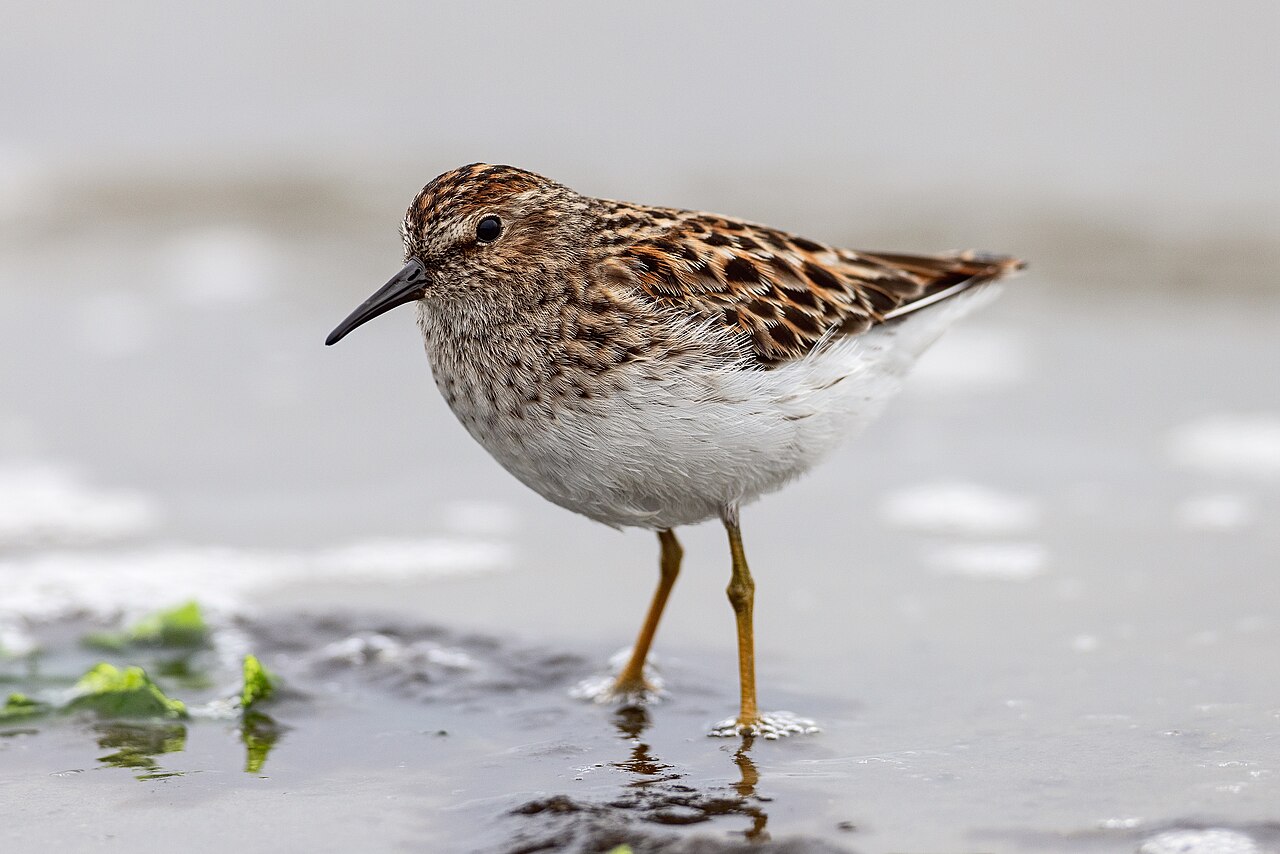
The smallest wader in the world and the only peep with pale legs. In the British Isles it averages one every couple of years, sometimes a bird that settles in for the winter, and it turns up on freshwater mud rather than open estuary.
Click a thumbnail to switch the photo above.
Voice
A high, thin and distinctly rising kreep or treep, far more drawn out and musical than the short tit of Little Stint and without the trill of Temminck's Stint. Alarmed birds also give a thin seeet. On a bird that flushes before you have worked out the legs, that rising call is often all the identification rests on, so listen before you push the flock.
Recording: Jeff Stewart — CC BY-NC-SA 4.0 · Wikimedia Commons
Identification
Smaller and more compact than Little Stint, with a rounded back and a crouching, low-slung stance. The legs are yellow to yellow-green, though a coat of mud can make them look dark, and while that is the quickest feature it is also the one that misleads most often. The bill is fine, dark and slightly decurved towards the tip. The breast carries a complete, densely brown-streaked band, darkest at the sides. Upperparts brown with black feather centres and rufous fringes, juveniles showing clear pale mantle lines and a warm buff cast. The toes are long and unwebbed, and the wing tips reach about the tail tip.
Confusion species
Leg colour sets it apart from every other peep, since Western, Semipalmated, Red-Necked and Little Stint all have black legs. Only Temminck's Stint shares pale legs, and it is the first bird to eliminate here: Temminck's is longer-bodied and plainer grey-brown, without mantle lines, with an even grey breast band cut sharply against white, white outer tail feathers and a tail that projects past the wing tips. Least Sandpiper is browner, more heavily streaked, shows obvious mantle braces and squats lower. Against Little Stint, alongside leg colour, the complete streaked breast band counts, together with the finer, slightly decurved bill and the absence of a cleanly cut white breast. Western and Semipalmated Sandpipers both show webs between the toes, which this species lacks; Western adds a longer bill drooping at the tip and rufous scapulars, Semipalmated a blunt straight bill and a plainer, greyer look. Red-Necked Stint is greyer and longer-winged, with primaries beyond the tail and, in summer, an unmarked brick-red throat. For completeness, Long-Toed Stint also has yellow legs, but stands upright on longer legs, looks longer-necked and shows a pale base to the bill.
Habitat
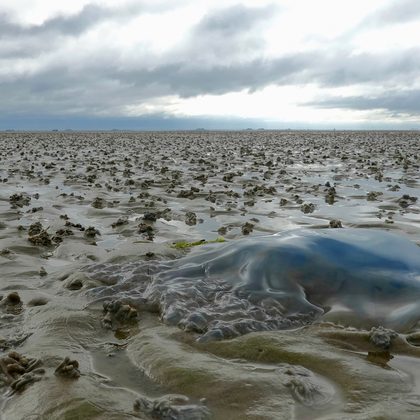
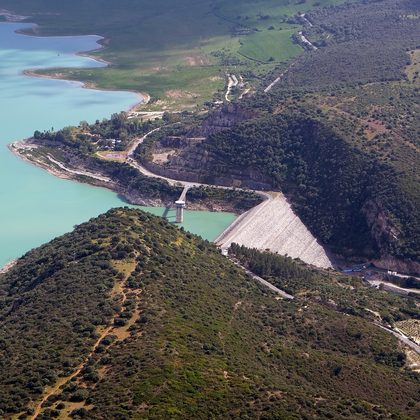
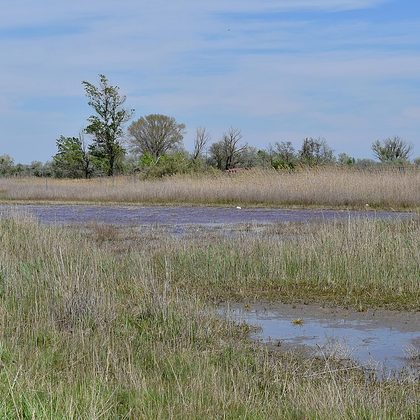
Unlike most peeps it avoids open tidal flats and works vegetated muddy edges: ditches and seepage channels, wet field corners, settling beds and sewage works, clay pits, coastal scrapes and the margins of brackish pools. It feeds slowly and deliberately among low vegetation, exactly where you would expect Temminck's Stint. Breeds on wet tundra, bogs and sedge flats across subarctic North America.
Where the bird is most at home, classified with EUNIS — the European standard for habitats.

Range and movements
Breeds across subarctic North America from Alaska east to Newfoundland and winters from the south of North America into South America. In Europe a genuine rarity: in the British Isles averaging roughly one every other year, with the odd long-staying or wintering bird among them, most of them in the Nearctic wader autumn from late August into October. In Iberia a few records, in Catalonia and Galicia, in August and October; on the continental North Sea coast it has not been recorded.
How and when to look
Look on scruffy, vegetated mud rather than on the open shore: sewage works, settling beds, clay pits, dried-out creeks, rice fields and the back edge of coastal scrapes and lagoons. In August and September work every Temminck's Stint for a complete streaked breast band and mantle lines, because those two are the pair that get confused in both directions here. Check the leg colour more than once, in different light and after the bird has waded, since dried mud turns yellow legs black and wet silt turns black legs shiny brown.
Conservation status
Assessed as Near Threatened in the recent Red List revision. The world population is still large but slowly falling. Because this sandpiper spends migration and winter on small, shallow freshwater marshes, wet grassland and rice fields rather than on great estuaries, the loss of exactly those small, scattered wetlands weighs more heavily on it than on species that rely on large estuaries. Drainage, drying and the tidying of muddy margins are the main concerns.
Scientific name
Calidris minutilla | (Vieillot, 1819)
Vieillot described the species in 1819 as Tringa minutilla; because it was later moved to another genus, the author and year stand in brackets. The genus Calidris was introduced in 1804 by Merrem. Calidris goes back to Ancient Greek kalidris or skalidris, a name Aristotle used for an unidentified grey waterside bird. minutilla is Medieval Latin for 'very small'. The specimen the first description was based on came from Halifax, Nova Scotia.