All species › Grebes › Grebes › Eared Grebe
Eared Grebe | Podiceps nigricollis
Geoorde fuut | Zampullín cuellinegro
A small, high-crowned grebe with a steep forehead and a fluffy, cocked rear end. In breeding plumage it carries a fan of golden ear plumes that spray back across the black head like sparks.

Click a thumbnail to switch the photo above.
Voice
At colonies a high, plaintive, slightly rising peeep or oo-eek, often in duet and mixed with a fast trilling chatter. Heard mainly from April to June at the breeding site, morning and evening; away from the colony the birds are practically silent.
Recording: African Bioacoustics Community — CC BY-NC-SA 4.0 · Wikimedia Commons
Identification
Small and dark, with a thin, slightly upturned bill and a high rounded crown that peaks in front of the eye. Breeding birds have a black head, neck and breast, chestnut flanks, fanned golden ear tufts and a red eye. In winter they are dingy grey, the dark cap running below the eye and the greyish cheek ending without a clean border.
Confusion species
Slavonian Grebe is the classic confusion. Black-necked has a finer, upturned bill, a steeper forehead peaking before the eye, and in winter a greyish cheek with a smudged, irregular border; Slavonian shows a straight, pale-tipped bill and a sharply cut, clean white cheek.
Habitat
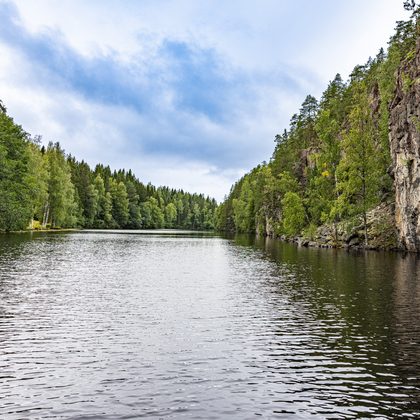
Shallow, nutrient-rich pools with abundant submerged and floating plants, often in colonies alongside Black-Headed Gulls, whose presence gives protection. Outside the breeding season on salt lagoons, salt pans, reservoirs and sheltered coastal water. Takes mostly insects and larvae from the surface and far less fish than other grebes.
Where the bird is most at home, classified with EUNIS — the European standard for habitats.



Range and movements
Scattered across Europe with an erratic breeding pattern that shifts from year to year; in north-west and central Europe a scarce breeder of fen marshes and young pools. Around the Mediterranean it nests in the lagoons of southern Iberia and winters in enormous numbers in the salt pans of the Ebro delta, the Bay of Cádiz and the Mar Menor, and more widely all round the Mediterranean to North Africa and the Levant.
- Resident
- Breeding (summer)
- Winter
- Passage
- dark = core range, pale = thinly spread
How and when to look
Look on shallow pools with a Black-Headed Gull colony in May and use the low light of early morning, when the golden plumes really glow. In August and September it pays to scan moulting flocks on larger waters, where summer and winter plumages swim side by side.
Conservation status
Not globally threatened (IUCN: Least Concern). Numbers swing sharply with water levels and with the fate of the gull colonies the species nests among. Drying fens, loss of floating vegetation and fish stocking press on the breeding sites, while the key wintering and moulting waters in southern Europe are vulnerable to salt pans and lagoons drying out.
Scientific name
Podiceps nigricollis | Brehm, 1831
Brehm described the species in 1831 and placed it straight away in the genus where it still stands. The genus Podiceps was introduced in 1787 by Latham. Podiceps is Latin, from podex, genitive podicis, 'rear end', and pes 'foot', after the legs set far back on the body. nigricollis is Latin, from niger 'black' and collum 'neck', after the black neck in breeding plumage. The specimen the first description was based on came from Germany.