All species › Waders, gulls and terns › Sandpipers and snipes › Common Snipe
Common Snipe | Gallinago gallinago
Watersnip | Agachadiza común | Bekassine | חרטומית ביצות | Bécassine des marais
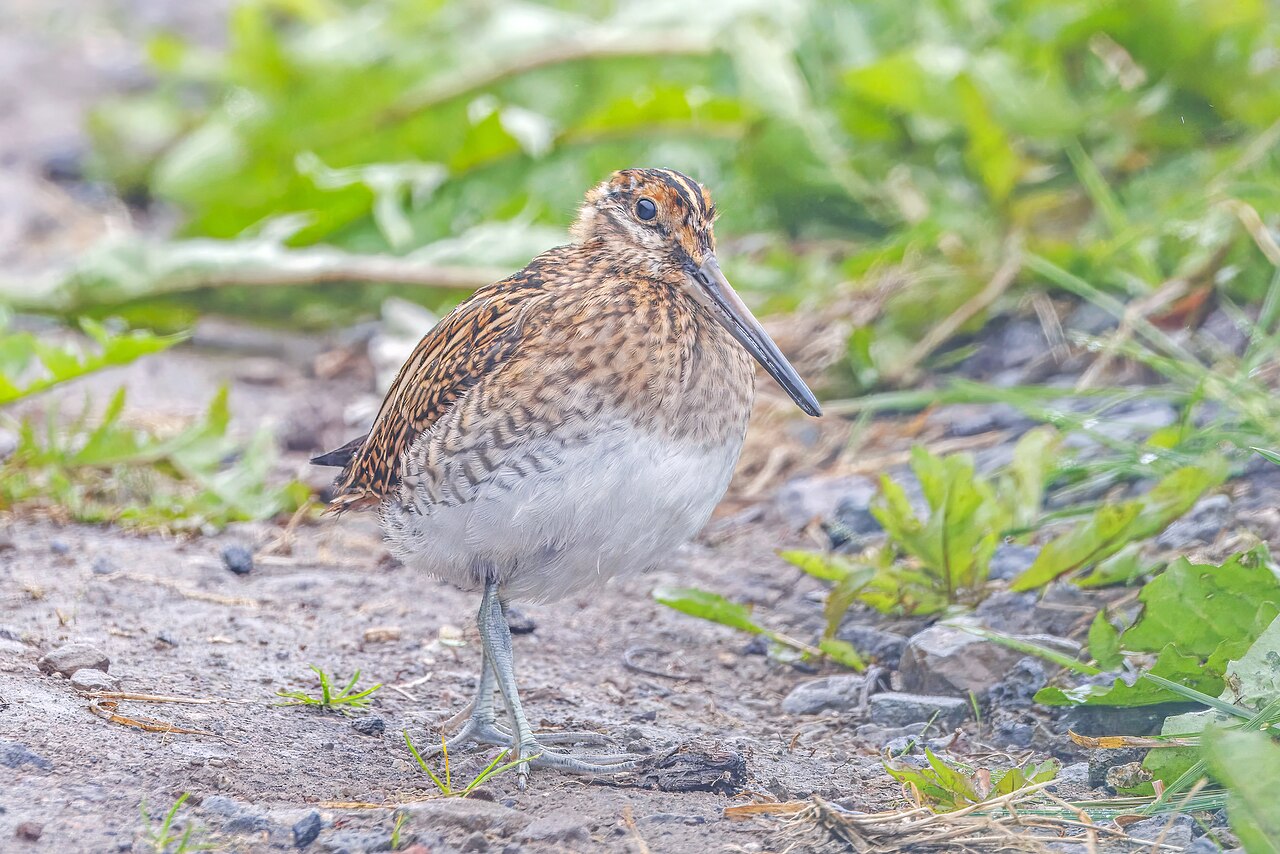
The Snipe usually goes up almost underfoot, screeching and zigzagging away. Watch a wet ditch edge patiently and you will see it out in the open, driving the very long bill into the mud like a sewing machine.
Click a thumbnail to switch the photo above.
Voice
On flushing a hoarse, drawn-out retch, like tearing cloth. Territorial birds call a monotonous tikka-tikka-tikka from a post. Characteristic is the drumming display: in dives the male spreads the outer tail feathers so they vibrate, producing a bleating hum, heard March to June and above all at dusk.
Recording: Joost van Bruggen — CC BY-SA 4.0 · Wikimedia Commons
Identification
A medium, dumpy snipe with a very long straight bill about twice the head length. The head is boldly striped dark and cream, with a pale crown stripe, dark lateral crown and pale supercilium. The back is dark with four cream braces, the flanks barred, the belly white. In flight, pointed wings and a narrow white trailing edge to the inner wing; seasonal plumages differ little.
Confusion species
Jack Snipe is the only real confusion: much smaller, clearly shorter-billed, with no pale crown stripe but a split supercilium, and a dark purple-and-green glossed back. It also flushes only at your feet, silently and straight, and drops in again at once, where Common Snipe towers away rasping and zigzagging.
Compare sandpipers, snipes and allies: bill, legs, wing bar and rump
Habitat
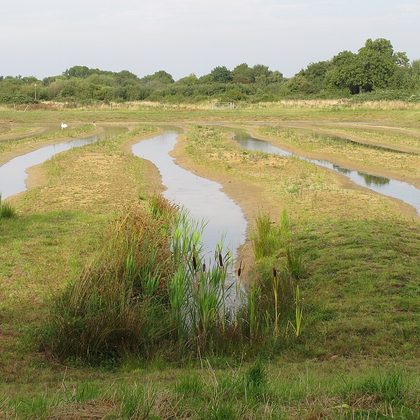
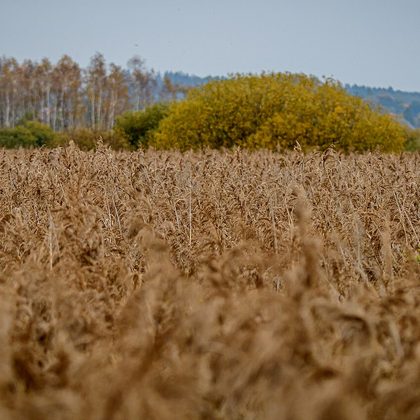
Wet sedge-rich grassland, fen meadows, bogs, damp dune slacks and soft muddy margins with cover. Breeds where the soil stays probeable and tussocks give structure. Outside the breeding season on ditch banks, shallow floods, rice fields and waterlogged pasture, always close to something to hide in.
Where the bird is most at home, classified with EUNIS — the European standard for habitats.


Range and movements
Breeds throughout northern and central Europe. Large numbers from northern and eastern Europe pass through and winter, Iberia included, where rice fields, dehesa pools and river plains can hold many birds.
- Resident
- Breeding (summer)
- Winter
- Passage
- dark = core range, pale = thinly spread
How and when to look
In October or November walk slowly along the edge of a shallow flood or a ditch in the middle of the day; snipe sit tight and flush only at a few metres. For the display, come to a wet reserve at dusk in late April and listen for the bleating hum passing overhead.
Conservation status
Not globally threatened (IUCN: Least Concern). As a breeder in western Europe it has declined steeply through drainage, lowered water tables and intensive grassland management, and it now nests almost only in reserves. As a passage and winter bird it remains common. Hunting in southern Europe and the continued drying of marshes are the main pressures.
Scientific name
Gallinago gallinago | (Linnaeus, 1758)
Linnaeus described the species in 1758 as Scolopax gallinago; because it was later moved to another genus, the author and year stand in brackets. The genus Gallinago was introduced in 1760 by Brisson. Gallinago is New Latin for a snipe, from Latin gallina 'hen' and the suffix -ago 'resembling'. The specific name repeats the genus name. The specimen the first description was based on came from Sweden.